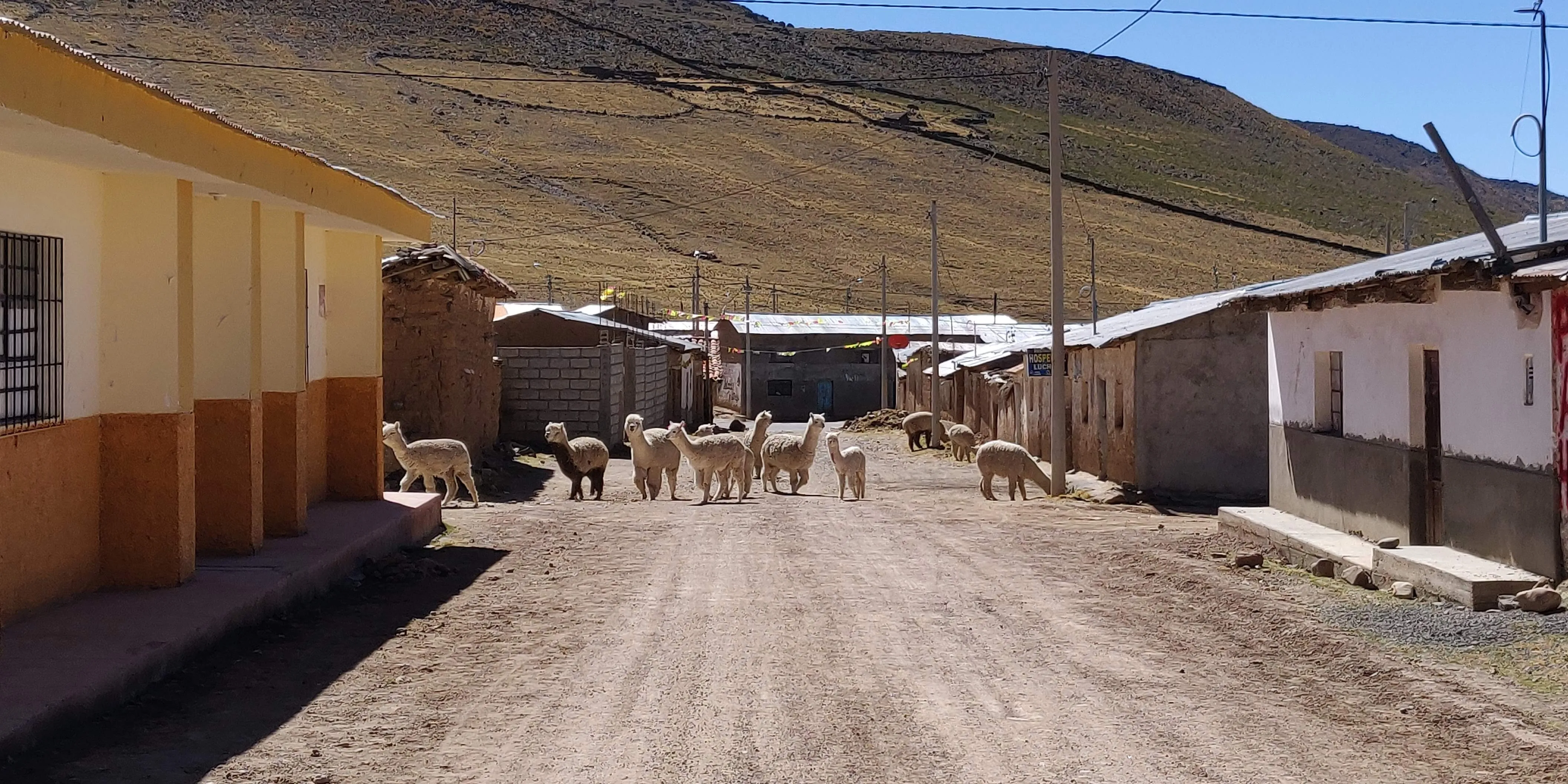
Peru: A Gluten Free Guide
Peru is a fantastic country to cycle through, and a reasonably manageable one for celiacs, provided you set your expectations appropriately from the start. Outside Lima, gluten free labelling is virtually non-existent, awareness of celiac disease is patchy at best, and the soup course at lunch will become a recurring source of low-level anxiety. The good news is that traditional Andean cooking leans heavily on potatoes, maize, quinoa and rice, none of which contain gluten. With a bit of vigilance and a willingness to stick to the basics, you can eat well.
Key Points:
- Labelling: Almost no GF labelled products in supermarkets outside Lima. Peru passed a GF labelling law in 2023 (Law N. 31881), but in 2019 when I visited, packaged GF food was nearly impossible to find.
- Cities: Lima has a growing number of dedicated GF restaurants and cafes, particularly in Miraflores and Barranco. Cusco has a reasonable selection in the San Blas area.
- Eating out: No specific legislation protecting celiacs in restaurants. Awareness varies wildly. In rural areas, expect limited understanding of what gluten actually is.
- Rural areas: Markets are your friend. Naturally GF staples like rice, potatoes, maize flour, quinoa, fresh cheese, dried fruits and nuts are easy to find.
- Key phrase: “Soy celiaco/a, no puedo comer gluten, trigo, cebada ni centeno.” (I am celiac, I cannot eat gluten, wheat, barley or rye.)
Contents
Personal Experience
Annie and I spent three months cycling Peru in 2019, entering from the south and making our way north. The roads were stunning, which is more than I can say for the daily mileage. The Andes had other ideas about how far we’d get each day, and the mountain passes were relentless. We did have one spectacular day descending from the highlands all the way down to the coast, an entire day of freewheeling.
I’d honestly go back to Peru in a heartbeat.
We spent the vast majority of our time in rural Andean locations, which meant markets rather than supermarkets and local restaurants rather than anything with a GF menu. For breakfast, we made breads from maize flour and egg. Lunch was the main challenge, which I’ll cover in detail below. Dinner was usually rice and vegetables cooked on our camping stove.
When we went really remote, the village shops would occasionally stock nothing beyond potatoes, tomatoes and fresh cheese. We had several fairly bleak days subsisting on those three things, feeling moderately malnourished and pedalling without motivation, until we noticed that cooking oil was always abundantly available. Chips. The answer was chips. It is not a nutrition plan anyone would recommend, but a plate of hand-cut fries made from excellent Peruvian potatoes was a good morale boost for two hungry cyclists feeling sorry for themselves in the frigid Andean climate.
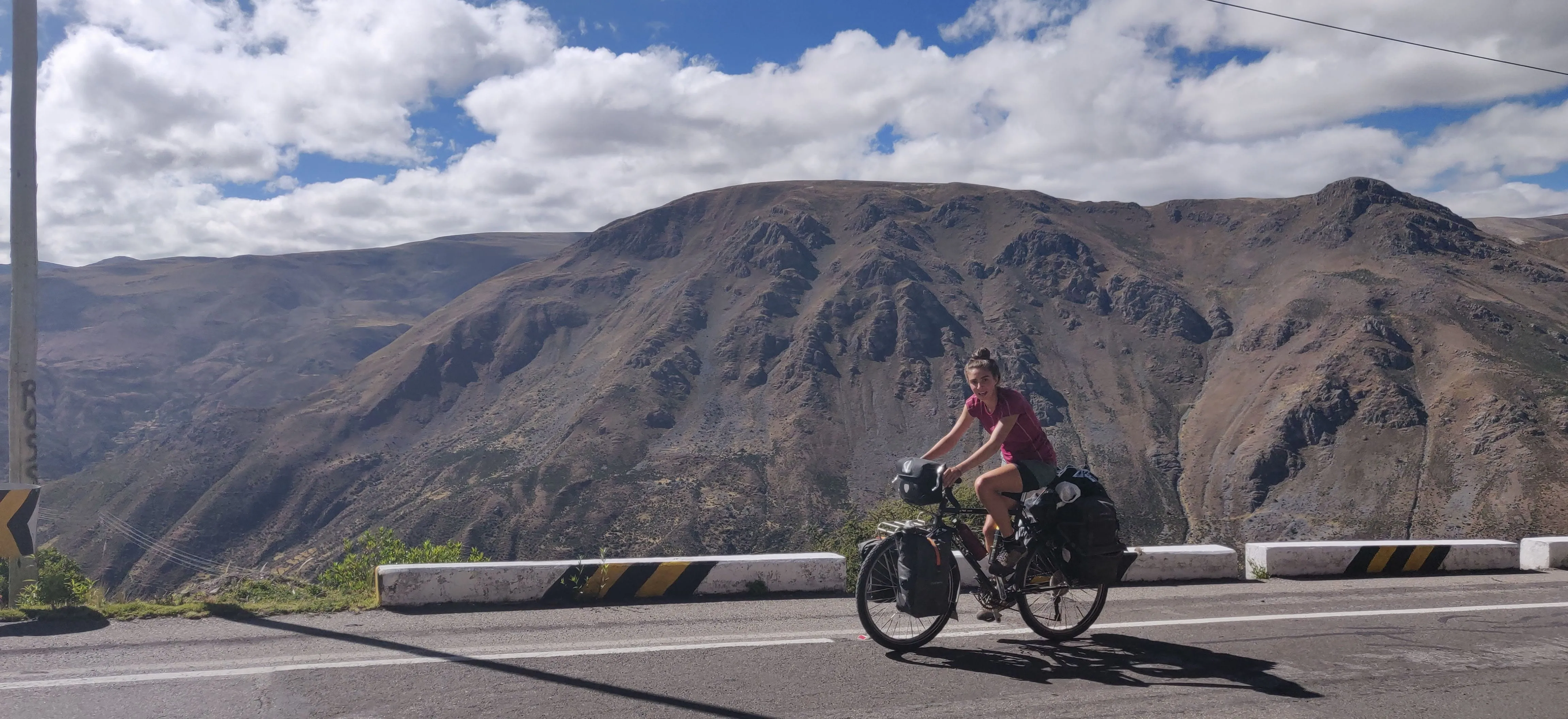
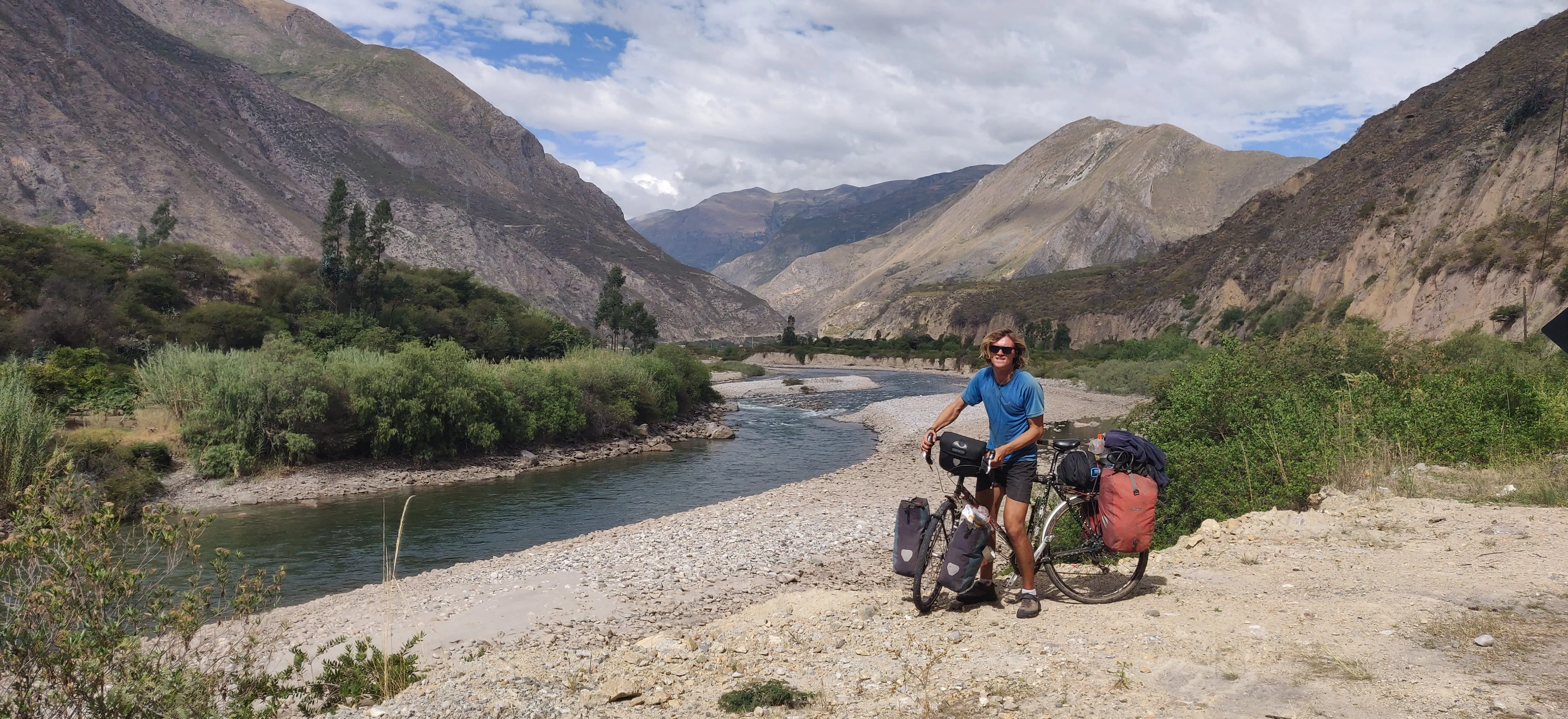
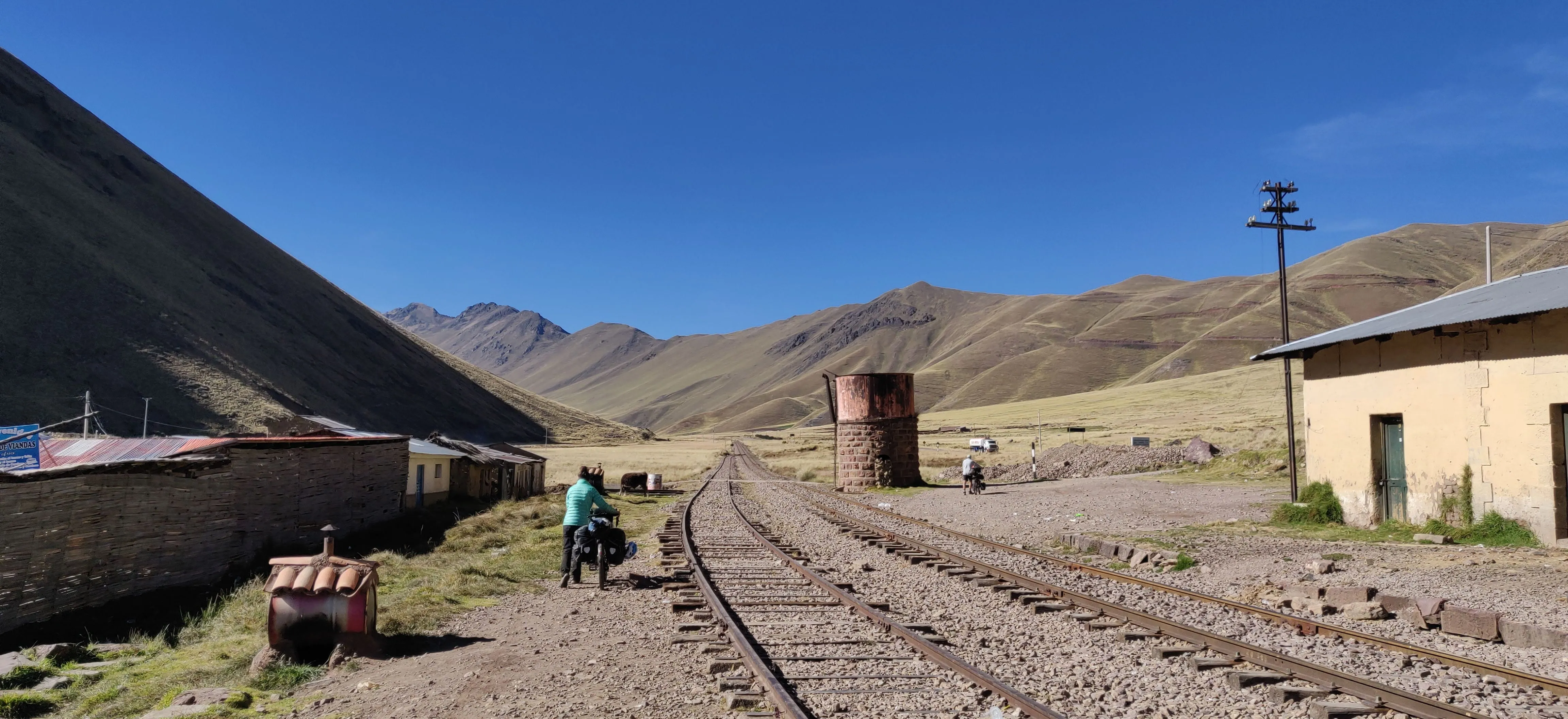
We did spend time in Lima too, meeting relatives for a cycling break. It is not a nice city to cycle into. Once you are in it, however, it is considerably more celiac-friendly than anywhere else in the country, with a good number of dedicated GF establishments if you know where to look.
One anecdote that sums up rural Peru fairly neatly: we sat down for lunch at a small restaurant, identified what we thought was a safe option on the chalkboard outside, and ordered it. The soup arrived first. It had pasta in it. We left it. The owner came over to ask what was wrong. We explained, as best we could, that we couldn’t eat the pasta. She seemed personally offended. We paid, thanked her, and left, slightly hungry. This happened more than once.
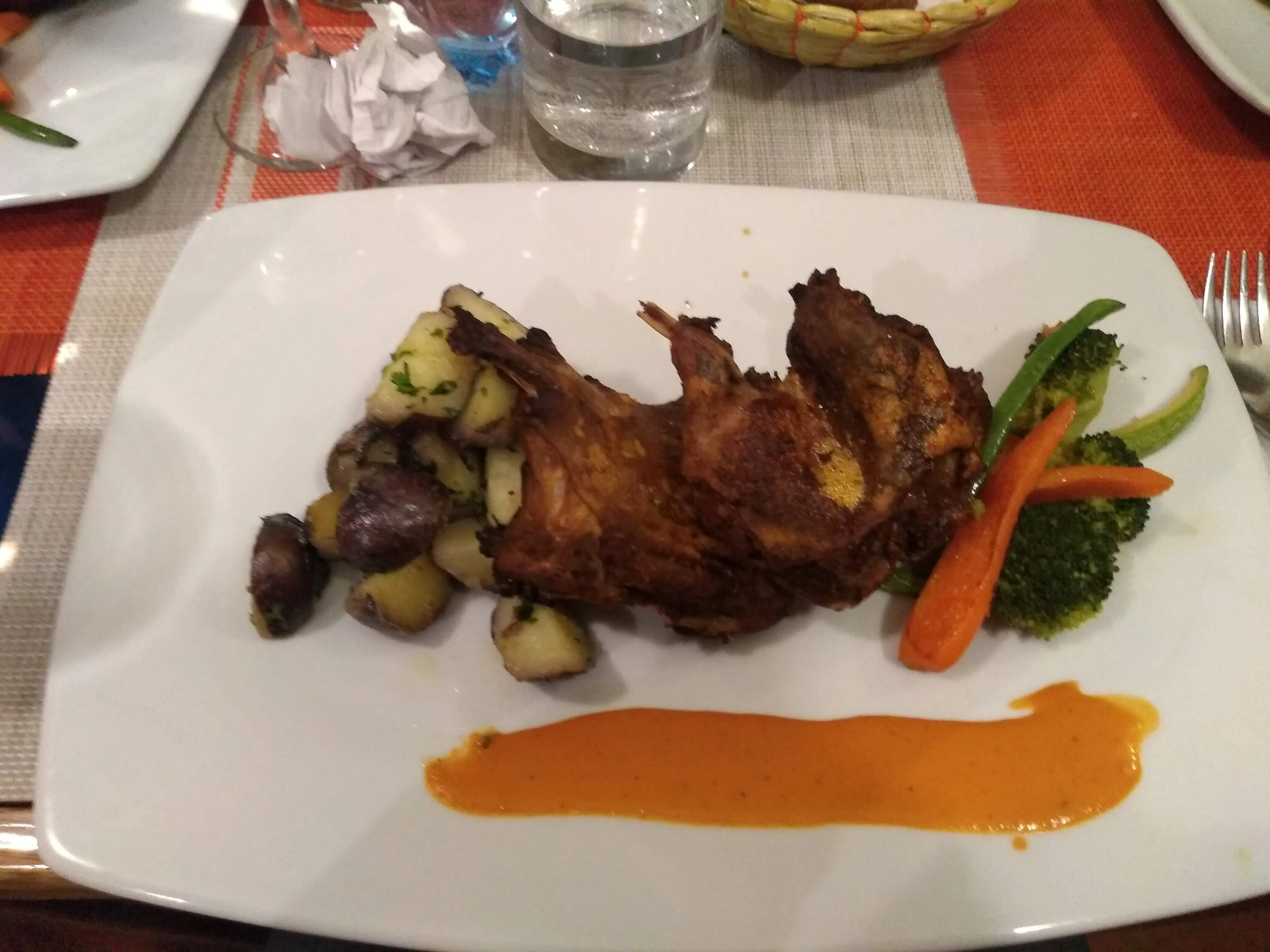
Not all the food memories are grim, though. We ate cuy at some point during the trip, which is roasted guinea pig and a traditional Andean dish that has been around since before the Incas. It tastes like duck. It is naturally GF when roasted, which is the traditional preparation, and well worth trying if you get the chance. The meat is dark, slightly gamey, and comes to the table looking exactly like what it is, which is either charming or alarming depending on your constitution.
Gluten Awareness
Celiac disease is not widely understood in rural Peru. The word “celiaco” will be recognised by some, particularly in cities, but in smaller towns and villages you may need to frame it as a serious allergy rather than a dietary preference. One well-worn piece of advice from other celiacs in Peru is to tell restaurant staff it could be fatal, which is an exaggeration, but one that apparently helps focus minds.
A note on well-meaning staff
A recurring issue in Peru is that restaurant staff who want to be helpful may tell you a dish is gluten free when they are not entirely sure. This is not dishonesty, it is hospitality. The problem is that it gives you a false sense of security. If in doubt, stick to dishes where the preparation is visible or the ingredients are obvious.
Peru passed Law N. 31881 in September 2023, which requires food manufacturers to label GF products and use a standardised “barred ear of corn in a circle” symbol. This is a meaningful step forward, but the law only came into force after my visit, and enforcement and product rollout will take time. When I was there in 2019, GF labelling in supermarkets was essentially zero outside the largest stores in Lima.
Eating Out
Menu Del Dia
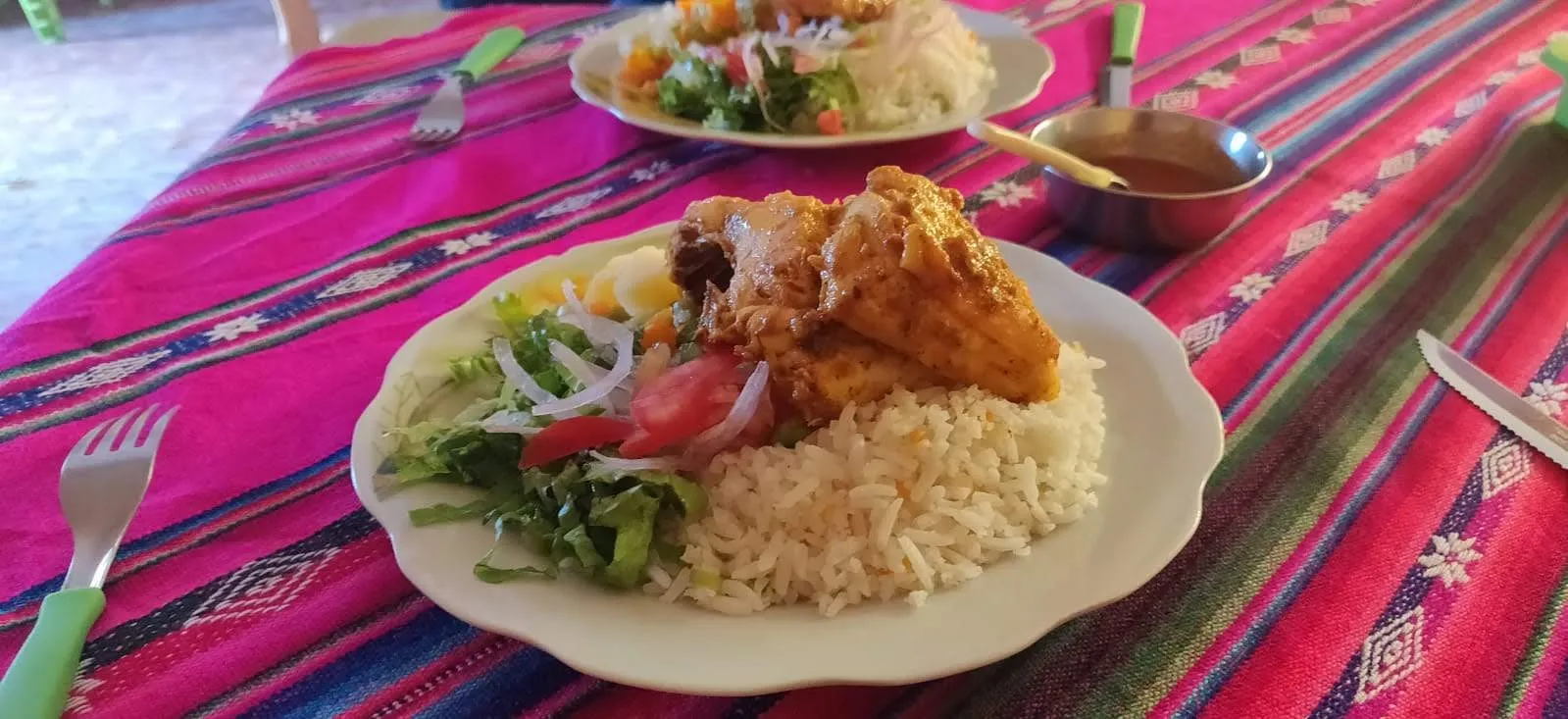
Lunch (almuerzo) is the main meal of the day, and the most common format in local restaurants is the menú del día: a fixed-price set lunch that typically includes a soup starter, a main course and a drink. It is cheap (less than £2), filling and the primary way most locals eat at midday.
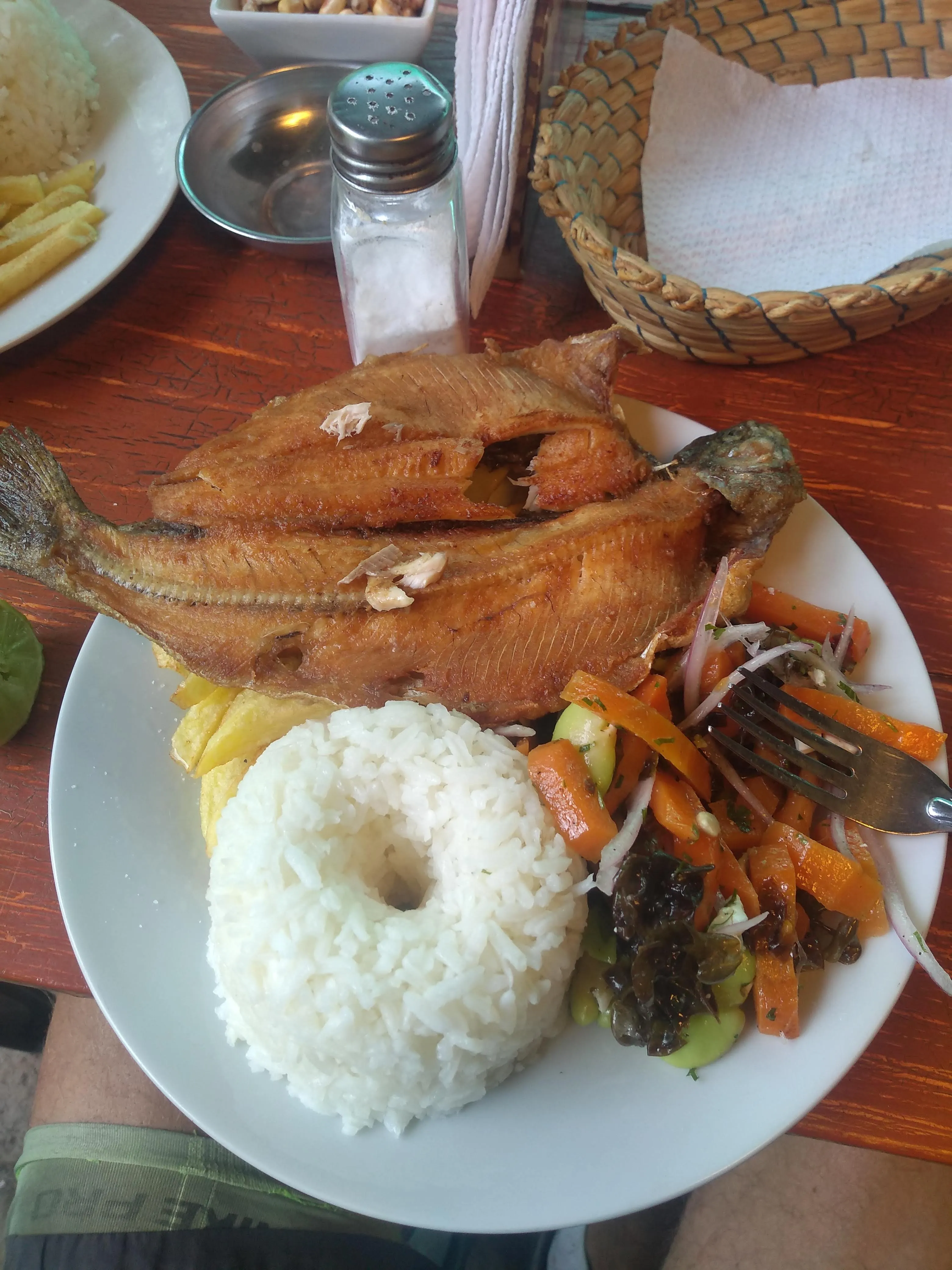
For a celiac, the menú del día is a daily lottery. The soup frequently contains pasta, or at least risks cross-contamination from pasta cooked in the same pot. The main could be a grilled trout with rice and potatoes, which is perfect. Or it could be a breaded chicken escalope sitting atop a bed of spaghetti. You genuinely do not know until you ask, and as noted above, asking does not always yield reliable information. There is sometimes a chalk board outside listing the days offerings, which is handy.
We left a lot of soup untouched. Waiters noticed and explanations did not always land well. It seems too much of a coincidence for both of us to suffer from this strange disease they’ve never heard of before. A Peruvian lunch restaurant takes a certain pride in its soup, and leaving it without an explanation that makes sense culturally is not ideal. We found that producing a written card explaining the allergy helped, though reactions still varied.
If you want the soup, ask specifically: “¿La sopa tiene fideos o pasta?” (Does the soup have noodles or pasta?) and follow up with “¿Puede hacerlo sin pasta?” (Can you make it without pasta?)
Despite the risks, we found ourselves searching for a menu del dia every day. It was always hearty, warming food - perfect for long days in brittle Peruvian climate.
Safer Restaurant Types
- Pollerías (roast chicken restaurants): These are your most reliable fallback. Rotisserie chicken is almost always served with rice and chips, and the seasoning is rarely flour-based. Worth checking, but we never found wheat flour in the seasoning at any pollería.
- Cevicherías: Ceviche itself is naturally GF (raw fish, lime juice, chilli, onion, sweet potato, corn). A good cevichería is a excellent option on the coast or in Lima. Less common in the highlands.
- Markets: Not a restaurant, but market stalls selling grilled or roasted meat, potatoes and corn are common and generally safe. The preparation is often visible, which helps.
- Higher-end restaurants in Lima and Cusco: These are the most likely to understand the question and to have staff trained to answer it properly.
Challenging Restaurant Types
- Menú del día restaurants: See above. The soup is frequently a problem. The main is hit or miss. Worth attempting if you can see the options beforehand or communicate clearly.
- Chifas (Peruvian-Chinese fusion restaurants): Popular and cheap, but soy sauce is used extensively, and the noodle dishes are obviously not GF. Arroz chaufa (fried rice) may be possible if made without soy sauce, but it is a difficult conversation to have.*
- Restaurants serving ají de gallina or papa a la huancaína: Both of these classic dishes use bread or crackers as a sauce thickener. They may look innocuous but are not GF.
* Soy sauce in Peru is generally not gluten free (it is typically wheat-based). Tamari is rarely available outside Lima.
Fast Food Chains
Peru does not have a strong international fast food presence outside Lima. In Lima you will find the usual suspects. None are particularly celiac-friendly, and none were of much use to us as we were not cycling through Lima at mealtimes.
Peruvian Dishes: A Quick GF Reference
These are the dishes you are most likely to encounter on a menú del día or in a local restaurant, and a rough guide to their celiac status.
| Dish | Description | GF Status |
|---|---|---|
| Trucha (grilled) | Grilled river trout, usually served with rice and potatoes | ✅ Usually safe — check it’s not battered |
| Ceviche | Raw fish in citrus marinade with corn, sweet potato, onion | ✅ Naturally GF |
| Arroz con pollo | Rice cooked with chicken and vegetables | ✅ Usually safe |
| Sopa (soup) | Varies — often contains pasta or wheat-based noodles | ❌ Avoid unless confirmed clear |
| Lomo saltado | Beef stir fry — usually contains soy sauce (wheat-based) | ⚠️ Risky — ask for it without soy sauce |
| Ají de gallina | Creamy chicken stew thickened with bread | ❌ Contains gluten |
| Papa a la huancaína | Potatoes in yellow pepper sauce — sauce uses crackers | ❌ Usually contains gluten |
| Alpaca/llama stew | Slow-cooked meat with potatoes and Andean spices | ✅ Usually safe — check for thickening agents |
| Trucha apanada | Battered/breaded trout | ❌ Contains gluten |
| Pollo apanado | Breaded chicken | ❌ Contains gluten |
| Arroz chaufa | Peruvian fried rice — contains soy sauce | ⚠️ Risky |
| Quinoa soup | Common in highland areas, particularly around Lake Titicaca | ✅ Usually safe — check no pasta added |
| Cuy (guinea pig) | Roasted or fried — traditional Andean dish | ✅ Usually safe when roasted |
| Anticuchos | Beef heart skewers — marinated in vinegar and spices | ✅ Usually safe |
| Causa | Cold layered mashed potato dish with chicken or seafood | ✅ Usually safe |
| Rocoto relleno | Stuffed roasted pepper with meat, cheese and potatoes | ✅ Usually safe |
| Tacu tacu | Fried rice and bean patty | ✅ Usually safe |
| Tamales | Maize flour steamed parcels with meat or cheese filling | ✅ Naturally GF |
Dedicated GF Establishments
These are all Lima or Cusco-based, which reflects the reality on the ground. Rural Peru does not yet have dedicated GF restaurants.
Lima:
- Veda Restaurante (Calle Schell 630, Miraflores) — 100% GF and vegan. Causa, papa a la huancaína made GF, artisanal pizzas on a corn base. Worth a visit if you are in Miraflores.
- Twins Cafe (Jiron Colina 108, Barranco) — Dedicated GF bakery and cafe. Sandwiches, pizzas, quiche, desserts. Good for stocking up.
- PER.UK — Labels GF options clearly. Anticuchos, alpaca, ceviche. A good option if you want a proper Peruvian meal with confidence.
Cusco:
- Organika / Rucula (Calle Resbalosa 410 / Calle Ataud 266) — Two restaurants under the same ownership, with healthy options and an allergen-aware approach.
- Yaku (Calle San Juan de Dios 214) — Higher-end. Staff can advise on GF preparation; reportedly excellent lomo saltado made without soy sauce.
- Acai (multiple locations in Cusco) — Sells GF bread and healthy snacks. Useful for stocking up before heading into the hills.
Groceries
Supermarket Chains
Supermarkets in rural Peru are thin on the ground. Most of our shopping was done in local markets, which was fine for naturally GF staples but obviously limited for anything more specific.
| Chain | Where | GF Stock |
|---|---|---|
| Wong | Lima (mid-large stores) | Has a dedicated GF section in larger branches — the best option in Lima |
| Plaza Vea | Lima and major cities | Limited GF products; bigger stores marginally better |
| Tottus | Lima | Similar to Plaza Vea |
| Metro | Lima and some cities | Basic GF imports; don’t expect much |
| Local tiendas | Nationwide | No GF labelled products, but rice, maize flour, quinoa widely available |
As I mentioned for Chile: there are no GF labelled products worth seeking out in rural supermarkets. The law has changed since my visit, so this may gradually improve, but the labelling infrastructure takes time to follow legislation.
Local Shops and Markets
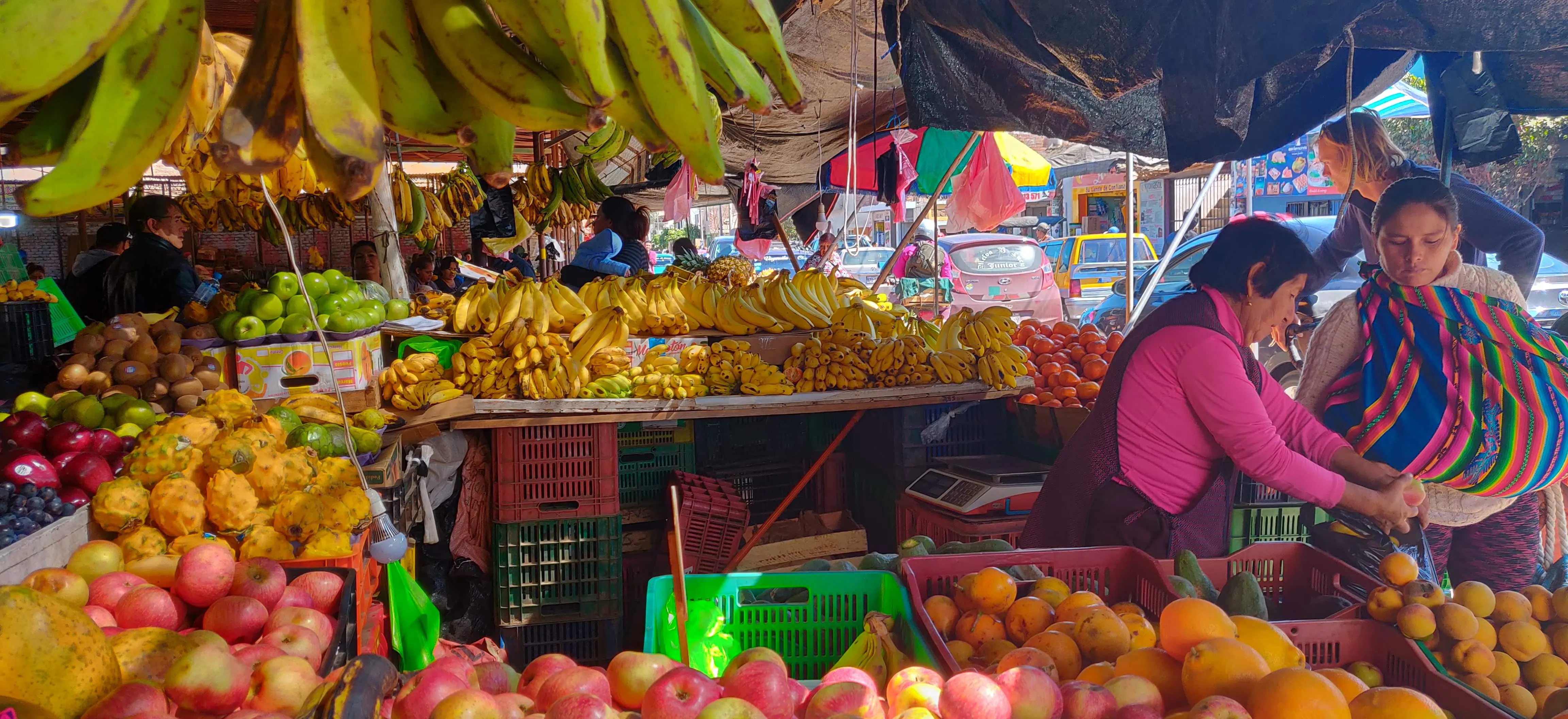
Markets are genuinely excellent in Peru, particularly in the Andes. You can find almost everything you need for naturally GF cooking:
Naturally GF staples in Peruvian markets:
- Rice (arroz) — universally available and cheap
- Maize flour (harina de maíz) — excellent for flatbreads, as we discovered
- Quinoa — common in the highlands; cheap and versatile
- Potatoes (papas) — Peru has thousands of varieties; you will not get bored
- Yuca (cassava)
- Dried beans and lentils
- Eggs
Naturally GF snacks we relied on:
- Nuts (nueces, maní) — peanuts particularly common and cheap
- Dried fruits
- Dark chocolate — available in most towns, though check ingredients
- Fresh cheese (queso fresco) — sold in markets throughout the Andes; soft, mild and perfectly edible on its own
- Fresh and dried fruits
- Cancha (toasted corn kernels) — classic Andean snack, naturally GF
- Chicha morada (purple corn drink) — non-alcoholic, naturally GF, delicious
A Note on Maize Flatbreads
We made these almost every morning throughout the trip. They require nothing beyond maize flour, egg, and a bit of water. If you are cycle touring or otherwise self-catering in rural Peru, this combination will serve you extremely well. Maize flour is reliably available in any market and is naturally GF. We also ate this for other meals, along side fresh guacamole made from the abundant avocados.
Saying that, we had a few amusing incidents when market vendors asked us what animal we were purchasing the maize flour for. It turns out that they have a certain grade for human consumption, and another for animals, and telling the difference was nigh on impossible for us. The animal grade maize still tasted good though, it was just a bit grainier.
Words to Remember
| English | Spanish |
|---|---|
| Celiac disease | Enfermedad celíaca |
| Gluten | Gluten |
| Wheat | Trigo |
| Barley | Cebada |
| Rye | Centeno |
| Oats | Avena |
| Flour | Harina |
| Bread | Pan |
| Pasta / noodles | Pasta / fideos |
| Soy sauce | Salsa de soja |
| Battered / breaded | Apanado/a |
| Without | Sin |
| Allergy | Alergia |
| Naturally gluten free | Naturalmente sin gluten |
| Grilled | A la plancha / asado |
| Market | Mercado |
| Maize flour | Harina de maíz |
| Phrase | Spanish |
|---|---|
| I have celiac disease | Soy celiaco/a |
| I cannot eat gluten | No puedo comer gluten |
| I cannot eat wheat, barley or rye | No puedo comer trigo, cebada ni centeno |
| Does this dish contain wheat or flour? | ¿Este plato contiene trigo o harina? |
| Does the soup have pasta or noodles? | ¿La sopa tiene pasta o fideos? |
| Can you make it without pasta? | ¿Puede hacerlo sin pasta? |
| Is the fish grilled or battered? | ¿El pescado es a la plancha o apanado? |
| It is a serious allergy | Es una alergia grave |
| Without sauce | Sin salsa |
Conclusions
- Peru’s traditional Andean diet is built on potatoes, maize, quinoa and rice, which makes naturally GF eating manageable if you stick to the basics.
- The menú del día is the main eating-out challenge. The soup almost always contains pasta. The main is hit or miss. Check the board outside before sitting down wherever possible.
- Rural markets are excellent for stocking up on naturally GF staples and snacks. Supermarkets outside Lima are not worth relying on for anything specifically GF.
- Lima and Cusco have dedicated GF restaurants and cafes that are genuinely good. Worth spending time in both cities to eat well.
- Grilled trout (trucha a la plancha) was our most reliable safe lunch option in the highlands. It appeared on a lot of menus. Just confirm it is not the battered version (trucha apanada).
- A written allergy card in Spanish is worth carrying. Verbal explanations are inconsistent. The word “celiaco” is understood by some but not all.
FAQs
It can be, but it requires attention. The traditional Andean diet is built on naturally GF ingredients like potatoes, maize, quinoa and rice, which is helpful. The main risks are hidden wheat flour in sauces (ají de gallina, papa a la huancaína), pasta added to soups, soy sauce in Chinese-influenced dishes, and breaded meat or fish. Sticking to simple grilled dishes with rice or potatoes is the safest approach in rural areas. For more detail, see our full guide above.
Yes, ceviche is naturally gluten free. It is raw fish marinated in citrus juice with chilli, onion, sweet potato and corn. It is one of the safest things to order in Peru, particularly on the coast and in Lima. If you are in the highlands, trout ceviche is common and equally safe. The one thing to confirm is that the corn served along side is cancha (toasted corn kernels) rather than anything wheat-based.
In Lima, the larger supermarket chains (particularly Wong) have a dedicated GF section. Outside Lima, GF labelled products are very hard to find. Peru passed a GF labelling law in 2023 (Law N. 31881), which should improve things over time, but enforcement and product availability will take time to catch up. The practical approach in rural Peru is to rely on naturally GF ingredients rather than packaged GF products.
Quinoa is naturally gluten free, and Peru is one of the largest producers in the world. It appears in soups, stews and salads throughout the highlands. The main risk in Peru, as elsewhere, is cross-contamination during processing, but this is a lower concern when eating freshly cooked quinoa in a restaurant or market. Quinoa soup (sopa de quinoa) is a good safe option, though as always, confirm no pasta has been added.
Sources
[1] FJS International Solutions, “Peru Approves Gluten-Free Labelling”, covering Law N. 31881 (September 2023), available here.
Tags :
Share :
Related Posts

Gluten Free Beer in Argentina
Argentina has a unique and up-and-coming gluten free (GF) beer scene. Local laws have enabled 100% GF beers to emerge in the market, and in recent years it has become more available. In this article, I’ll cover what makes the Argentinian GF beer market so unique, where you can buy it, and which beer
read more
Argentina: A Gluten Free guide
Argentina is surprisingly on it with celiac disease. There is huge awareness of the condition, even in remote parts of the country, and gluten free essentials are widely available in the larger supermarket chains. With a small amount of consideration for which restaurants you visit, it is very feasi
read more
Are Chuños Gluten Free?
Chuños are freeze-dried potatoes, making them naturally gluten free. However, some of the Bolivian and Peruvian dishes they are traditionally used in do contain gluten. They’re a must-try if you’re visiting the region — a unique food item found almost nowhere else in the world.
read more
Bolivia: A Gluten Free Guide
Bolivia is one of the more challenging countries to travel through as a celiac. When eating out, there are naturally gluten free dishes, but the level of cross-contamination is high, and wheat flour finds its way to a surprising number of items. If cooking for yourself, naturally gluten free food is
read more
A Complete Guide to Gluten Free Bolivian Restaurant Dishes
Before visiting Bolivia, we did zero research into restaurant food and regretted it deeply. The menus were indecipherable, even with a working knowledge of Spanish. It was difficult to work out what each dish contained, never mind whether it was gluten free or not.
read more
Chile: A Gluten Free Guide
Chile is not the celiac paradise that Argentina is next door, there's no restaurant allergen law, rural options are slim, and staff awareness is inconsistent at best. That said, the Chilean diet leans naturally gluten free, Santiago has a growing dedicated GF scene, and if you're willing to live on
read more
Ecuador: A Gluten Free Guide
Ecuador's traditional diet leans heavily on corn, rice, cassava, and plantains, which makes it a surprisingly good destination for celiacs willing to eat simply. Celiac awareness is low and GF labelling is rare, but the naturally gluten free options, especially through markets and the menu del día,
read more
Is Quinoa Gluten Free?
Yes, quinoa is naturally gluten free. It contains no wheat, barley, or rye, and has been a staple food in the Andes for thousands of years. The catch, and there is one, is cross-contamination. Quinoa is often grown, harvested, and processed alongside gluten-containing grains, which means unlabelled
read more
Mauritania: A Gluten Free Guide
- Mauritania
- Travel
- 22 Mar, 2026
Mauritania is not an easy destination for celiacs. Awareness of gluten and celiac disease is effectively zero, and outside Nouakchott you won't find a single dedicated GF product. That said, the country's cuisine is rice- and meat-heavy enough that eating naturally gluten free is possible — especial
read more
Morocco: A Gluten Free Guide
Morocco is a brilliant place to travel; it has a vibrant culture, interesting landscapes and lovely people. Cycling for 3 months through Morocco taught us that this fantastic country is also one of the toughest for gluten-free travellers. This guide breaks down exactly what food is available off the
read more
Cusco: A Gluten Free City Guide
Cusco is the most celiac-friendly city in Peru outside Lima, which is not a particularly high bar to clear. That said, the tourist centre has a decent cluster of restaurants that understand the question, mark GF options on their menus, and won't look at you blankly when you mention gluten. The menú
read more
A Gluten Free Guide to Poland
Poland surprised me, but then again, much of Eastern Europe has far surpassed my expectations as a celiac. In the cities and in supermarkets, you're in genuinely good hands: plentiful free-from aisles, strict EU labelling laws, a dedicated certification symbol, and a growing network of certified glu
read more
Gluten Free in Romania
Romania is a country of two speeds for celiacs: Bucharest has a genuinely improving GF scene with certified bakeries and dedicated menus, while rural areas still run almost entirely on wheat. Supermarkets in bigger towns will keep you fed either way.
read more
Senegal: A Gluten Free Guide
Senegal is a manageable country for celiacs, largely because so much of the traditional food is naturally gluten free. Thieboudienne and mafé are safe, filling, cheap, and available everywhere. Supermarkets stock no gluten free substitutes to speak of, so if you rely on GF bread or pasta, you'll nee
read more
Is Mafe Gluten Free?
Mafe is usually gluten free. It's a rich peanut stew made with meat, tomatoes, and vegetables, with no wheat in the traditional recipe. That said, some cooks thicken it with wheat flour, so it's not one you can order blindly without checking.
read more
Is Thieboudienne Gluten Free?
Thieboudienne is naturally gluten free, made from rice, fish, tomatoes, and vegetables. The one caveat is the stock cube used in its preparation, which is worth checking, but the main Senegalese brands are GF.
read more
Gluten Free in Mississippi
Mississippi is a mixed bag for celiacs. Chains and Walmart have your back, but local diners and Southern classics are a minefield of shared fryers and flour-dusted everything. Here's what I learned over two months of work trips.
read more
South India: A Gluten Free Guide
India is a beautiful, diverse country with rich food traditions. The South, in particular, is an excellent destination for gluten-free travellers thanks to its reliance on rice, lentils, coconut, vegetables, and spices. This guide focuses on South India, where we spent three weeks exploring, eating
read more
Is Dosa Gluten Free?
Dosa is naturally gluten free, made from a fermented batter of rice and lentils. Most varieties are safe for celiacs, though a handful of dishes served alongside dosa are worth watching out for.
read more
Kenya: A Gluten Free Guide
Kenya is a brilliant country to travel through as a celiac. celiac awareness is virtually zero, but the traditional diet is naturally gluten free, fresh food is abundant, and self-catering is easy and enjoyable.
read more
Is Ugali Gluten Free?
Ugali is Kenya's staple food, eaten by the vast majority of the population at least once a day. It is made from maize flour and water, which makes it naturally gluten free. Here's what a celiac needs to know about eating it safely in Kenya.
read more
Nairobi: A Gluten Free Guide
Nairobi is a great city to visit as a celiac. Celiac awareness is low, but the food scene is excellent, self-catering is easy, and the traditional Kenyan diet is naturally gluten free friendly. Here is what we learned after nearly a month in the city.
read more
Spain: A Gluten Free Guide
Ahhh Spain, lovely Spain. The weather’s (mostly) good, landscapes varied, and gluten free food is abundant. Celiac disease is well known, and there are some good government and third-party resources to help with eating out gluten free. With a bit of care, you can easily travel in Spain and successfu
read more