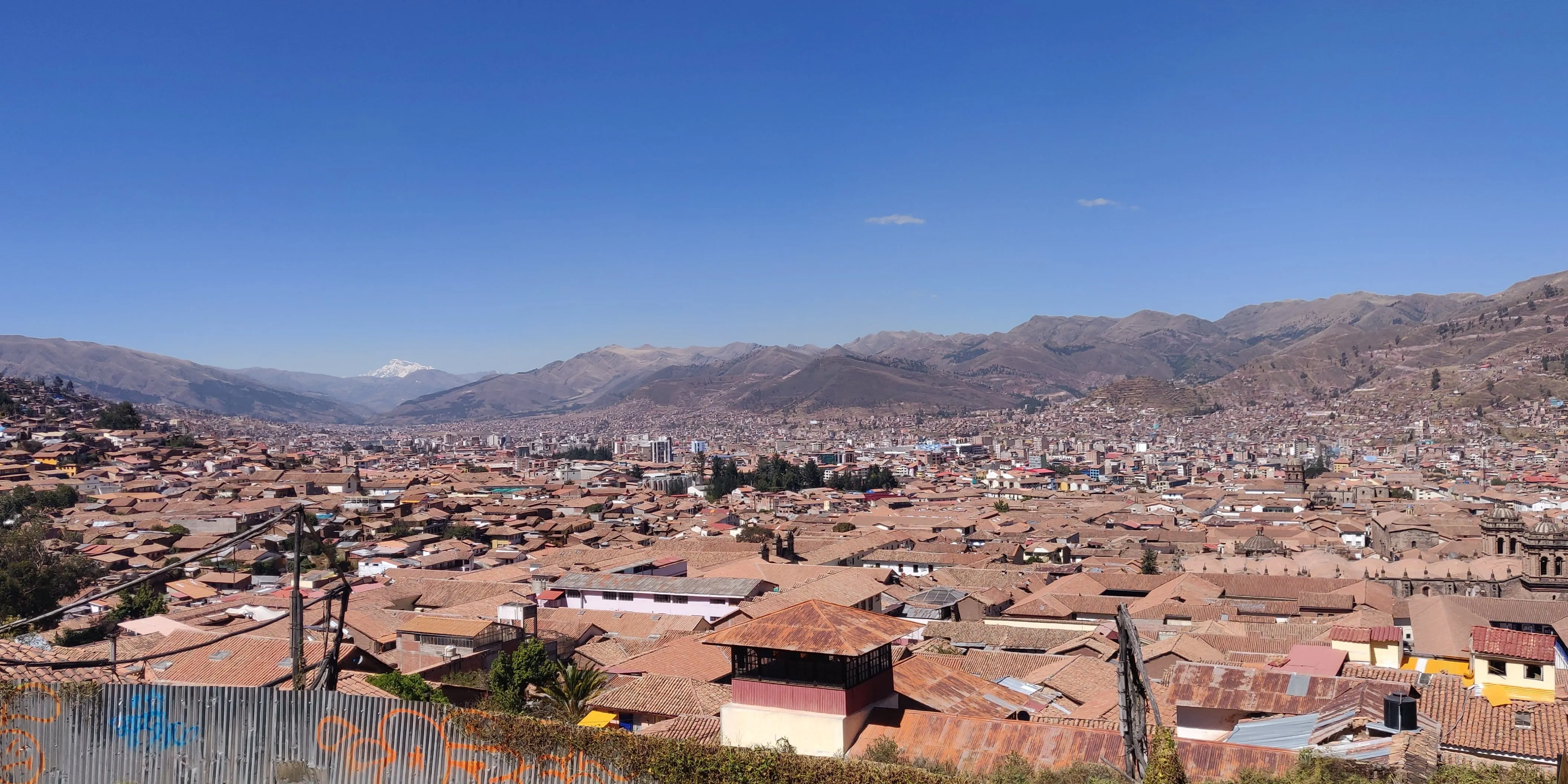
Cusco: A Gluten Free City Guide
Cusco is the most GF-friendly city in Peru outside Lima, which admittedly is not saying much. But the high volume of international tourists passing through has done celiacs a quiet favour: restaurants near the Plaza de Armas are more likely to understand dietary requirements, mark allergens on menus, and have staff who have encountered the question before. Head ten minutes out from the tourist centre and you are back in standard rural Peru, where gluten awareness drops sharply and the soup will come with pasta in it, despite you explaining to the waitor you cannot eat it.
Annie and I spent a week in Cusco across two separate stints during our three-month cycling trip in 2019, arriving from the Bolivian border in the south. Cusco is where the roads got busier and the climbs got bigger. It is also where we finally got GF pizza, which felt like a significant event after weeks of rice and potatoes.
Contents
Getting Your Bearings
Cusco sits at 3,400 metres, which is worth knowing before you arrive. The altitude affects appetite and energy for the first day or two, which at least takes the edge off any stress about finding safe food. The city divides fairly neatly into two zones for a celiac: the historic tourist centre around the Plaza de Armas and San Blas, where people know of celiac disease, and everywhere else, where people do not.
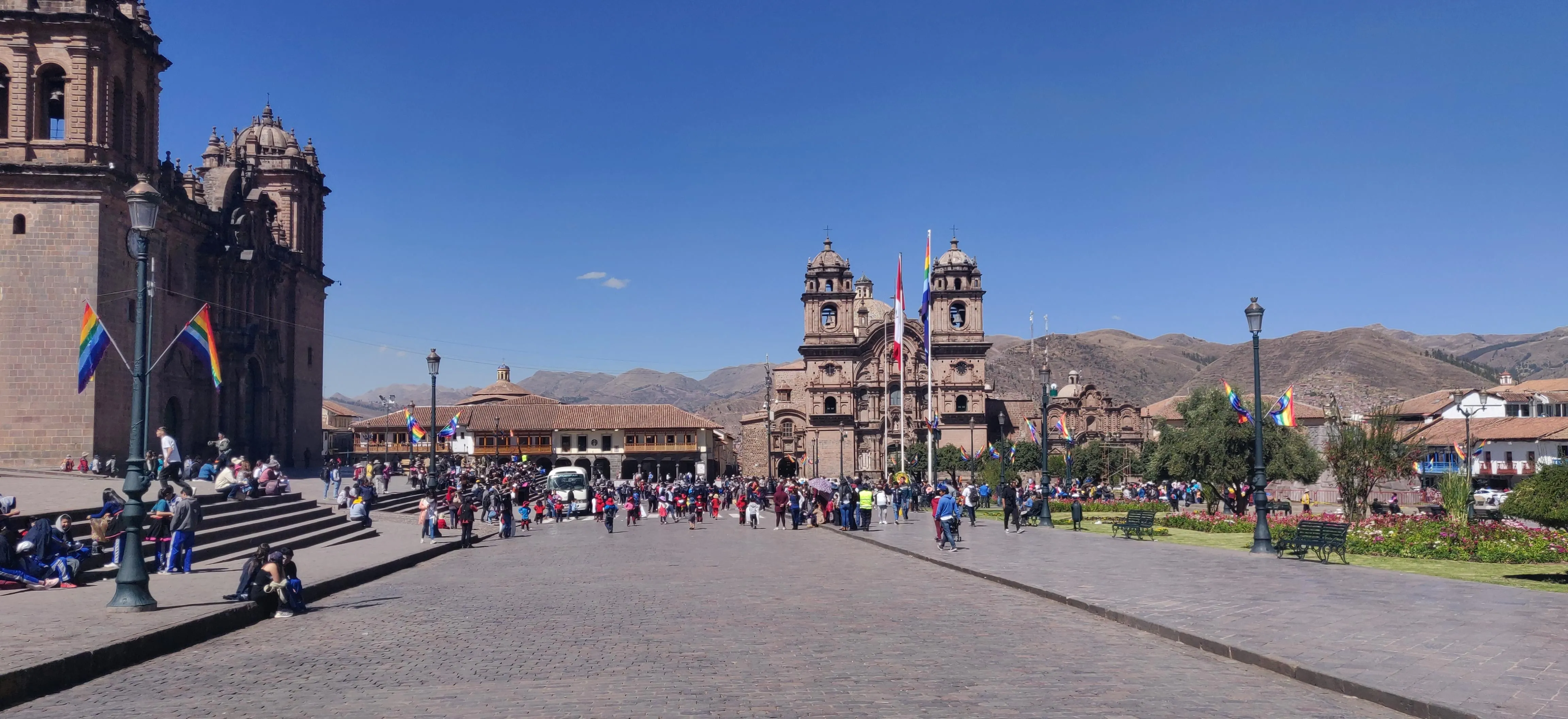
The Plaza de Armas is the heart of the tourist centre, ringed with colonial Spanish architecture that genuinely does feel like a transplanted European city square. The streets immediately around it — Plateros, Procuradores and Triunfo — are dense with restaurants at various price points, many of which have learned to cater to international visitors with dietary requirements. San Blas, the bohemian neighbourhood uphill from the plaza, has a slightly more relaxed set of options and is worth exploring.
The San Pedro Market, a short walk from the plaza, is worth visiting for fruit, fresh juice and naturally GF snacks. The cooked food stalls inside carry the same risks as any menú del día restaurant, so approach those with the usual caution.
Eating Out in Cusco
The Menú del Día
Even in Cusco, the cheapest lunch option is the menú del día, the fixed-price set lunch of soup plus a main. We ate at these places most days in Cusco because, at under £2 a head, the alternative options were considerably more expensive on a cycling budget. The same rules apply here as anywhere in Peru: the soup has a 50% chance of containing pasta, the main is hit or miss, and a chalkboard outside listing the day’s options is worth reading before you sit down. The upside in Cusco compared to rural Peru is that staff are more likely to have dealt with the question before.
GF-Friendly Restaurants
These are all research-based recommendations rather than personal ones — we were on a tight cycling budget and stuck mostly to the menú del día spots. But for anyone who wants to eat well and safely in Cusco without gambling on the soup, these are the places worth knowing about.
Greens Organic (Santa Catalina Angosta 135, 2nd floor, Plaza de Armas) One of the most consistently recommended GF options in Cusco. Overlooks the Plaza de Armas, which makes it a useful landmark. GF items are marked on the menu, the staff are familiar with celiac disease, and the food skews healthy: salads, quinoa dishes, trout ceviche, grain bowls, GF baked goods for breakfast. Reviewers note that cross-contamination is possible as it is not a fully dedicated GF kitchen, so worth flagging your celiac status when ordering. Priced above the menú del día bracket but not extortionate.
Nuna Raymi (Plateros 365, near Plaza de Armas) Described as blending Italian and Peruvian influences, with an allergen-aware approach and staff who are reportedly knowledgeable about celiac disease. GF options on the menu. The balcony has views worth the extra five minutes it takes to find a table.
Green Point (San Blas neighbourhood) A vegan restaurant with GF labels on the menu — one of the few places in Cusco where you can see GF marked clearly without having to interrogate the kitchen. More affordable than the Plaza de Armas options. Worth the short uphill walk from the plaza if you are in the area.
Organika / Rucula (Calle Resbalosa 410 / Calle Ataud 266) Two restaurants under the same ownership, with a health-conscious approach and allergen awareness. Solid option for a proper sit-down meal.
Pachapapa (Plazoleta San Blas 120) A more traditional Peruvian restaurant set around a courtyard in San Blas. Not a dedicated GF establishment but staff are reportedly well-informed about what can be prepared GF. One reviewer mentions the trout prepared with corn flour as a reliably safe and satisfying option. Worth noting: this is where you might try cuy (roasted guinea pig) in a proper Peruvian setting, with staff who can confirm the preparation method.
La Rabona (city centre) A café selling GF bread, brownies, chips and cookies. Useful for stocking up on snacks before heading out of the city, or as a breakfast stop if you are tired of hunting for a safe cooked option.
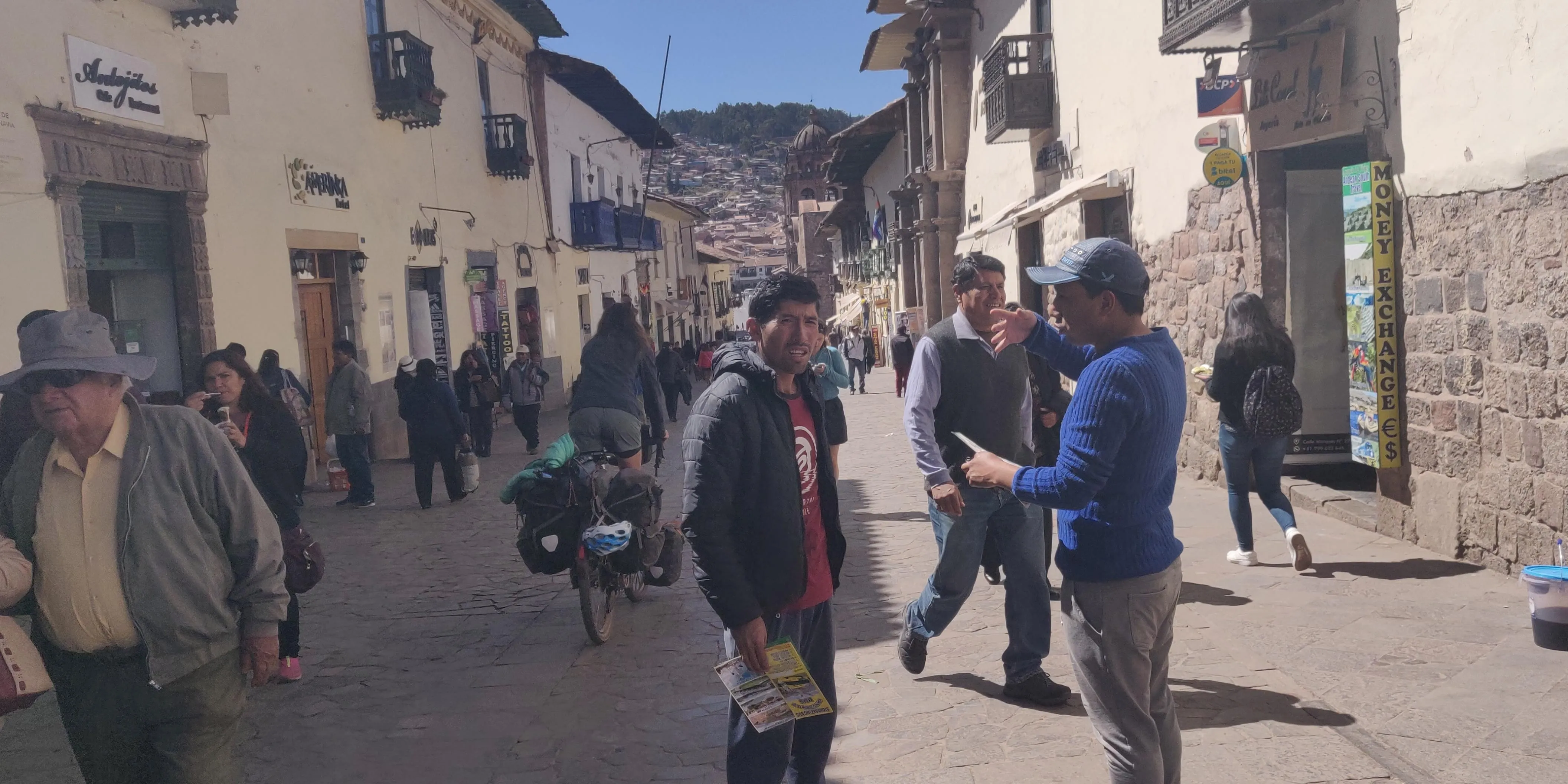
buildings. To the left, typicl peruvia city.
A Note on GF Pizza
Yep, you can get GF pizza in Cusco. Several restaurants near the plaza offer it. We found it after weeks of rural Andean diet and it was a genuinely welcome change. I cannot point you to a specific place as we stumbled upon it rather than researching it, but if you ask around in the tourist centre you will find it without much difficulty.
Chicha — A Word of Caution
Chicha morada (purple corn drink, non-alcoholic) is naturally GF and widely available. Chicha de jora, the fermented corn beer that is traditional across the Andes, sometimes contains barley. If you are offered chicha in Cusco, check which type it is before drinking.
The San Pedro Market
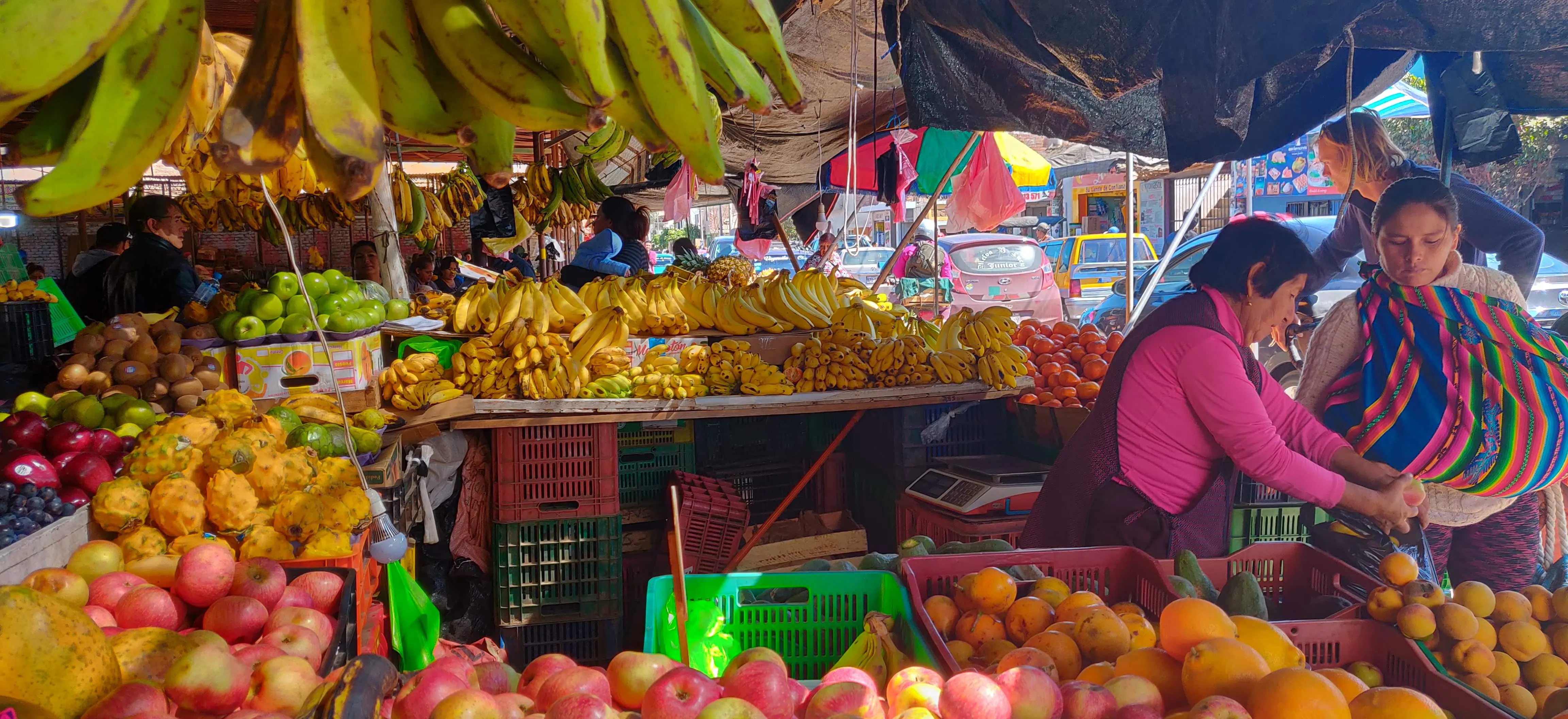
San Pedro Market is Cusco’s main local market and easy to reach on foot from the plaza. For a celiac, the most useful parts are the fruit stalls: fresh fruit, freshly squeezed juices and smoothies, all naturally GF and generally very good. The cooked food stalls inside carry the same cross-contamination risks as any menú del día restaurant. I would not rule them out entirely, but they require the same careful questioning as anywhere else.
For stocking up on naturally GF staples — quinoa, maize flour, potatoes, dried fruits and cancha (toasted corn kernels) — the market is as good as any in Peru. Just be prepared for a hefty “tourist price”.
Practical Tips for Cusco
- Carry a written allergy card in Spanish. Verbal explanations are inconsistent even in the tourist centre. A card that lists what you cannot eat (trigo, cebada, centeno, gluten, fideos, harina de trigo) removes the ambiguity.
- Read the chalkboard before sitting down for a menú del día. It tells you the day’s soup and main. If neither looks safe, keep walking.
- The tourist premium is worth paying occasionally. The marked-up restaurants near the plaza that cater to international visitors are considerably safer than the cheapest local options. For a celiac, the price difference is meaningful.
- Altitude affects appetite. You may find you want smaller meals for the first day or two. Fruit from San Pedro Market is a low-effort, low-risk option while you acclimatise.
- Ask specifically about frying oil. One reviewer notes that a restaurant’s GF-marked fries turned out to share a fryer with gluten-containing items. Worth asking: “¿Las papas fritas se fríen en el mismo aceite que otros alimentos con gluten?” (Are the chips fried in the same oil as other gluten-containing foods?)
Conclusions
- Cusco is the most practical city in Peru for a celiac outside Lima. The Plaza de Armas tourist area has a decent cluster of restaurants with GF menus and aware staff.
- Greens Organic is the most consistently recommended option for a reliably safe sit-down meal. Go for breakfast or lunch, flag your celiac status regardless of what the menu says.
- The menú del día is still the main daily challenge. The soup is frequently a problem. The main is hit or miss. A chalkboard outside is worth reading before you commit to a table.
- San Pedro Market is excellent for fruit, fresh juice and naturally GF snacks. Approach the cooked food stalls with the usual caution.
- GF pizza exists in Cusco. After enough weeks in the Andes, this is better news than it sounds.
For the full guide to eating gluten free across Peru, including rural areas, Lima, supermarkets and the menú del día in detail, see the main Peru country guide.
Tags :
Share :
Related Posts

Gluten Free Beer in Argentina
Argentina has a unique and up-and-coming gluten free (GF) beer scene. Local laws have enabled 100% GF beers to emerge in the market, and in recent years it has become more available. In this article, I’ll cover what makes the Argentinian GF beer market so unique, where you can buy it, and which beer
read more
Argentina: A Gluten Free guide
Argentina is surprisingly on it with celiac disease. There is huge awareness of the condition, even in remote parts of the country, and gluten free essentials are widely available in the larger supermarket chains. With a small amount of consideration for which restaurants you visit, it is very feasi
read more
Are Chuños Gluten Free?
Chuños are freeze-dried potatoes, making them naturally gluten free. However, some of the Bolivian and Peruvian dishes they are traditionally used in do contain gluten. They’re a must-try if you’re visiting the region — a unique food item found almost nowhere else in the world.
read more
Bolivia: A Gluten Free Guide
Bolivia is one of the more challenging countries to travel through as a celiac. When eating out, there are naturally gluten free dishes, but the level of cross-contamination is high, and wheat flour finds its way to a surprising number of items. If cooking for yourself, naturally gluten free food is
read more
A Complete Guide to Gluten Free Bolivian Restaurant Dishes
Before visiting Bolivia, we did zero research into restaurant food and regretted it deeply. The menus were indecipherable, even with a working knowledge of Spanish. It was difficult to work out what each dish contained, never mind whether it was gluten free or not.
read more
Chile: A Gluten Free Guide
Chile is not the celiac paradise that Argentina is next door, there's no restaurant allergen law, rural options are slim, and staff awareness is inconsistent at best. That said, the Chilean diet leans naturally gluten free, Santiago has a growing dedicated GF scene, and if you're willing to live on
read more
Ecuador: A Gluten Free Guide
Ecuador's traditional diet leans heavily on corn, rice, cassava, and plantains, which makes it a surprisingly good destination for celiacs willing to eat simply. Celiac awareness is low and GF labelling is rare, but the naturally gluten free options, especially through markets and the menu del día,
read more
Is Quinoa Gluten Free?
Yes, quinoa is naturally gluten free. It contains no wheat, barley, or rye, and has been a staple food in the Andes for thousands of years. The catch, and there is one, is cross-contamination. Quinoa is often grown, harvested, and processed alongside gluten-containing grains, which means unlabelled
read more
Mauritania: A Gluten Free Guide
- Mauritania
- Travel
- 22 Mar, 2026
Mauritania is not an easy destination for celiacs. Awareness of gluten and celiac disease is effectively zero, and outside Nouakchott you won't find a single dedicated GF product. That said, the country's cuisine is rice- and meat-heavy enough that eating naturally gluten free is possible — especial
read more
Morocco: A Gluten Free Guide
Morocco is a brilliant place to travel; it has a vibrant culture, interesting landscapes and lovely people. Cycling for 3 months through Morocco taught us that this fantastic country is also one of the toughest for gluten-free travellers. This guide breaks down exactly what food is available off the
read more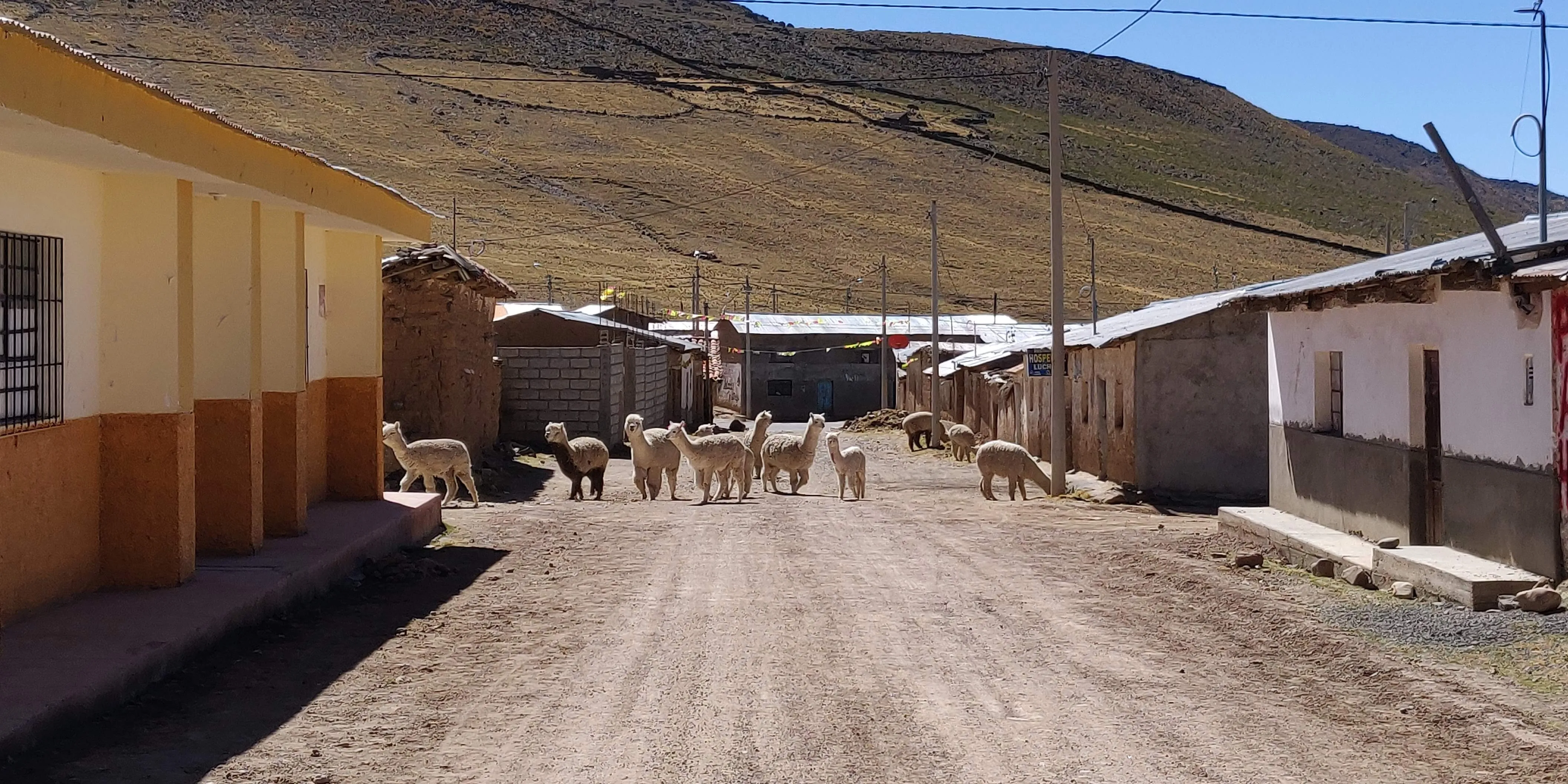
Peru: A Gluten Free Guide
Peru is not a country that has caught up with celiac disease. When I was there in 2019, GF labelling was essentially non-existent outside Lima, and restaurant staff in rural areas were more likely to be baffled by the question than helpful. That said, Peru's traditional Andean diet is built on potat
read more
A Gluten Free Guide to Poland
Poland surprised me, but then again, much of Eastern Europe has far surpassed my expectations as a celiac. In the cities and in supermarkets, you're in genuinely good hands: plentiful free-from aisles, strict EU labelling laws, a dedicated certification symbol, and a growing network of certified glu
read more
Gluten Free in Romania
Romania is a country of two speeds for celiacs: Bucharest has a genuinely improving GF scene with certified bakeries and dedicated menus, while rural areas still run almost entirely on wheat. Supermarkets in bigger towns will keep you fed either way.
read more
Senegal: A Gluten Free Guide
Senegal is a manageable country for celiacs, largely because so much of the traditional food is naturally gluten free. Thieboudienne and mafé are safe, filling, cheap, and available everywhere. Supermarkets stock no gluten free substitutes to speak of, so if you rely on GF bread or pasta, you'll nee
read more
Is Mafe Gluten Free?
Mafe is usually gluten free. It's a rich peanut stew made with meat, tomatoes, and vegetables, with no wheat in the traditional recipe. That said, some cooks thicken it with wheat flour, so it's not one you can order blindly without checking.
read more
Is Thieboudienne Gluten Free?
Thieboudienne is naturally gluten free, made from rice, fish, tomatoes, and vegetables. The one caveat is the stock cube used in its preparation, which is worth checking, but the main Senegalese brands are GF.
read more
Gluten Free in Mississippi
Mississippi is a mixed bag for celiacs. Chains and Walmart have your back, but local diners and Southern classics are a minefield of shared fryers and flour-dusted everything. Here's what I learned over two months of work trips.
read more
South India: A Gluten Free Guide
India is a beautiful, diverse country with rich food traditions. The South, in particular, is an excellent destination for gluten-free travellers thanks to its reliance on rice, lentils, coconut, vegetables, and spices. This guide focuses on South India, where we spent three weeks exploring, eating
read more
Is Dosa Gluten Free?
Dosa is naturally gluten free, made from a fermented batter of rice and lentils. Most varieties are safe for celiacs, though a handful of dishes served alongside dosa are worth watching out for.
read more
Kenya: A Gluten Free Guide
Kenya is a brilliant country to travel through as a celiac. celiac awareness is virtually zero, but the traditional diet is naturally gluten free, fresh food is abundant, and self-catering is easy and enjoyable.
read more
Is Ugali Gluten Free?
Ugali is Kenya's staple food, eaten by the vast majority of the population at least once a day. It is made from maize flour and water, which makes it naturally gluten free. Here's what a celiac needs to know about eating it safely in Kenya.
read more
Nairobi: A Gluten Free Guide
Nairobi is a great city to visit as a celiac. Celiac awareness is low, but the food scene is excellent, self-catering is easy, and the traditional Kenyan diet is naturally gluten free friendly. Here is what we learned after nearly a month in the city.
read more
Marrakesh: A Gluten Free Guide
The gluten free food scene in Marrakesh came as a nice surprise during my travels through Morocco: a country with little awareness of celiac disease. It was the first place I visited in which restaurants actively cater to celiacs. There are even bakeries in which you can find gluten free bread.
read more