Kenya: A Gluten Free Guide
We spent three months in Kenya, largely recovering from cycling injuries. A month was in Rongo, where we worked on a small family owned farm, and another month in the outskirts of Nairobi, working at an Epilepsy charity. We mostly ate at local homes of our hosts, and occasionally made it into Nairobi for a proper meal out.
Kenya turned out to be one of the easier countries we have visited as celiacs. The traditional Kenyan diet is built around naturally gluten free staples. Fresh produce is abundant and cheap. Markets are fun. You will not find dedicated gluten free products outside of Nairobi, but you will find plenty to eat. The main thing to get your head around is that celiac disease is essentially unknown here, so you will be doing your own legwork rather than relying on anyone else’s knowledge. With a bit of preparation, it’s very manageable.
Key points for celiacs:
- Celiac disease is not understood in Kenya. Explaining what you can and cannot eat is more effective than explaining gluten free.
- The traditional Kenyan diet is largely naturally gluten free. Ugali, nyama choma, sukuma wiki, rice, beans, and lentils are all staples and all safe in principle.
- Chapati and mandazi are the main wheat items you will regularly encounter. Both are easy to avoid once you know to look for them.
- Royco, the ubiquitous Kenyan spice mix used in wet fry and dry fry dishes, carries a “may contain wheat gluten” warning. Worth knowing before ordering anything cooked with it.
- Fresh produce is cheap and plentiful at local markets. Self-catering is easy and enjoyable.
- Pre-packaged pulses and grains often carry no cross-contamination warnings. We noticed reactions after some. Buy fresh where you can.
- Wimbi (finger millet) flour is widely available and naturally gluten free. A great ingredient to experiment with.
- Nairobi has the best options for eating out, with a handful of restaurants in the expat areas that mark gluten free options on their menus.
Contents
- Personal Experience
- Gluten Free Awareness
- Eating Out
- Groceries
- Words to Remember
- Accommodation
- Go-To GF Meals in Kenya
- Conclusions
- FAQs
Personal Experience
The Mandazis
We had been out in the farm for three hours working in the heat, and by the time we stumbled back into the house we were absolutely ravenous. Before we even got through the door, something stopped us both in our tracks. Something sweet and fried was cooking.
We looked at each other and immediately reached the same conclusion: whatever it was, it could not possibly be for us. It smelt far too good.
When we came through and saw them, little brown lumps sitting on the side, still warm. I couldn’t quite believe it. Our host had made us mandazis using ugali flour. She had listened carefully to what we had explained about our diet, and worked out how to make us some tasty treats. They were delicious. Sweet, doughy little fried doughnuts, completely gluten free.
We encountered that kind of thoughtful hospitality more than once during our time volunteering. Nobody knew what celiac disease was, but when we took the time to explain what we could and could not eat, people went out of their way to accommodate us.
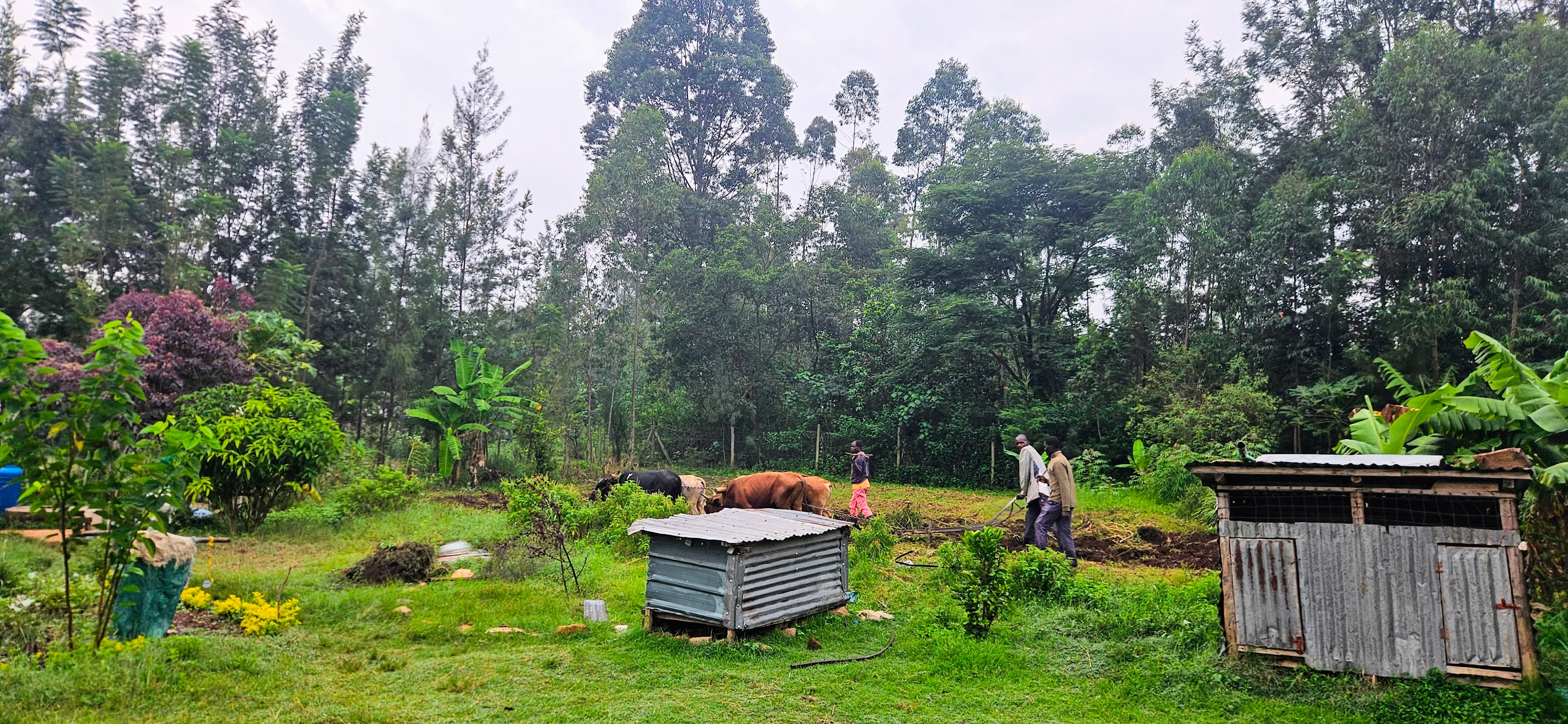
The farm we were working on in Rongo, where the mandazi moment happened
Gluten Free Awareness
Celiac disease is virtually unheard of in Kenya. Research on celiac disease in Sub-Saharan Africa is extremely limited, and the condition is considered significantly underdiagnosed across the continent, with low clinical awareness, limited diagnostic resources, and a lack of general public understanding all contributing [1, 2, 3]. In practical terms, even in Nairobi’s more international restaurants, you cannot assume staff have any understanding of what celiac disease is or what cross-contamination means.
We found it far more effective to skip the phrase “gluten free” entirely and instead explain what we could and could not eat. Most people understood “I cannot eat wheat flour, chapati, or mandazi” much more readily.
The Kenyan Staple Diet
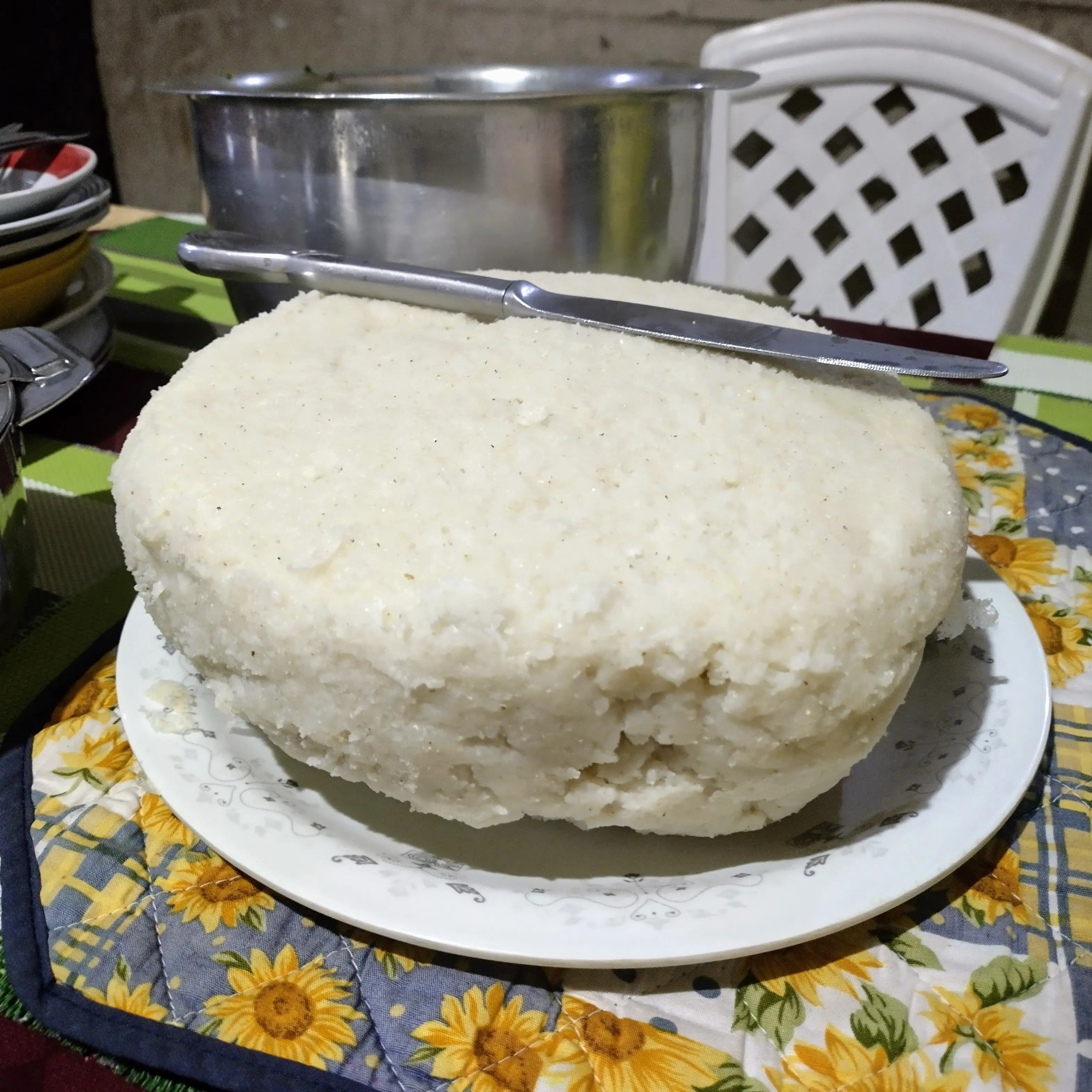
Kenya’s food culture revolves around a core set of naturally gluten free ingredients. Ugali is the national staple, a dense, stiff maize porridge that is delicious and filling. It’s mostly eaten with a good stew or greens. It’s naturally gluten free and on the table at almost every meal. Ugali flour (maize flour) is also a good baking substitute in a pinch: we made banana bread and carrot cake with it in Rongo, and both worked very well.
Alongside ugali, you will typically find sukuma wiki (sautéed collard greens), cabbage, beans, lentils, or a saucy dish. Rice is common too, particularly in towns. Kachumbari, a fresh salad of tomatoes, onions, and coriander is served alongside many dishes and is naturally gluten free [4].
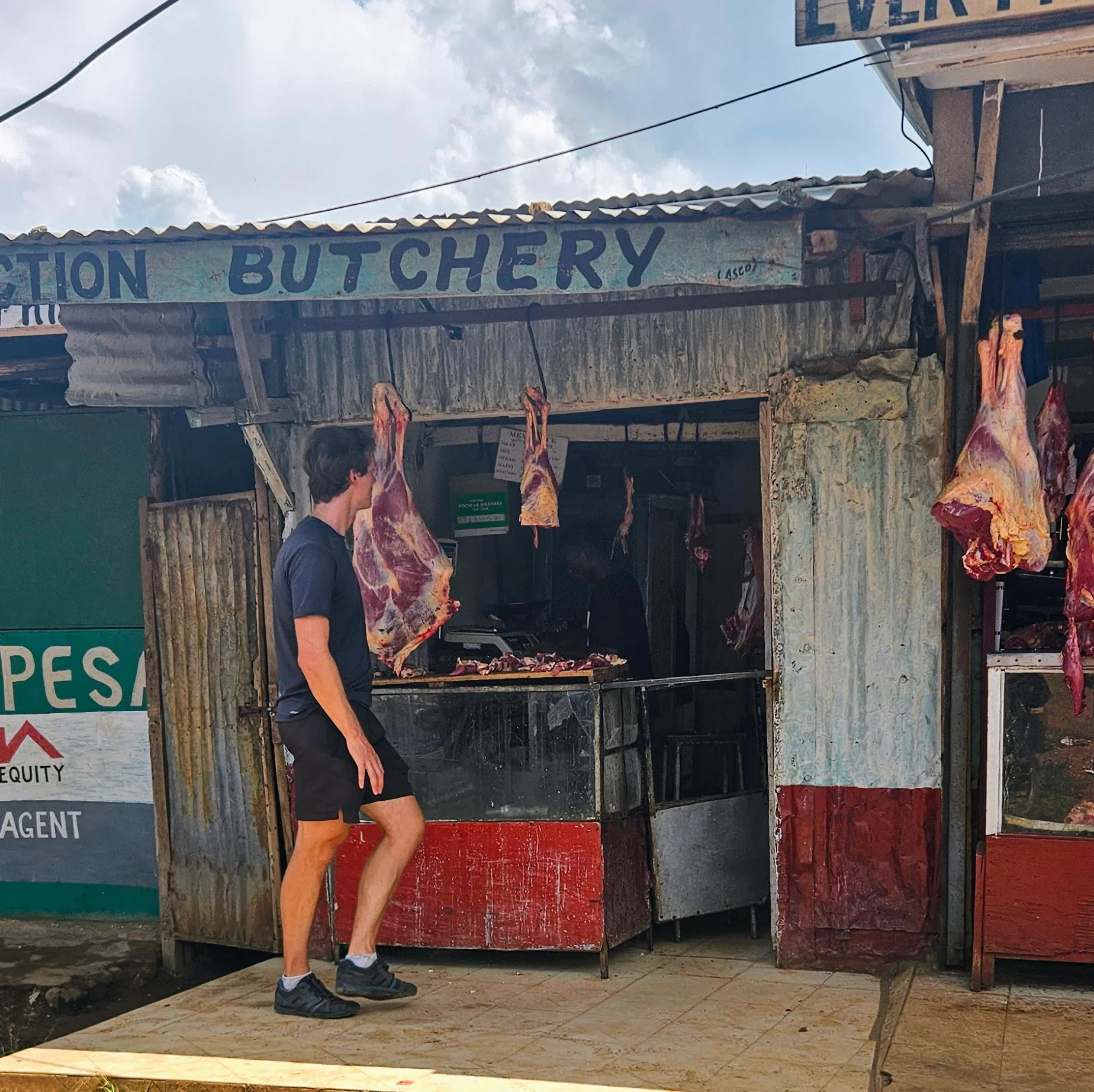
Meat is treated as a special occasion rather than an everyday staple, especially outside cities. In rural areas it mostly means goat or beef from a butchery. Kenyan meat is tougher than you might be used to, so it takes longer to cook through properly. Chicken was much harder to find in rural areas. In Rongo, if you wanted it, you were looking at buying a live one and slaughtering it yourself. We ate mostly vegetarian, which turned out to be easy and filling.
The two wheat items you will encounter regularly are chapati, a flatbread served alongside most meals, and mandazi, a sweet fried dough snack. Although these are easy to avoid.
Wet Fry, Dry Fry, and Royco
Two cooking methods you will come across everywhere in Kenya are wet fry (meat or vegetables cooked down in a tomato and onion sauce) and dry fry (cooked until almost no liquid remains, giving a richer, more concentrated result). These dishes are delicious but are often made using Royco, Kenya’s go-to spice mix.
Something to be aware of is that Royco Mchuzi Mix carries a “may contain wheat gluten” warning [5]. If you are eating out or being hosted and a wet fry or dry fry is on the table, it is worth asking whether Royco has been used. We cooked without it and used individual spices instead.
A Typical Day
Breakfast in Kenya is typically chai (a sweet milky tea) served with bread, mandazi, or chapati [6]. None of those work for us, so we made our own. Wimbi porridge and banana and millet pancakes were our regulars, both naturally gluten free and filling. Uji, a thin fermented porridge made from millet, sorghum, or maize flour, is also a traditional breakfast option and naturally GF. Sweet potatoes and arrowroot are other common choices.
Lunch and dinner follow a similar pattern: ugali or rice with side dishes, typically greens, cabbage, beans, lentils, or a meat dish. Chapati is served alongside a lot of meals but is always easy to avoid. Githeri (maize and beans cooked together) was one of our favourite things to eat. It’s filling, tasty, and naturally gluten free.
Eating Out
Outside Nairobi, eating out is limited and we did not attempt it during our time in Rongo. Celiac awareness is essentially zero, shared cooking surfaces are the norm, and Royco is in a lot of dishes. Self-catering was always the safer and more enjoyable option outside the city.
Naturally Gluten Free Dishes
Most of Kenya’s traditional dishes are naturally gluten free.
- Ugali, dense maize porridge, the national staple. Naturally gluten free. Eaten with almost everything.
- Nyama choma, grilled goat or beef, usually served with ugali. Naturally GF in principle, though always worth checking on marinades and spice blends.
- Sukuma wiki, sautéed collard greens with onion and tomato. A daily staple and naturally safe.
- Githeri, maize and beans cooked together. Naturally gluten free and one of our favourites.
- Irio, mashed peas, potato, and maize. Naturally gluten free.
- Wimbi porridge, finger millet porridge, eaten for breakfast. Naturally gluten free and widely available.
- Kachumbari, fresh tomato, onion, and coriander salad, served as a side with many dishes. Naturally gluten free.
- Beans and lentils, served daily, usually in a tomato-based sauce. Naturally GF, though see the note on packaged versions below.
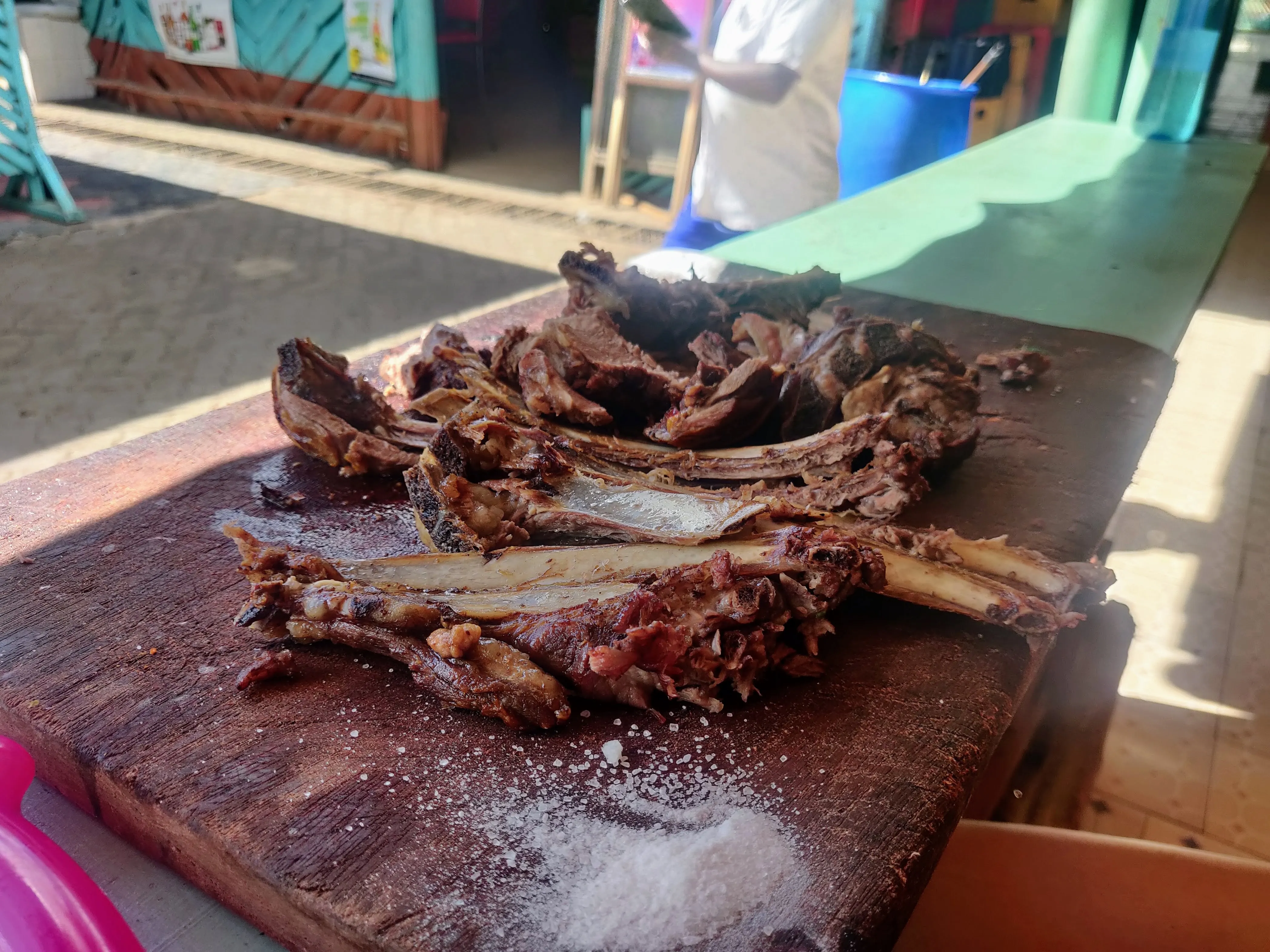
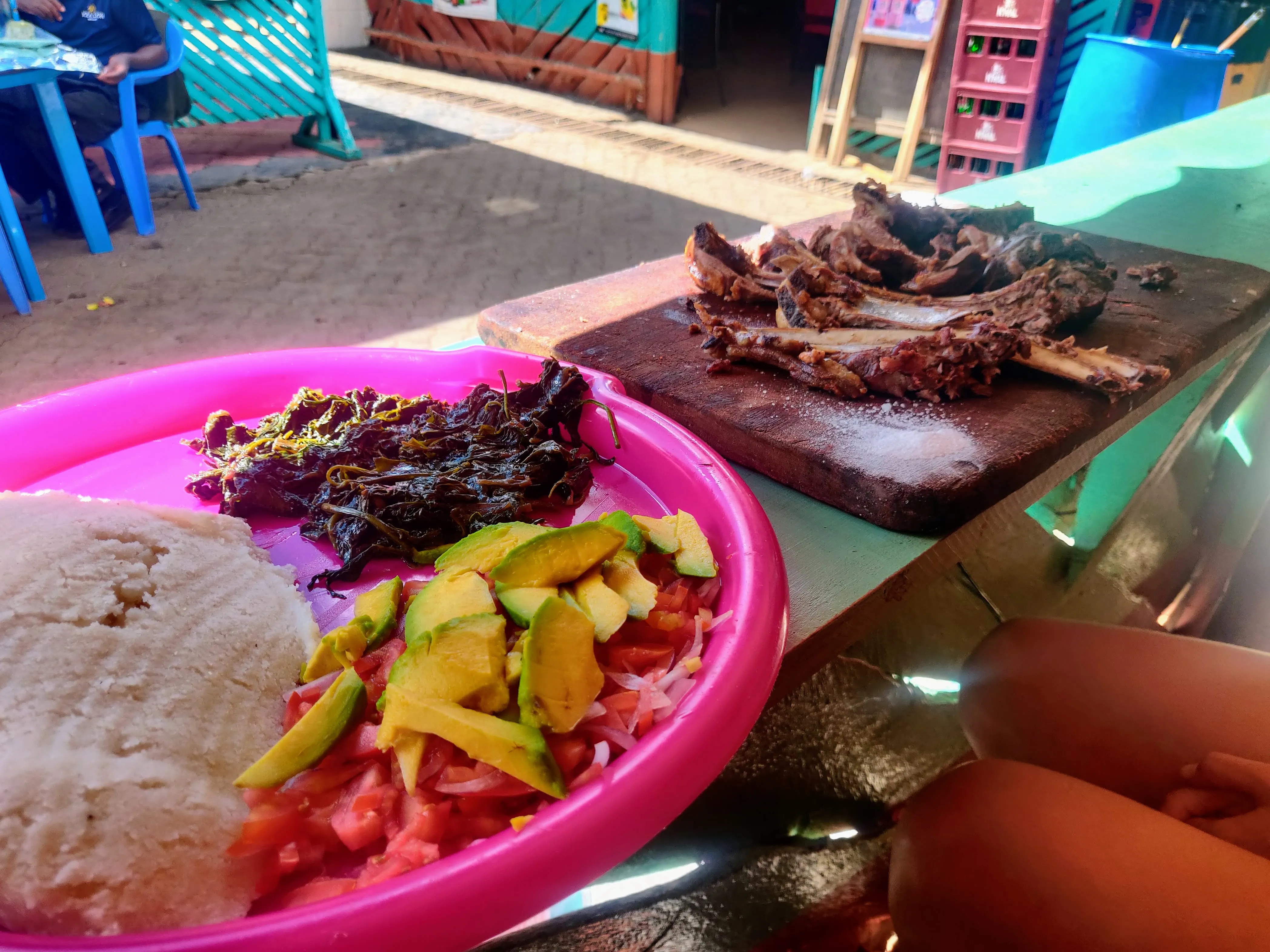
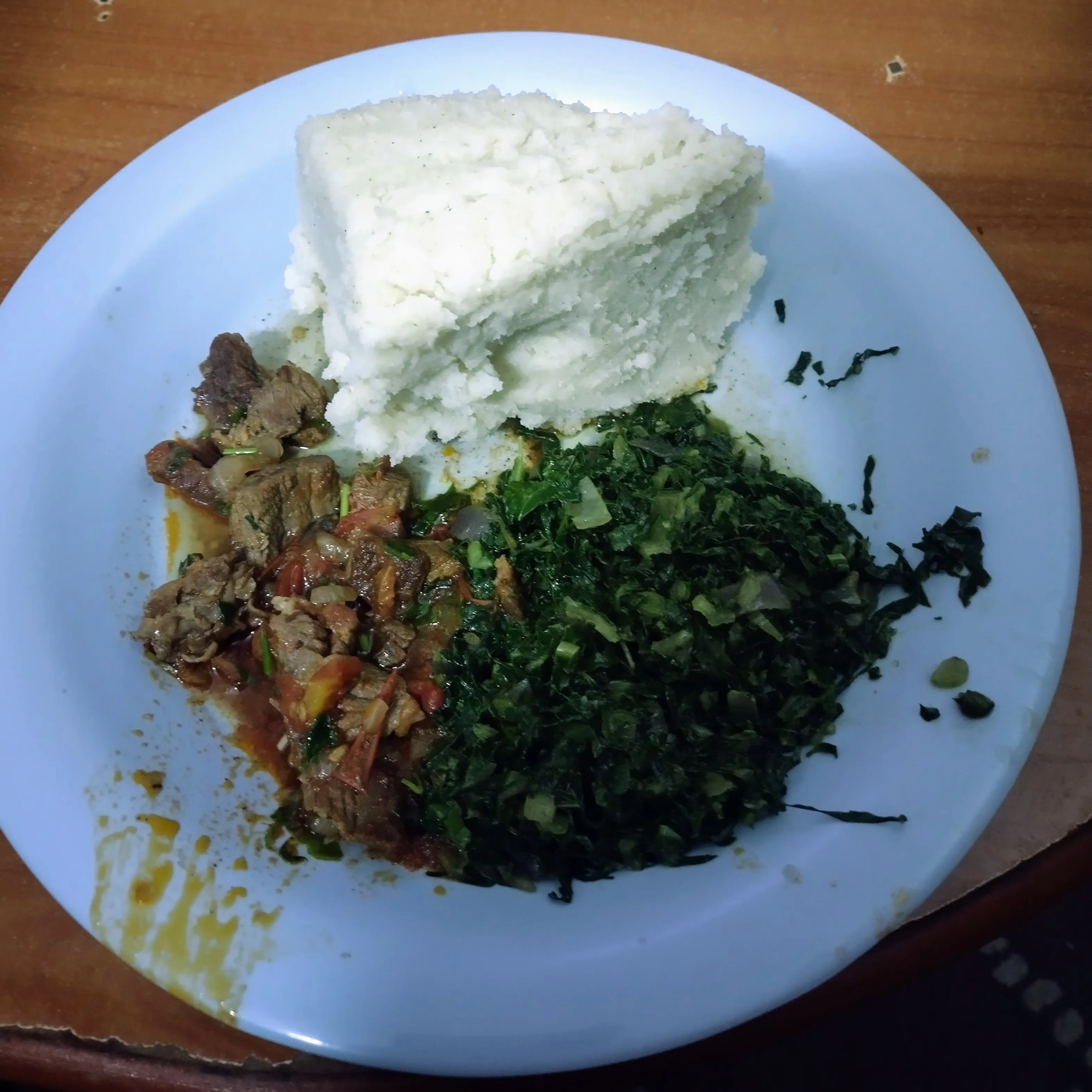
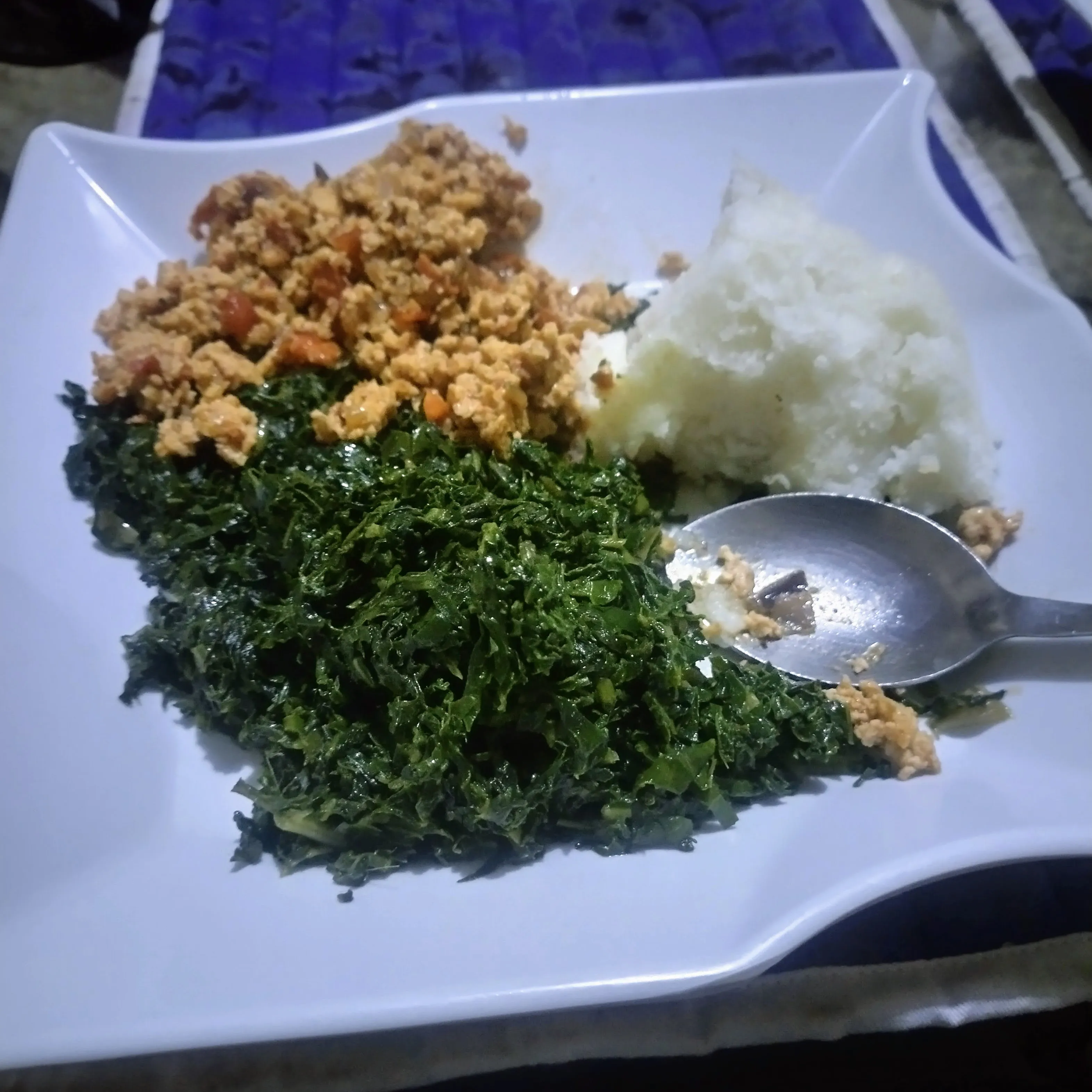
The full spread, nyama choma, ugali, sukuma wiki, and avocado kachumbari
Why Restaurant Meals Carry Risk
- No celiac awareness. Staff will not know what gluten is or understand cross-contamination.
- Chapati is everywhere. It is served alongside most dishes and cooked on shared surfaces. Always confirm it will not be included with your meal.
- Royco is widely used in wet fry and dry fry dishes and carries a “may contain wheat gluten” warning. Ask before ordering anything cooked with it.
- Shared cooking oil and surfaces are standard. Even a naturally GF dish carries risk if prepared alongside wheat items.
- No menu labelling outside of a handful of Nairobi restaurants.
Eating Out in Nairobi
Nairobi is a different story. The expat and diplomatic areas, particularly Westlands and Kilimani, have restaurants that mark gluten free options on their menus. We ate well there, including at a dedicated gluten free bakery and several good restaurants. For the full rundown, see our Nairobi gluten free city guide.
Groceries
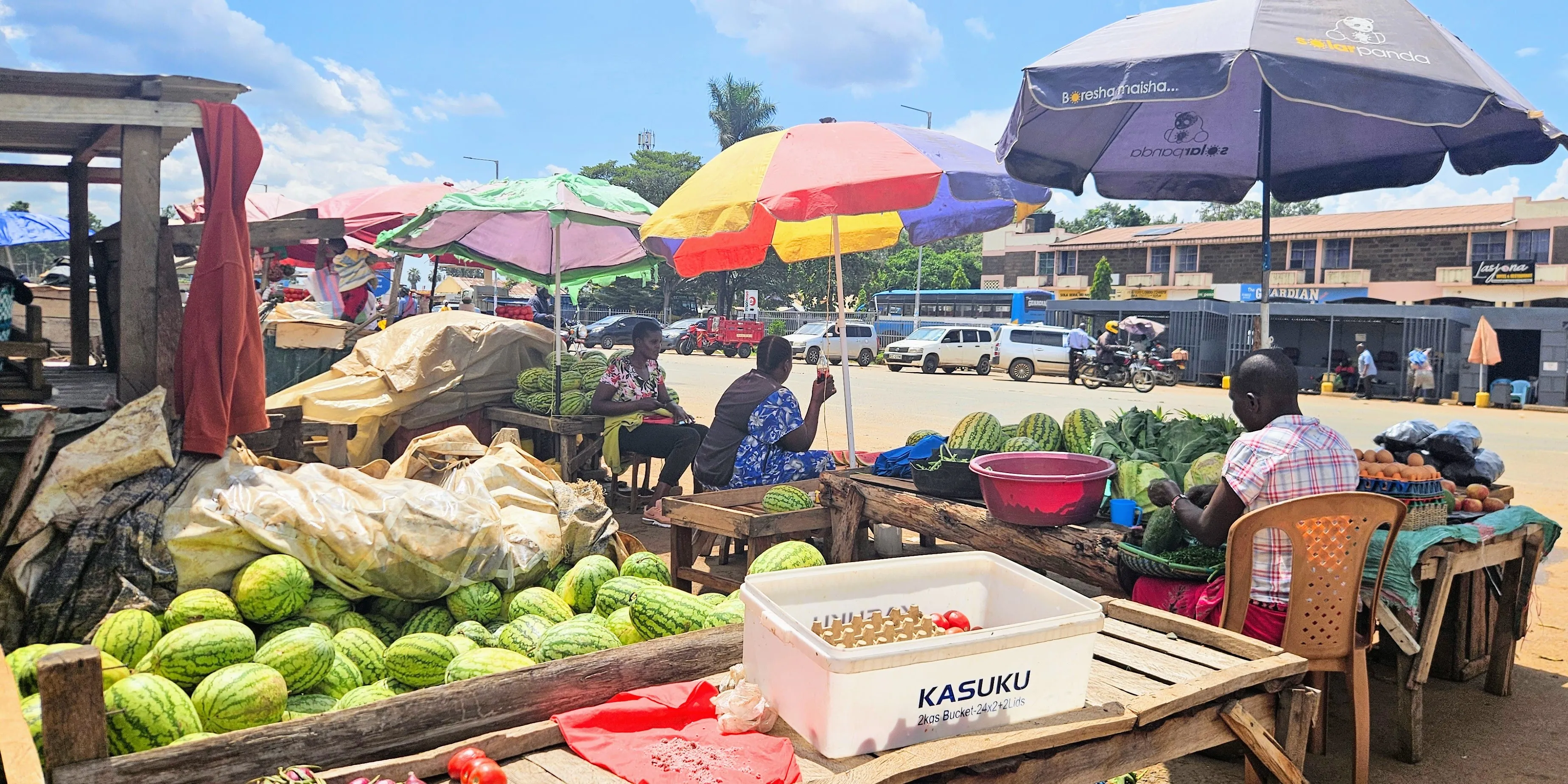
Self-catering in Kenya is easy and enjoyable. Markets are lively, supermarkets cover your packaged staples, and the variety of fresh produce is excellent.
Shopping at Markets
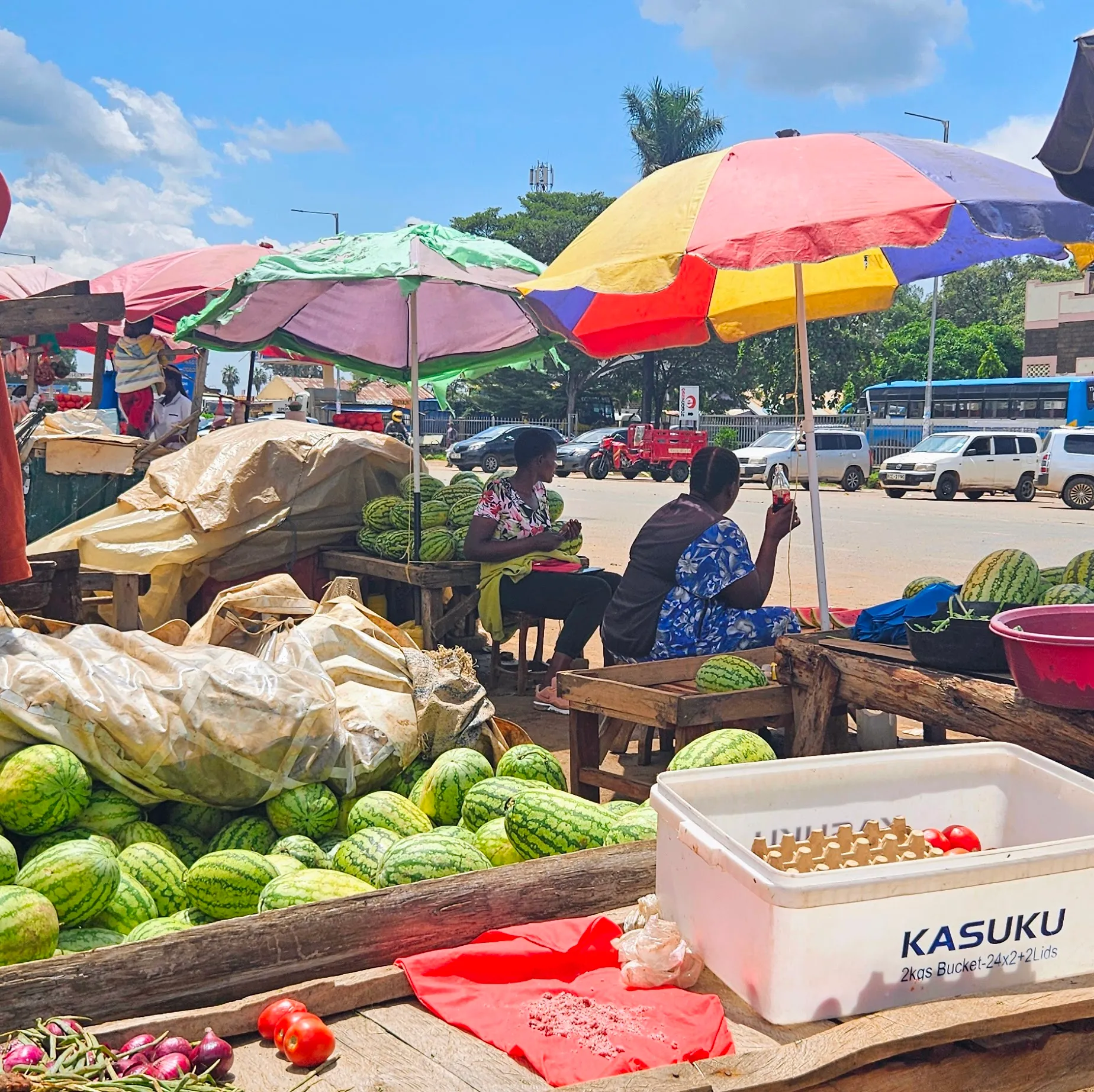
Local markets are the best place to buy fresh fruit, vegetables, and pulses, and they are genuinely fun to shop in. One tip we were given by the family we stayed with in Rongo: ask for items by price rather than quantity. Saying “give me 20 Bob of tomatoes” will get you much further than asking for a specific number.
Fresh pulses and beans from a market are also preferable to the packaged supermarket versions. We noticed reactions after eating some packaged lentils and beans that carried no cross-contamination labelling. Fresh from a market carries less risk.
Supermarkets
Naivas and Quickmart are both widespread across Kenya and useful for everyday staples. Neither stocks dedicated gluten free products, but both have rice, flour, pulses, coconut milk, and all the basics you need. You will also find small locally-run supermarkets in most towns, stocking essentials like rice, flour, and pulses; no fresh produce, but handy for pantry staples.
Carrefour and Greenspoon (which has a dedicated gluten free section including bread and dairy free cheese) are available in Nairobi.
Naturally GF Dry Goods
- Ugali flour (maize flour) - the most widely available flour in Kenya. Cheap and sold everywhere. Good for ugali, but also for baking.
- Wimbi flour (finger millet) - naturally gluten free and widely available. Makes excellent porridge and pancakes.
- Rice - widely available everywhere.
- Beans and lentils - huge variety, very cheap. Buy fresh from a market where possible.
- Coconut milk - readily available in supermarkets. Useful for curries, sauces, and baking.
- Sossi - a soya mince/ chunks product, widely available and very cheap. Naturally gluten free and a brilliant meat replacement. We used it regularly in curry-style dishes and it worked really well. Easy to cook with and a great source of protein if you are eating mostly vegetarian.
A Word on Cross-Contamination
Pre-packaged pulses, lentils, and grains in Kenyan supermarkets often carry no cross-contamination warnings. We experienced what we believe were gluten reactions after eating some. The same products bought fresh from a market caused no issues. If you are highly sensitive, buy your pulses and grains fresh and rinse them well before cooking.
Fruit
Kenya’s fruit is one of the great pleasures of travelling here. Mangoes, bananas, avocados, and passion fruit are all widely available and very cheap. If you visit during mango season, you are in for something special, we ate the best mangoes of our lives in Kenya. Fresh fruit also makes snacking very easy as a celiac.
Snacks
- Nuts - available from local markets.
- Sesame balls - Will found these and they were cheap and delicious. Worth looking out for in local shops and markets.
- Fresh fruit - the easiest and most enjoyable snack option everywhere in Kenya.
- Chevda - Simialr to Indian snack mixes.
Words to Remember
English is widely spoken across Kenya, so you will not face a language barrier in most situations (if you speak some English, that is). A few words of Swahili go a long way though, and Kenyans respond warmly to any attempt. Even a basic greeting sets a friendlier tone for the conversation that follows.
When it comes to food, the most practical approach is to explain what you cannot eat simply and concretely.
Get Your Allergy Card Ready
For eating out, a printed allergy card is a useful backup. Legal Nomads produces well-researched celiac travel cards in multiple languages including Swahili.
| English | Swahili |
|---|---|
| I have celiac Disease | Nina ugonjwa wa Celiac |
| I cannot eat wheat or flour | Siwezi kula ngano au unga wa ngano |
| I cannot eat chapati or mandazi | Siwezi kula chapati au mandazi |
| If I eat this, I will be very sick | Nikila hii, nitaugua sana |
| Does this contain wheat? | Je, hii ina ngano? |
Accommodation
Having access to a kitchen is the most important factor for eating safely as a celiac in Kenya. Given that celiac awareness is essentially zero outside a handful of Nairobi restaurants, self-catering is not just convenient — it is your main line of defence.
| Accommodation Type | GF Risk | Notes |
|---|---|---|
| Apartment (Airbnb/Booking.com) | Low | Best option. Well-equipped kitchens, excellent availability in Nairobi. Many have pools, gyms, or play areas. |
| Staying with a local family | Low to Medium | Kenyan hospitality is warm and people will try to accommodate you once they understand. Explain what you can and cannot eat clearly and specifically. |
| Guesthouse with shared kitchen | Medium | Depends on facilities. Ask about kitchen access before booking. |
| Hotel without kitchen | High | Reliant entirely on eating out. Outside Nairobi, this is very difficult. |
Hotel Breakfasts
Hotel breakfasts in Kenya typically include bread, chapati, mandazi, eggs, and chai. Eggs are your safest option. If you are staying somewhere without a kitchen, stock up on fruit, nuts, and wimbi flour in advance so you have a breakfast option that does not depend on the hotel spread.
Go-To GF Meals in Kenya
Kenya’s ingredients lend themselves well to simple, naturally gluten free cooking. We ate very well for two months without ever feeling restricted. The standard Kenyan plate of rice or ugali with beans and greens is filling and good. We also baked regularly in Rongo, banana bread and carrot cake, both made with ugali or wimbi flour.
| Meal | Notes |
|---|---|
| Wimbi porridge with fruit | A pretty standard filling breakfast |
| Banana and millet pancakes | Recipe below |
| Rice with egg curry and greens | An easy but tasty dinner |
| Ugali with sukuma wiki and beans | The classic Kenyan plate |
| Githeri | Maize and beans. One of our favourite things we ate in Kenya. Look for pre-soaked or pre-cooked versions in supermarkets to cut down on cooking time. |
| Sossi curry with rice | Sossi soya mince or chunks cooked in a tomato and spice sauce. Works brilliantly as a meat replacement and comes together quickly. |
Banana and Millet Pancakes
A recipe we made over and over. The bananas keep them naturally sweet so you do not need much sugar.
Ingredients
(Makes approximately 8 small pancakes)
- 1 cup wimbi (finger millet) flour
- 2 ripe bananas, mashed
- 2 eggs
- 2 tsp baking powder
- 2 tbsp sugar
- Pinch of salt
- ½ cup water
Method
- Mash the bananas well in a large bowl until smooth.
- Add the eggs and mix together.
- Add the wimbi flour, baking powder, sugar, and salt. Stir to combine.
- Add the water gradually until you have a thick batter. You may need slightly more or less depending on the size of your bananas.
- Heat a little oil in a pan over medium heat. Spoon in small rounds of batter and cook for 2 to 3 minutes per side until golden and cooked through.
- Serve with fresh fruit and peanut butter.
Conclusions
Kenya surprised us. We arrived expecting a country where eating well as a celiac would take considerable effort, and instead found a food culture that suited us better than most. The ingredients are naturally in our favour, fresh produce is everywhere, and the warmth people showed us when we explained our needs was something we did not expect. Those mandazis said it all.
Come prepared, lean on self-catering, and learn to explain what you need in simple, concrete terms. Kenya will feed you very well.
FAQs
Yes. Ugali is made from maize flour and is naturally gluten free. It is the national staple of Kenya and one of the safest things you can eat there as a celiac, and it is delicious. Just confirm it has been made with plain maize flour rather than a blend, which is occasionally done in commercial settings.
Nyama choma (grilled goat or beef) is naturally gluten free in its basic form. The risk lies in spice blends, marinades, and cross-contamination. At local butcheries and roadside spots where the meat is simply grilled over charcoal with minimal seasoning, it is generally a reasonable choice. In restaurants, ask what goes into the marinade and check whether Royco spice mix has been used, as it carries a “may contain wheat gluten” warning. Kenyan meat is also tougher than you might be used to and needs longer cooking times.
Branded, labelled gluten free products are very hard to find outside Nairobi. In Nairobi, Carrefour stocks gluten free flour, and Greenspoon (an online delivery service) has a dedicated gluten free range including bread and dairy free cheese. Outside the capital, you will not find labelled GF products, but you do not really need them. Ugali flour, wimbi flour, rice, fresh produce, and beans are all naturally gluten free and available everywhere.
Street food carries higher risk due to shared cooking surfaces and oils, and the near-total absence of celiac awareness. Roasted corn and fresh fruit are safer options. Nyama choma from a roadside grill where the meat is simply charcoal-grilled is lower risk. Avoid mandazi, fried dough, and anything cooked in shared oil alongside wheat-based items. Royco spice mix is also widely used at street food stalls.
Kenyan hospitality is warm and generous, and declining food can feel awkward. The best approach is to explain clearly and specifically what you cannot eat rather than using the term “gluten free,” which will not be understood. Say you cannot eat chapati, mandazi, or wheat flour, and show examples if you can. In our experience, once people understood, they were happy to accommodate, sometimes going well out of their way to do so. Most traditional Kenyan home cooking is naturally gluten free anyway, so with a small amount of explanation the meal will often be fine.
Yes. Wimbi, also known as finger millet, is naturally gluten free and widely available across Kenya as both a grain and a flour. It makes excellent porridge and pancakes, and it is one of the most useful ingredients you will come across as a celiac in Kenya. As with any naturally GF grain, cross-contamination is possible if it has been processed alongside wheat, but wimbi bought loose from a market is generally very safe.
Sources
[1] Singh P, et al., Global Prevalence of Celiac Disease: Systematic Review and Meta-analysis, Clinical Gastroenterology and Hepatology, 2018, available here.
[2] Catassi C, et al., World perspective and celiac disease epidemiology, Digestive Diseases, 2015, available here.
[3] Lerner A, The Underdiagnosed Enemy: Africa Goes Celiac?, International Journal of Celiac Disease, 2019, available here.
[4] Remitly Blog, Traditional Kenyan Food, available here.
[5] Carrefour Kenya, Royco Mchuzi Mix Beef Seasoning Powder, available here.
[6] Together Women Rise, Customs and Cuisine of Kenya, available here.
[7] Greenspoon Kenya, Gluten Free products, available here.
Tags :
Share :
Related Posts

Gluten Free Beer in Argentina
Argentina has a unique and up-and-coming gluten free (GF) beer scene. Local laws have enabled 100% GF beers to emerge in the market, and in recent years it has become more available. In this article, I’ll cover what makes the Argentinian GF beer market so unique, where you can buy it, and which beer
read more
Argentina: A Gluten Free guide
Argentina is surprisingly on it with celiac disease. There is huge awareness of the condition, even in remote parts of the country, and gluten free essentials are widely available in the larger supermarket chains. With a small amount of consideration for which restaurants you visit, it is very feasi
read more
Are Chuños Gluten Free?
Chuños are freeze-dried potatoes, making them naturally gluten free. However, some of the Bolivian and Peruvian dishes they are traditionally used in do contain gluten. They’re a must-try if you’re visiting the region — a unique food item found almost nowhere else in the world.
read more
Bolivia: A Gluten Free Guide
Bolivia is one of the more challenging countries to travel through as a celiac. When eating out, there are naturally gluten free dishes, but the level of cross-contamination is high, and wheat flour finds its way to a surprising number of items. If cooking for yourself, naturally gluten free food is
read more
A Complete Guide to Gluten Free Bolivian Restaurant Dishes
Before visiting Bolivia, we did zero research into restaurant food and regretted it deeply. The menus were indecipherable, even with a working knowledge of Spanish. It was difficult to work out what each dish contained, never mind whether it was gluten free or not.
read more
Chile: A Gluten Free Guide
Chile is not the celiac paradise that Argentina is next door, there's no restaurant allergen law, rural options are slim, and staff awareness is inconsistent at best. That said, the Chilean diet leans naturally gluten free, Santiago has a growing dedicated GF scene, and if you're willing to live on
read more
Ecuador: A Gluten Free Guide
Ecuador's traditional diet leans heavily on corn, rice, cassava, and plantains, which makes it a surprisingly good destination for celiacs willing to eat simply. Celiac awareness is low and GF labelling is rare, but the naturally gluten free options, especially through markets and the menu del día,
read more
Is Quinoa Gluten Free?
Yes, quinoa is naturally gluten free. It contains no wheat, barley, or rye, and has been a staple food in the Andes for thousands of years. The catch, and there is one, is cross-contamination. Quinoa is often grown, harvested, and processed alongside gluten-containing grains, which means unlabelled
read more
Mauritania: A Gluten Free Guide
- Mauritania
- Travel
- 22 Mar, 2026
Mauritania is not an easy destination for celiacs. Awareness of gluten and celiac disease is effectively zero, and outside Nouakchott you won't find a single dedicated GF product. That said, the country's cuisine is rice- and meat-heavy enough that eating naturally gluten free is possible — especial
read more
Morocco: A Gluten Free Guide
Morocco is a brilliant place to travel; it has a vibrant culture, interesting landscapes and lovely people. Cycling for 3 months through Morocco taught us that this fantastic country is also one of the toughest for gluten-free travellers. This guide breaks down exactly what food is available off the
read more
Peru: A Gluten Free Guide
Peru is not a country that has caught up with celiac disease. When I was there in 2019, GF labelling was essentially non-existent outside Lima, and restaurant staff in rural areas were more likely to be baffled by the question than helpful. That said, Peru's traditional Andean diet is built on potat
read more
Cusco: A Gluten Free City Guide
Cusco is the most celiac-friendly city in Peru outside Lima, which is not a particularly high bar to clear. That said, the tourist centre has a decent cluster of restaurants that understand the question, mark GF options on their menus, and won't look at you blankly when you mention gluten. The menú
read more
A Gluten Free Guide to Poland
Poland surprised me, but then again, much of Eastern Europe has far surpassed my expectations as a celiac. In the cities and in supermarkets, you're in genuinely good hands: plentiful free-from aisles, strict EU labelling laws, a dedicated certification symbol, and a growing network of certified glu
read more
Gluten Free in Romania
Romania is a country of two speeds for celiacs: Bucharest has a genuinely improving GF scene with certified bakeries and dedicated menus, while rural areas still run almost entirely on wheat. Supermarkets in bigger towns will keep you fed either way.
read more
Senegal: A Gluten Free Guide
Senegal is a manageable country for celiacs, largely because so much of the traditional food is naturally gluten free. Thieboudienne and mafé are safe, filling, cheap, and available everywhere. Supermarkets stock no gluten free substitutes to speak of, so if you rely on GF bread or pasta, you'll nee
read more
Is Mafe Gluten Free?
Mafe is usually gluten free. It's a rich peanut stew made with meat, tomatoes, and vegetables, with no wheat in the traditional recipe. That said, some cooks thicken it with wheat flour, so it's not one you can order blindly without checking.
read more
Is Thieboudienne Gluten Free?
Thieboudienne is naturally gluten free, made from rice, fish, tomatoes, and vegetables. The one caveat is the stock cube used in its preparation, which is worth checking, but the main Senegalese brands are GF.
read more
Gluten Free in Mississippi
Mississippi is a mixed bag for celiacs. Chains and Walmart have your back, but local diners and Southern classics are a minefield of shared fryers and flour-dusted everything. Here's what I learned over two months of work trips.
read more
South India: A Gluten Free Guide
India is a beautiful, diverse country with rich food traditions. The South, in particular, is an excellent destination for gluten-free travellers thanks to its reliance on rice, lentils, coconut, vegetables, and spices. This guide focuses on South India, where we spent three weeks exploring, eating
read more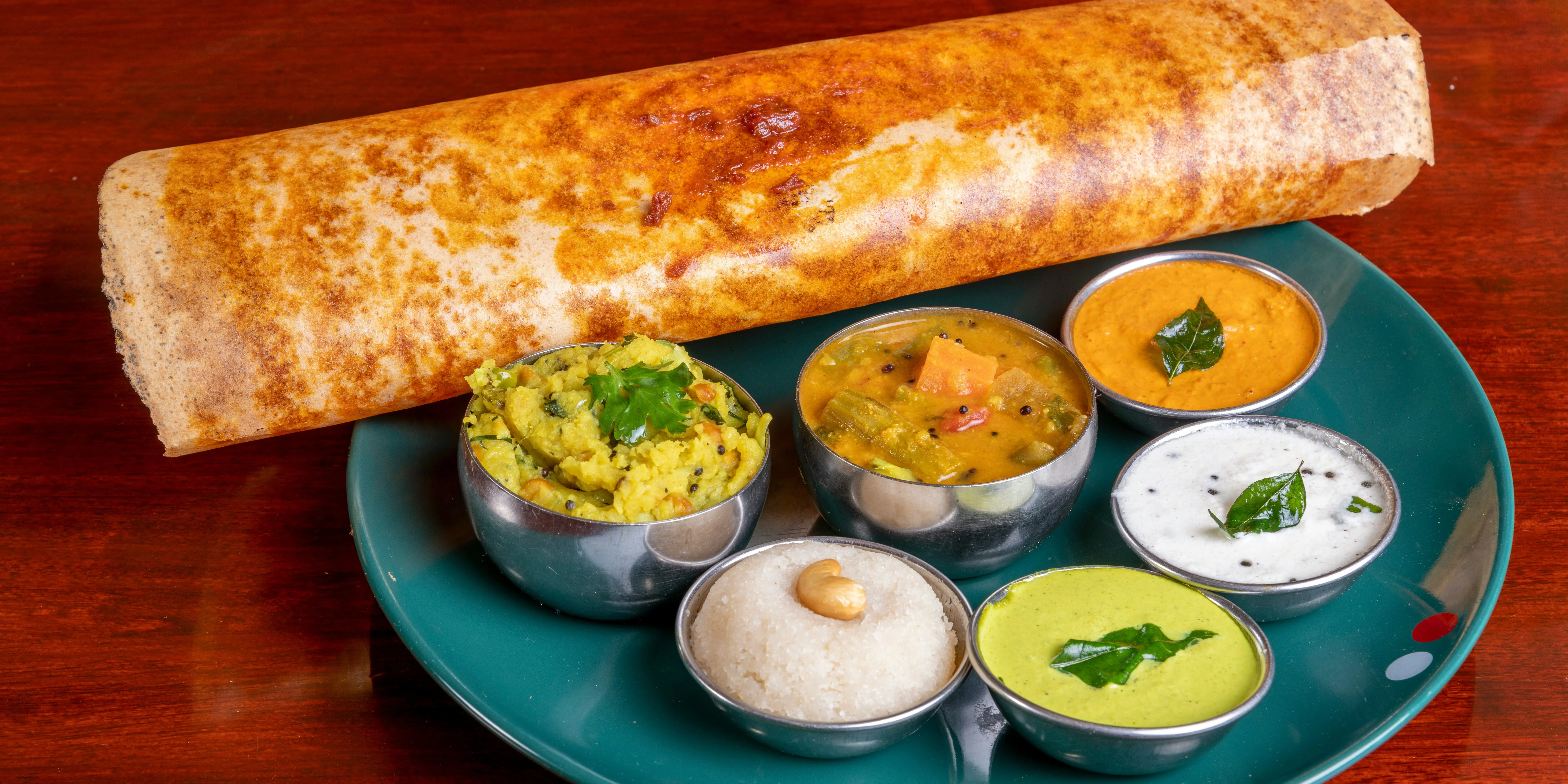
Is Dosa Gluten Free?
Dosa is naturally gluten free, made from a fermented batter of rice and lentils. Most varieties are safe for celiacs, though a handful of dishes served alongside dosa are worth watching out for.
read more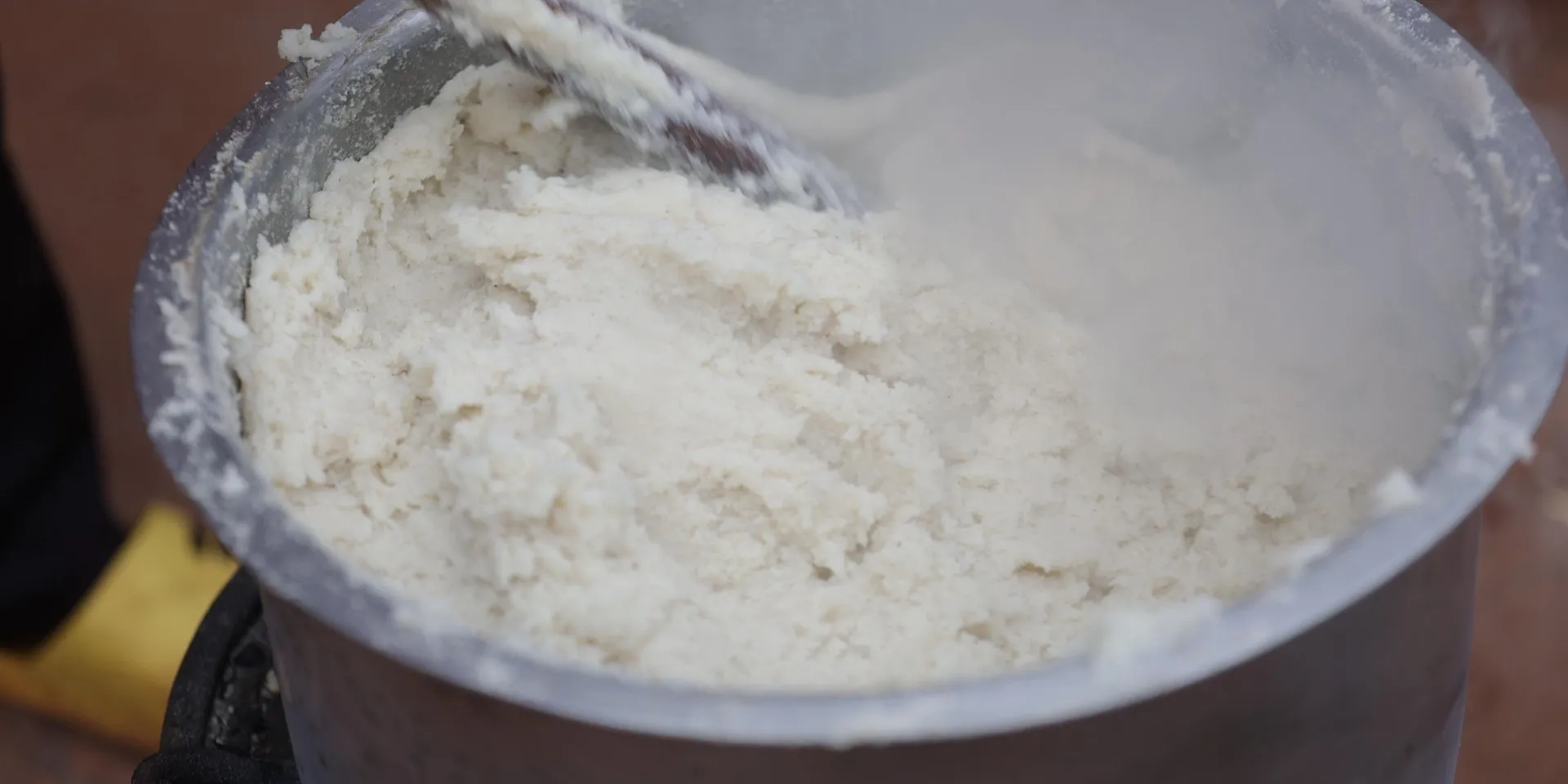
Is Ugali Gluten Free?
Ugali is Kenya's staple food, eaten by the vast majority of the population at least once a day. It is made from maize flour and water, which makes it naturally gluten free. Here's what a celiac needs to know about eating it safely in Kenya.
read more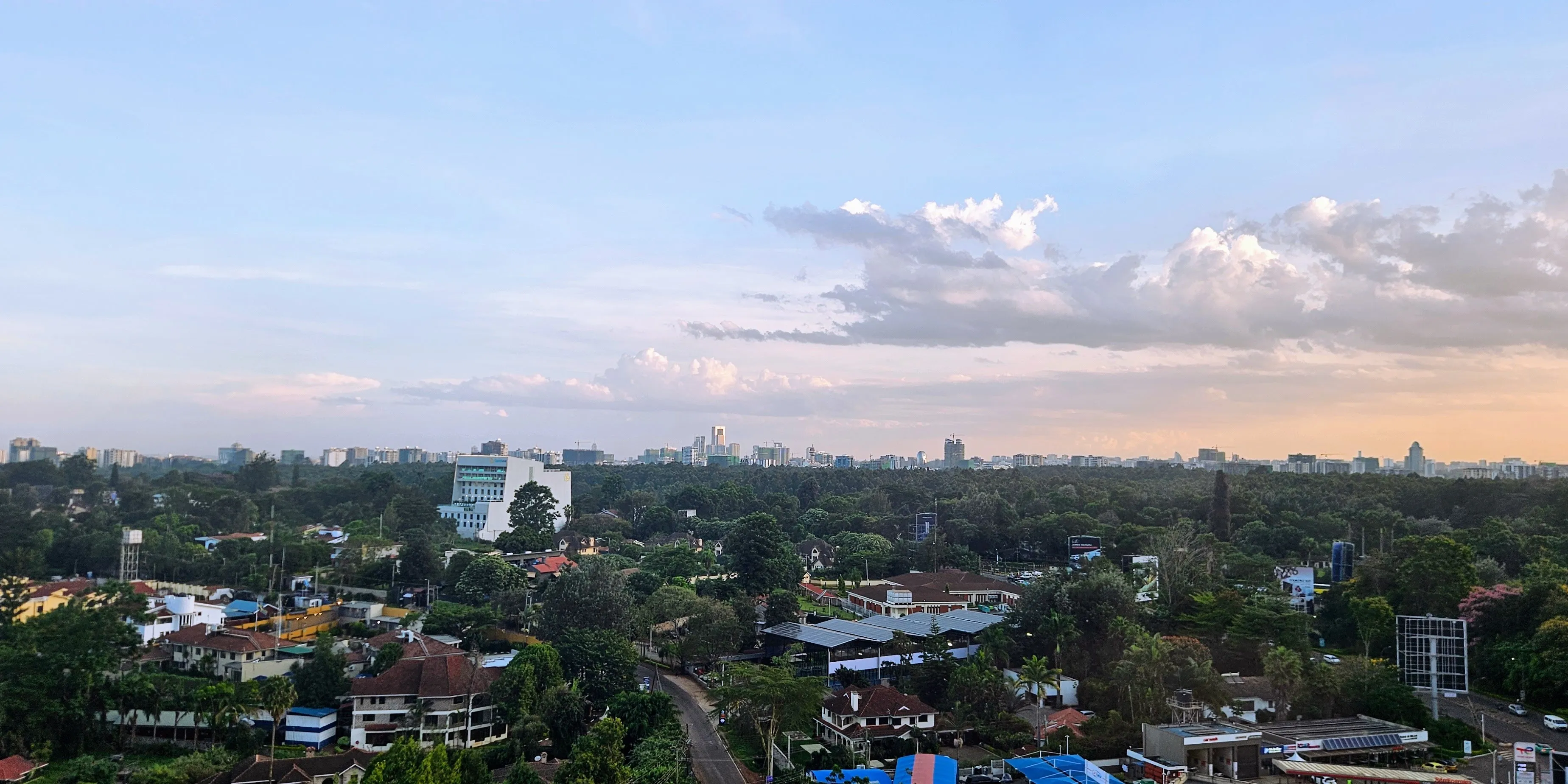
Nairobi: A Gluten Free Guide
Nairobi is a great city to visit as a celiac. Celiac awareness is low, but the food scene is excellent, self-catering is easy, and the traditional Kenyan diet is naturally gluten free friendly. Here is what we learned after nearly a month in the city.
read more
Spain: A Gluten Free Guide
Ahhh Spain, lovely Spain. The weather’s (mostly) good, landscapes varied, and gluten free food is abundant. Celiac disease is well known, and there are some good government and third-party resources to help with eating out gluten free. With a bit of care, you can easily travel in Spain and successfu
read more