Bolivia: A Gluten Free Guide
Bolivia is one of the more challenging countries to travel through as a celiac. When eating out, there are naturally gluten free dishes, but the level of cross-contamination is high, and wheat flour finds its way to a surprising number of items. If cooking for yourself, naturally gluten free food is readily available in the markets, and some gluten free substitute items are even available in city supermarkets.
Contents
- Personal Experience
- Gluten Awareness
- Eating Out
- Groceries
- Our Meals
- Phrases to Remember
- FAQs
- To Summarise
Personal Experience
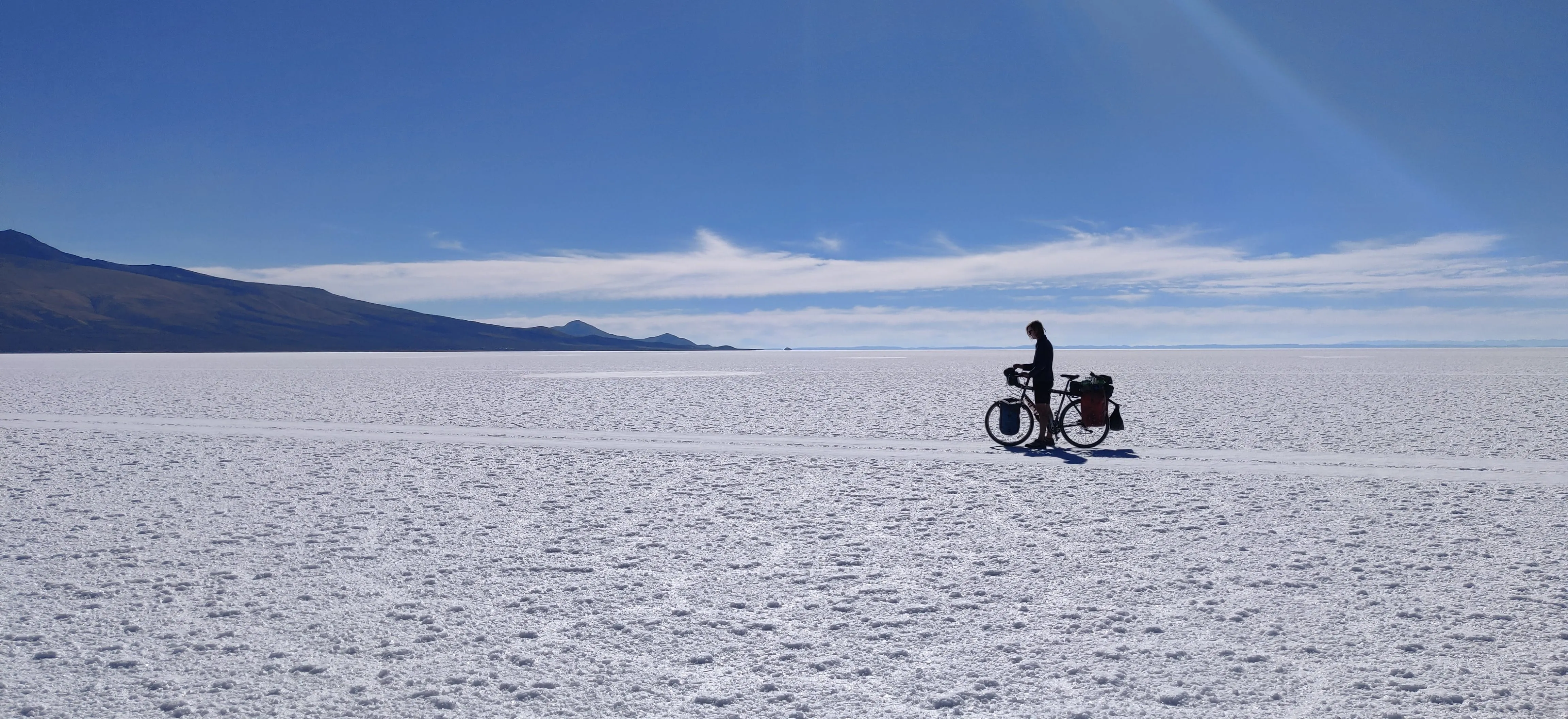
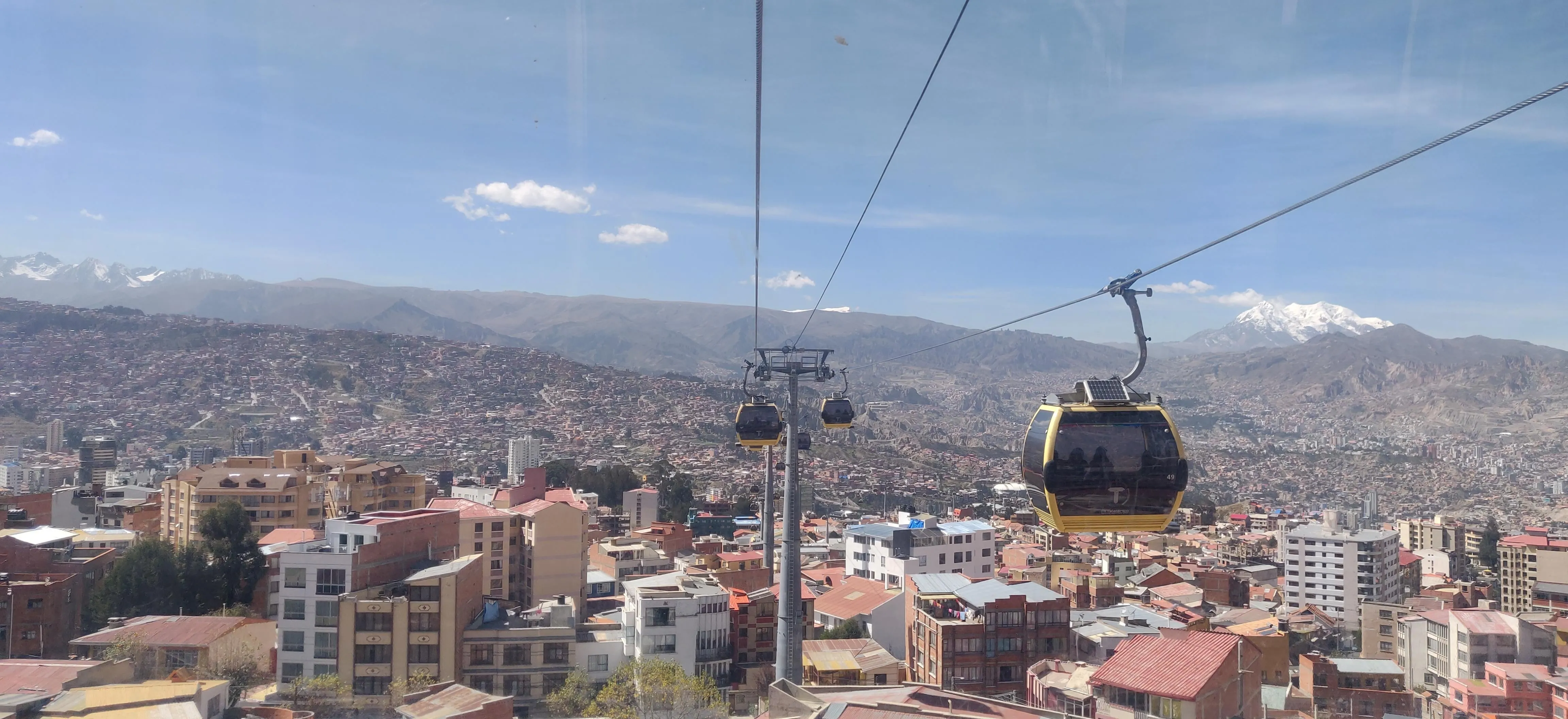
We spent a month in Bolivia, and from both a gluten free perspective and a people perspective, it was by far the most challenging country we visited in South America. We travelled across the Altiplano - the high, dry plateau - where towns are remote, ingredients are limited, and eating out as a celiac can be difficult.
In our experience, gluten-related questions were rarely understood, and restaurants didn’t tend to engage with them. Most of the time we ended up cooking for ourselves, but even then, the availability of gluten free staples was limited, which made variety hard to come by. On the occasions we did eat out, we often had to choose the “least risky” item on the menu and hope for the best, with mixed results.
Bolivia has incredible landscapes, and we met travellers who had great experiences, especially in the lowlands and tropical regions. But for strictly gluten free travel, the country requires extra preparation, patience, and a willingness to cook for yourself, or take a risk.
But fear not. We learnt a lot, and by the end of the month we had got our gluten free eating sorted. So, here’s our practical advice for surviving Bolivia as a celiac. Hopefully the mistakes we made help you to not get as glutened as we did.
Gluten Awareness
There is a low awareness of celiac disease across the country. In rural areas, it is very unlikely that people have heard of celiac disease, or a gluten free diet. Often when communicating your needs, you have to explicitly explain what gluten is, and which food items contain it. The one exception is in the larger cities, where some restaurants include gluten free options on their menus.
There is no govenment celiac program, and it is thought that there is a high rate of undiagnosed people living in the country with the disease.
Eating Out
Eating out certainly posed its challenges. Before we dive in, there are a few important things to mention:
- Soy sauce is an annoyingly common ingredient in restaurant food.
- Bolivian food tends to consist of some kind of meat accompanied with rice, potato and some vegetables. Sometimes the meat is breaded or battered. Sometimes the meat contains hidden wheat, particularly sausages.
- Wheat flour finds its way into sauces, marinades, soups and fryers.
Step 1 – Entering the Restaurant
The first stage of eating out is to actually be accepted in a restaurant. You can be refused entry as a foreigner. Even if you quietly enter, be polite and smile; the waiter will sometimes see your foreign face and shout “NO” while pointing to the door. It doesn’t happen frequently, but I thought I’d mention it, just so you’re prepared and don’t get caught out like us.
Step 2 – Finding out What is Gluten Free
Well done, you’ve made it in. Now time to decipher the menu and figure out what your best options are. If you have a working knowledge of Spanish, but can’t understand any of the items on the menu, then you’re not alone.
In the tables below are the most common Bolivian dishes, split out into those that are and are not naturally gluten free. We’ve also created a complete list of Bolivian restaurant dishes, split out into gluten free and gluten-containing, to help out the next time you’re in a Bolivian restaurant.
Naturally Gluten Free Dishes
| Name | What is it? | Risks |
|---|---|---|
| Majadito | Rice with dried meat, tomatoes, onions and fried eggs | Occasionally made with soy sauce. |
| Sopa de maní | Peanut soup, sometimes with meat | Flour as a thickener (low risk) |
| Trucha a la plancha | Fried trout, with potato, rice and salad | The trout is sometimes battered |
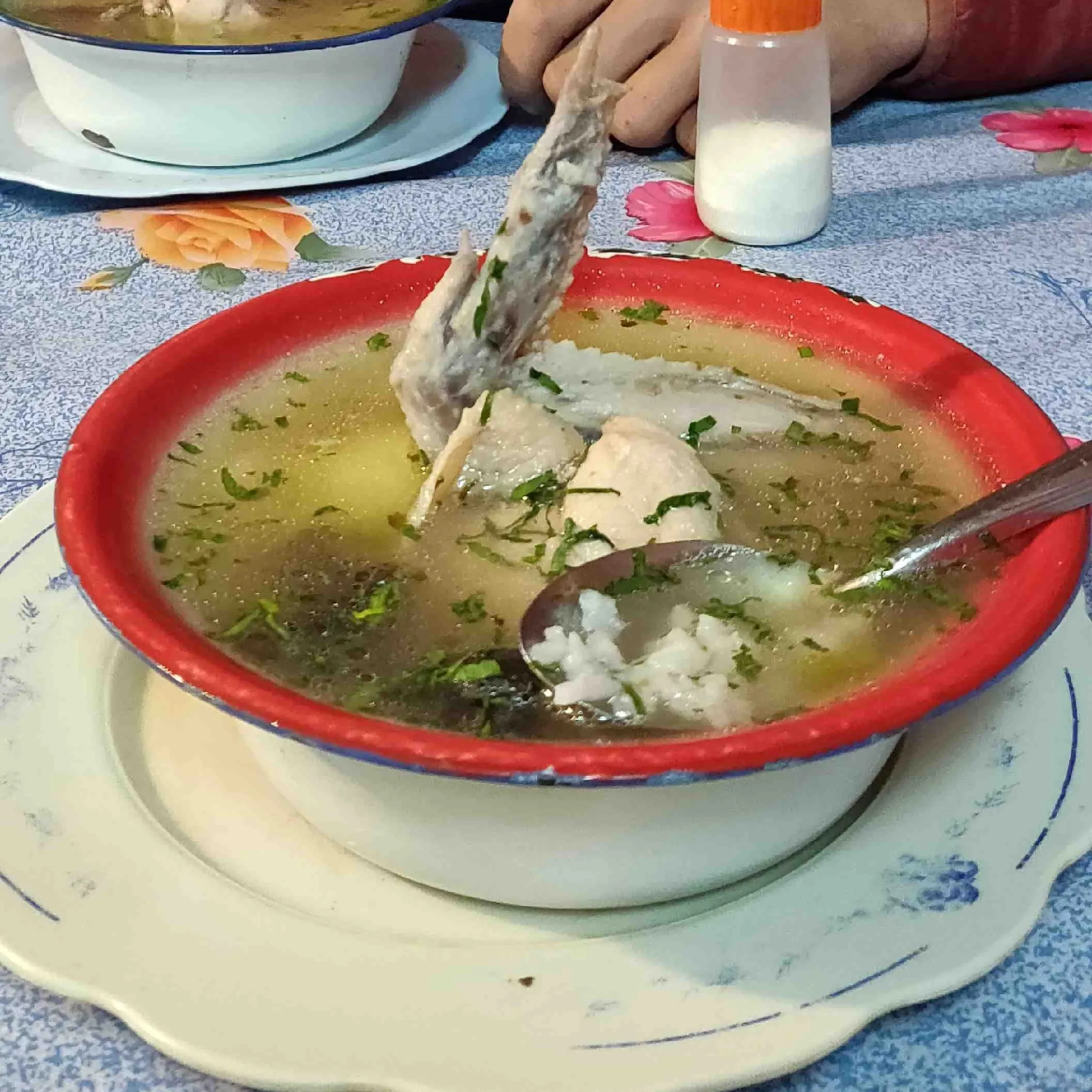
| Picante de pollo | Spicy chicken soup | None |
| Pique macho | Beef, sausage, chips, peppers and onions | The sausage could contain wheat, although this is rare |
| Lomo montado / bistec a lo pobre | Steak, egg, rice, fries salad | None |
| Pollo a la brasa | Rotisserie Chicken | None |
| Sopa de Qqinua | Quinoa soup | Sometimes thickened with flour |
| Papas a la huancaína | Potatoes in a chilli-cheese sauce | Sometimes flour in the sauce |
Dishes to Avoid
| Name | What is it? |
|---|---|
| Salteñas | Pastries filled with vegetables and potato |
| Empanadas | Fried dough with meat or cheese fillings |
| Milanesa | Breaded and fried meat, served with rice, potato and vegetables |
| Pollo broaster | Battered chicken |
| Buñuelos | Sweet, fried dough balls |
Other Things to Watch Out For
If you want to maximise your chances of not getting glutened with what should be a naturally gluten free dish, always talk to the server. The phrases in the Phrases to Remember section are useful for this, as is a gluten free card.
The fryers are almost always full of gluten. Assume anything that goes into them does not come out gluten free. The chance of cross contamination is very high. It is likely you will get glutened. If this isn’t something you want to risk, cooking for yourself is the best option.
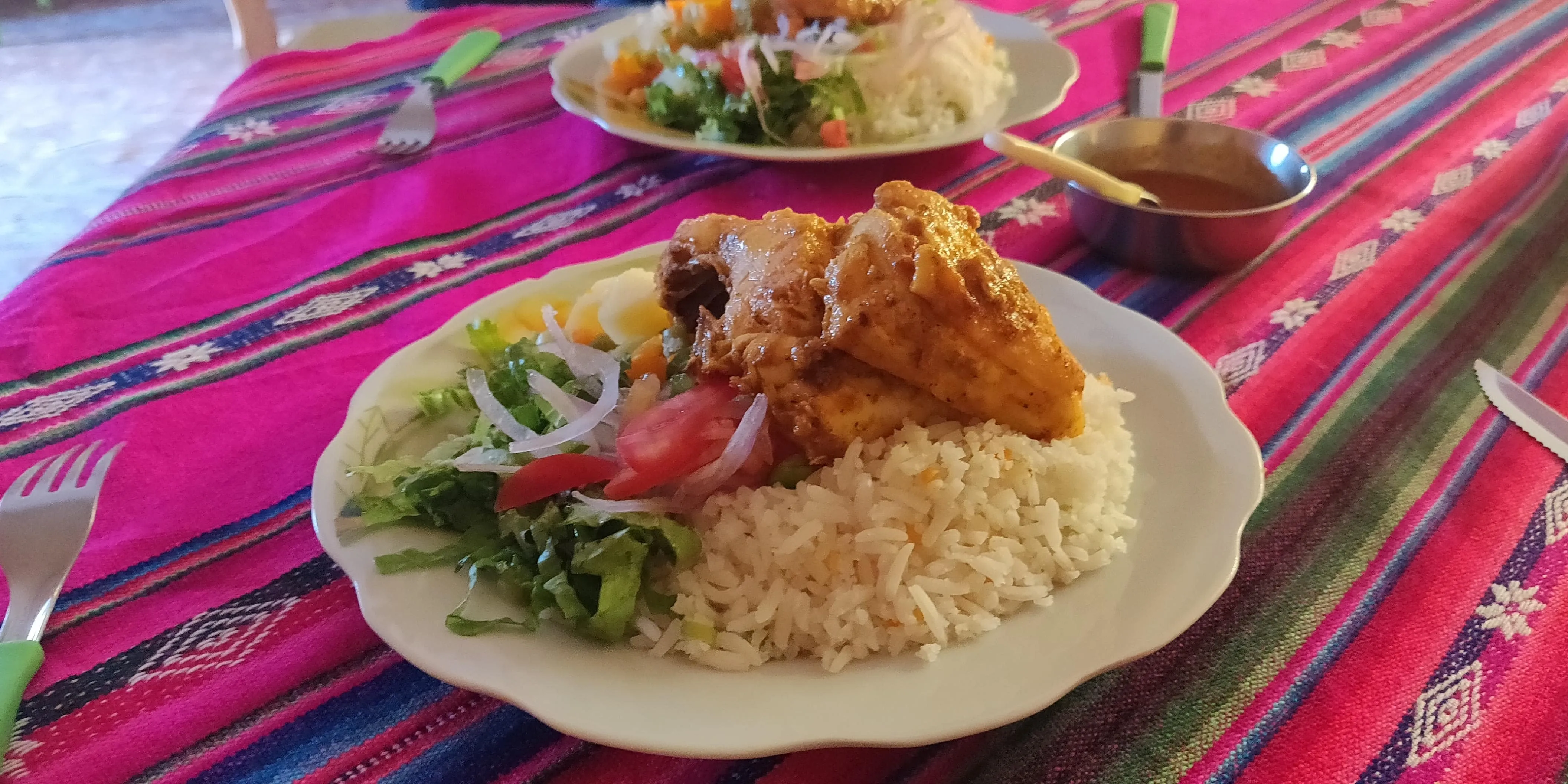
Groceries
Outside of the cities, your location for buying food is the market and small convenience stores dotted around villages.
The Markets
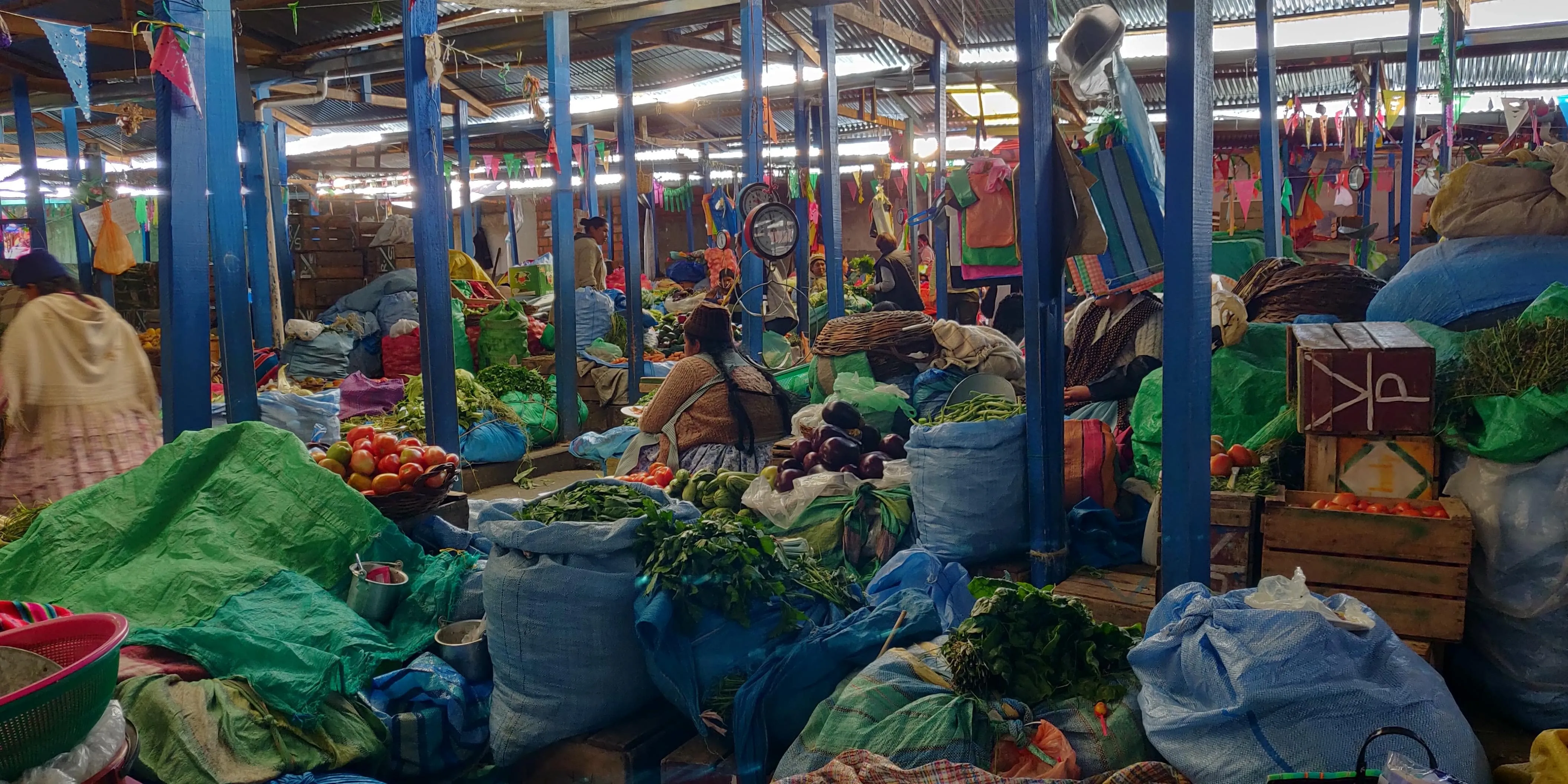
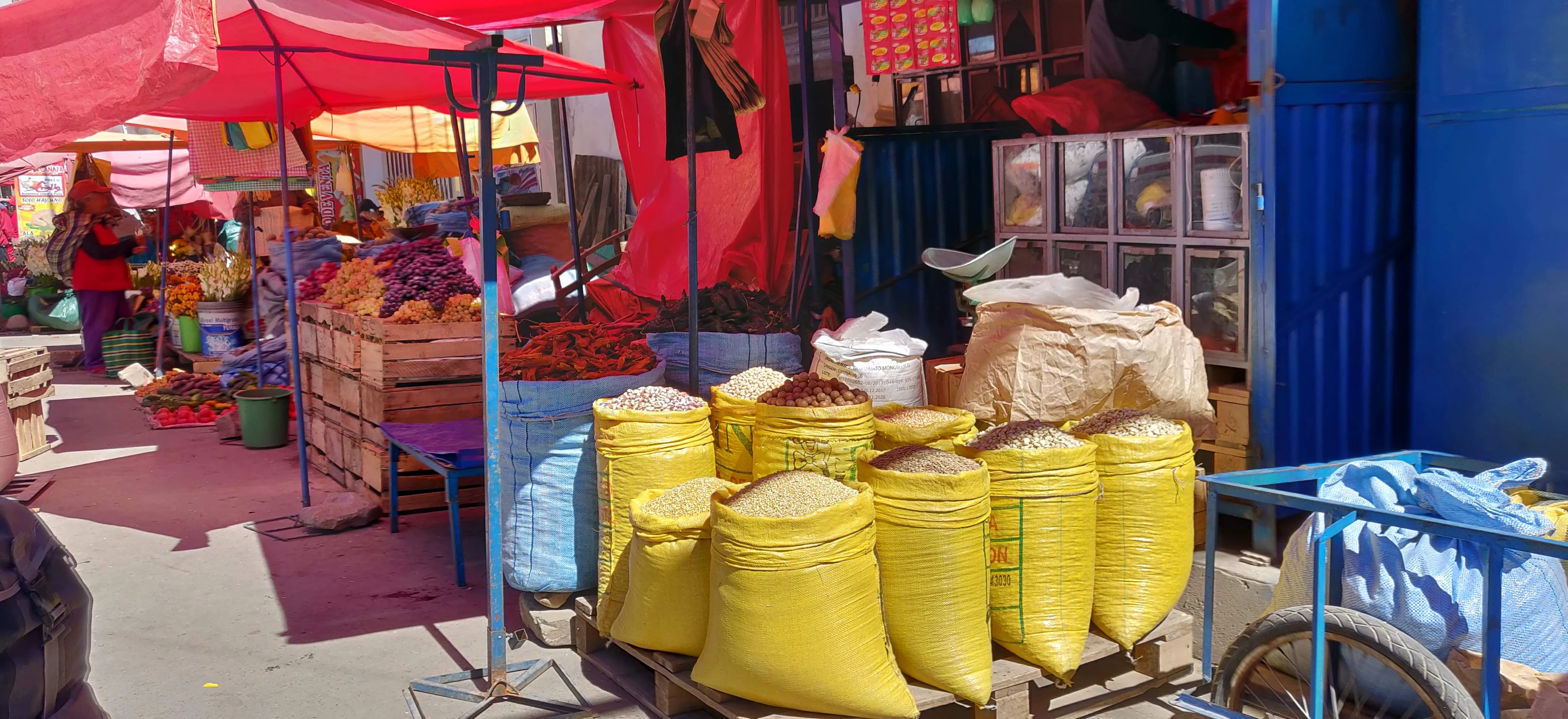
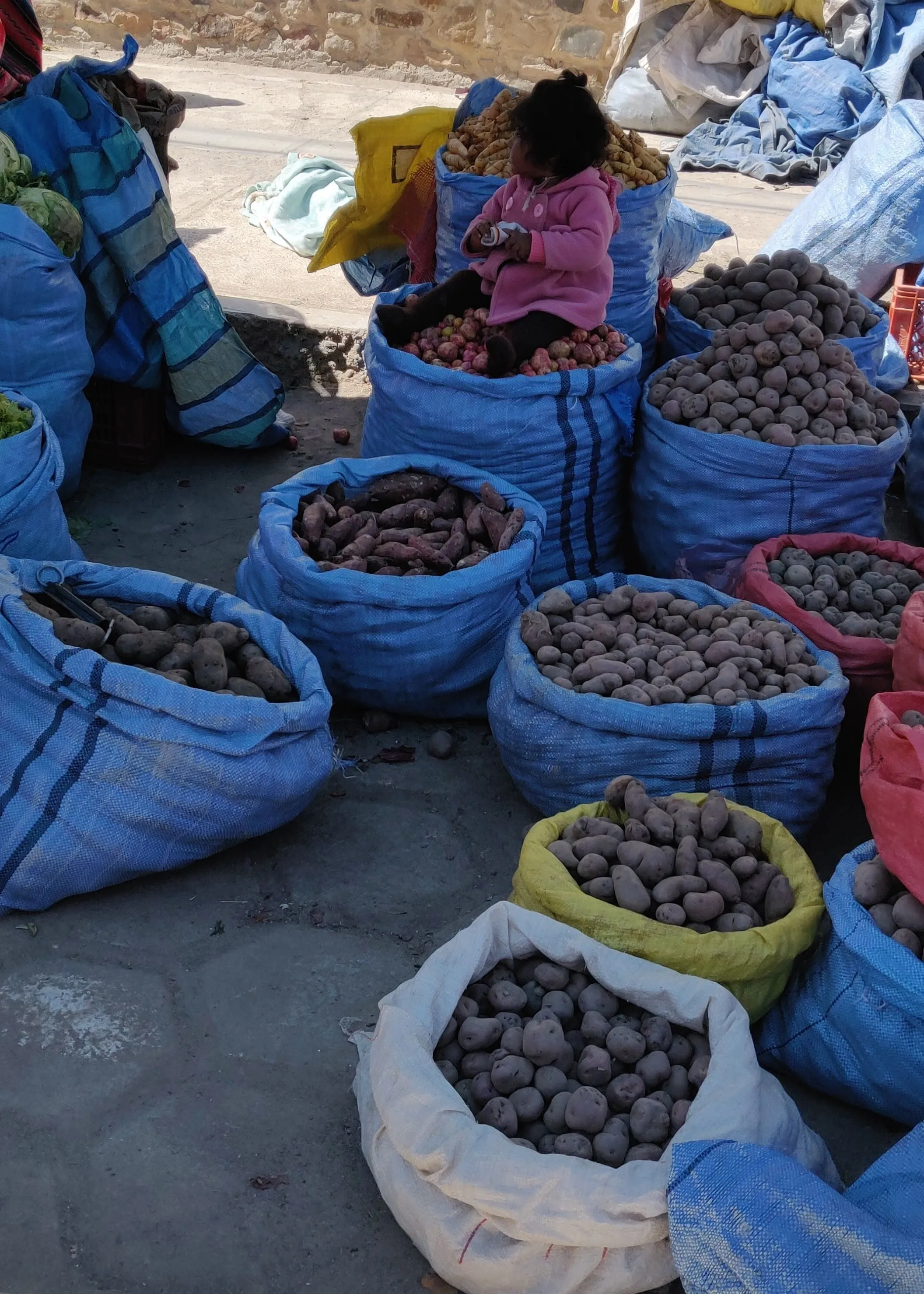
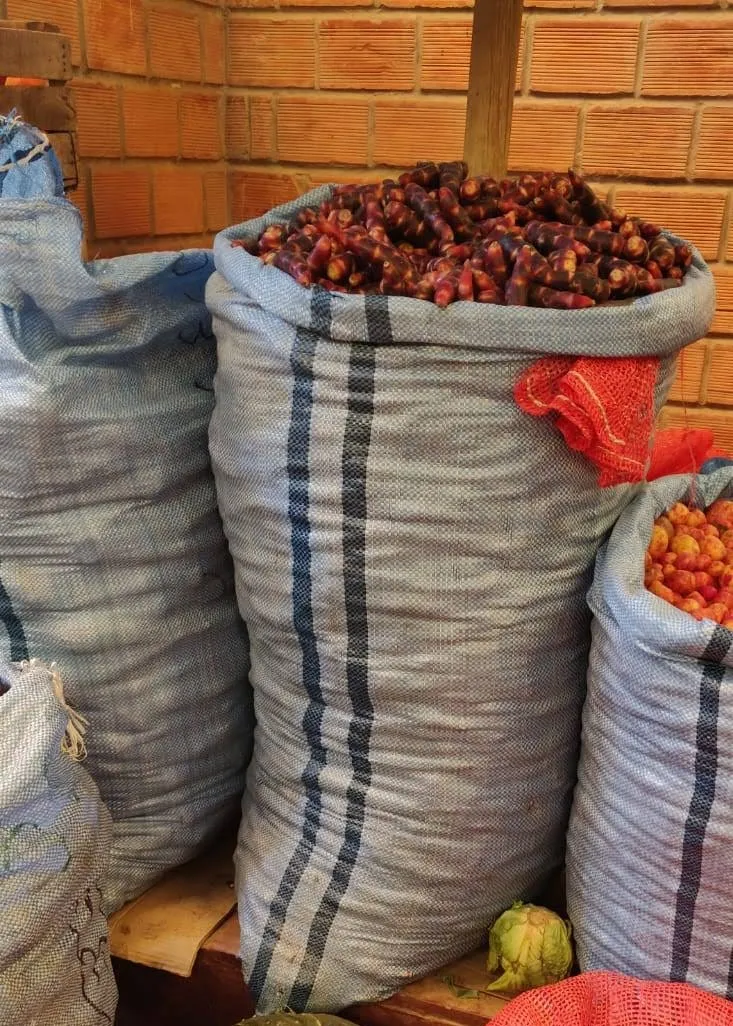
The markets are vibrant places, full of stalls with big colourful sacks containing masses of fresh produce. They’re often divided into sections: fruit & veg, meat, dried fruit and nuts, spices and dry goods.
As you can imagine, the price for goods is made up on the spot, with some sellers adding a hefty surcharge for foreigners. The products were still cheaper than buying them in Europe.
Sellers weigh their produce in pounds (“libra in Spanish”), not kilos. One pound is 0.45 kg.
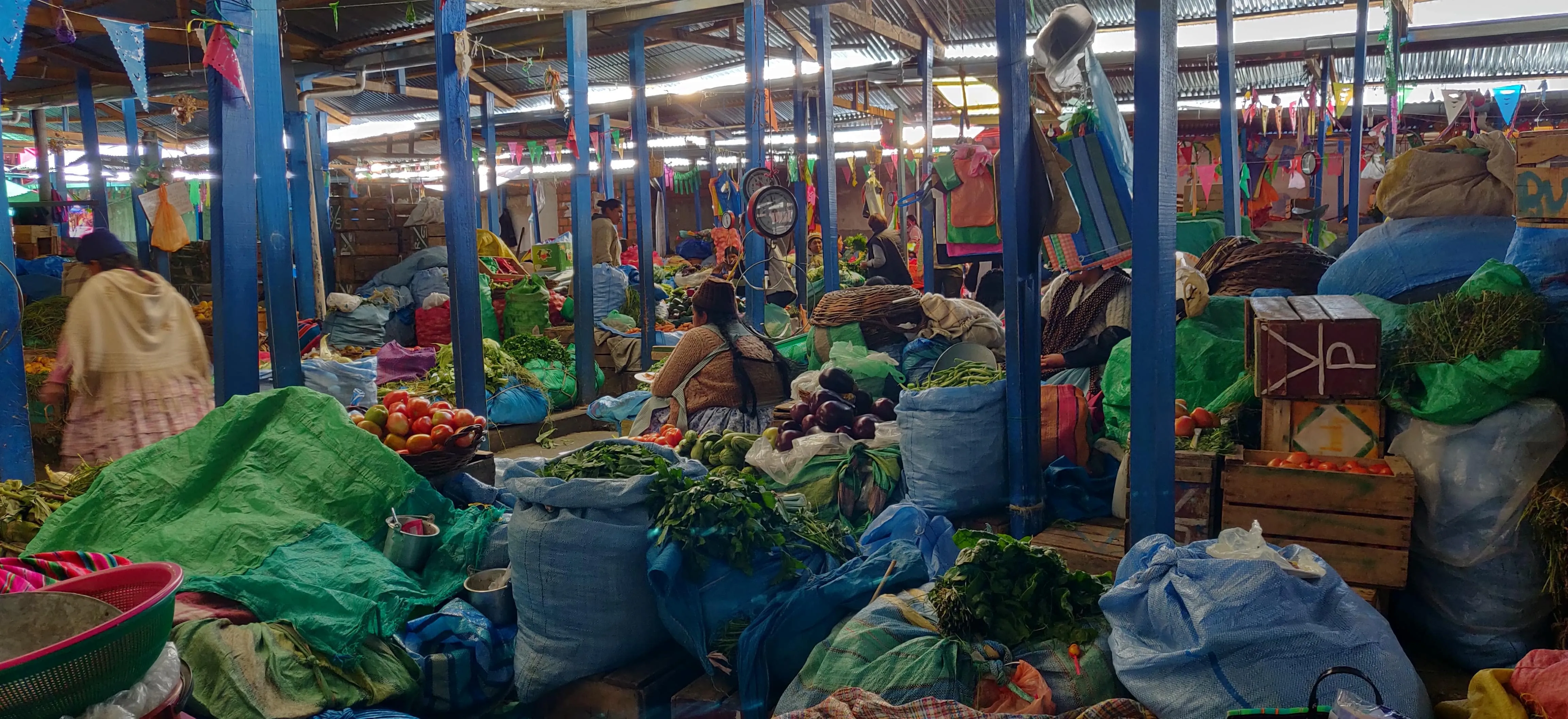
Fruit & Veg
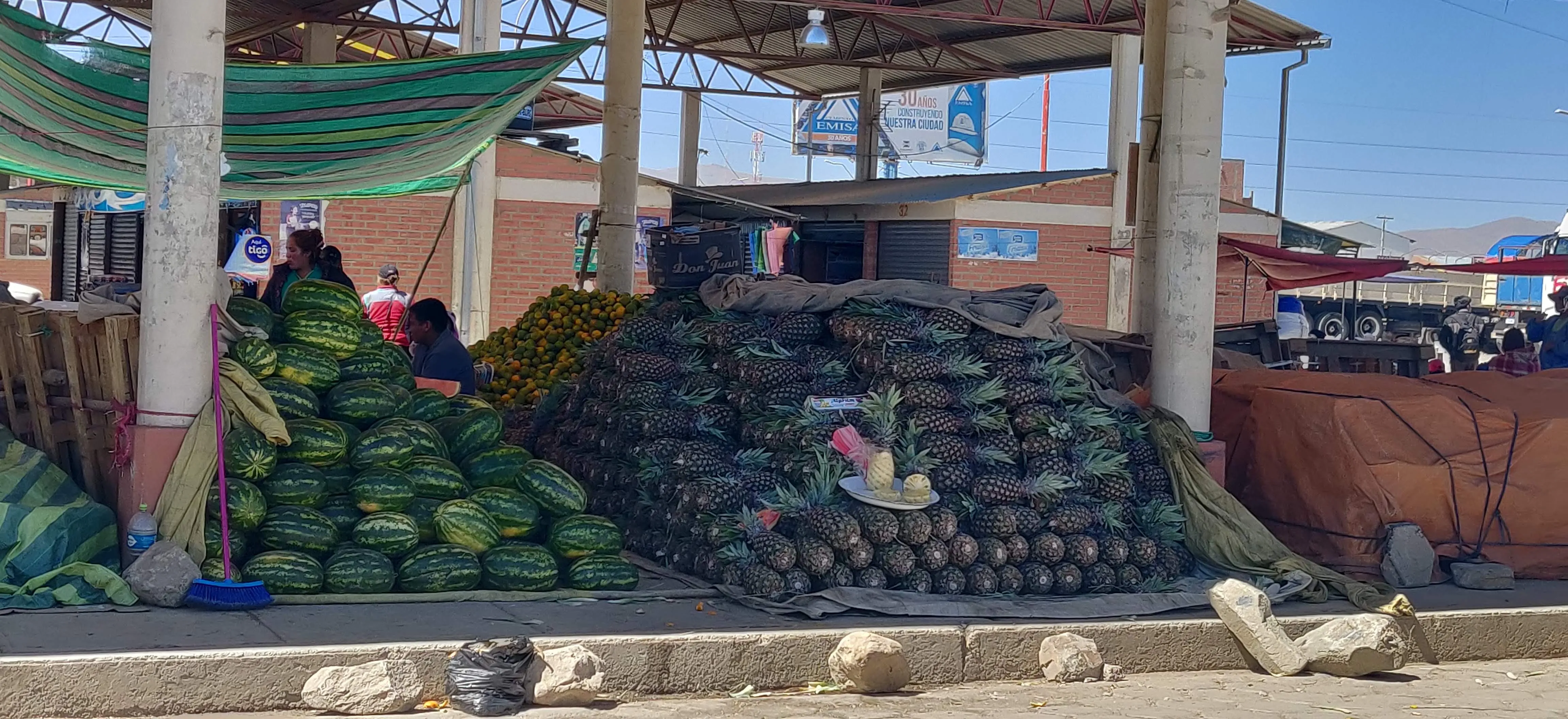
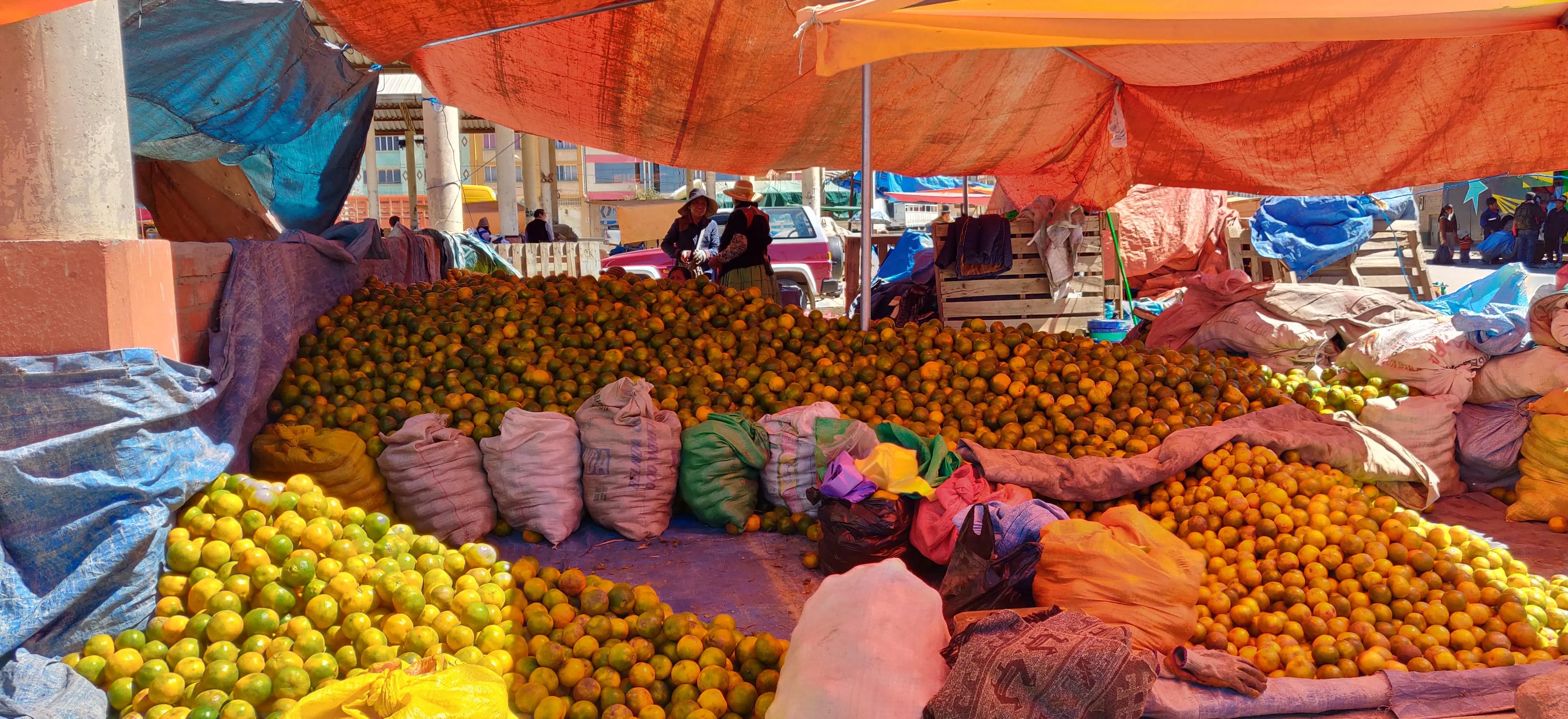
These stalls were great: full of big, fresh, and brightly coloured food. Most of the produce is grown in the tropical lowlands so is available all year around.
The veg selection includes: potatoes, sweet potatoes, squash (these are massive, you ask for a chunk to be cut off), peppers, tomatoes, onions, cucumber, lettuce, cabbage, spinach, chard, carrot, beetroot and celery.
Fruits include bananas, mangoes, avacados, oranges, papayas, passion fruit (maracuyá), pineapple. The quality of the fruit is so good compared to in Europe, make the most of it during your trip!
Bolivian avocados are massive, like bigger than my head. One of our go-to meals was to make flatbreads from maize flour and dip then in a big bowl of guacamole made from one of these avocados.
Dry Food Stalls
The dried food stalls sell a variety of flours. You will usually find some naturally gluten free ones: maize, cassava and quinoa flours. These are versatile flours and can be used to make all sorts of gluten free breads and soups. Be wary of cross contamination though, the flours are all sold from sacks, positioned next to each other. There’s nothing to stop the gluten-containing flours finding their way into the gluten-free ones. It’s not uncommon for the same scoop to be used for every sack of flour too.
These also sell rice and wheat-based pastas, along with dried beans, legumes and chuños. You can usually find packaged rice in the convenience shops too which negates the cross-contamination risks.
Spice Stalls
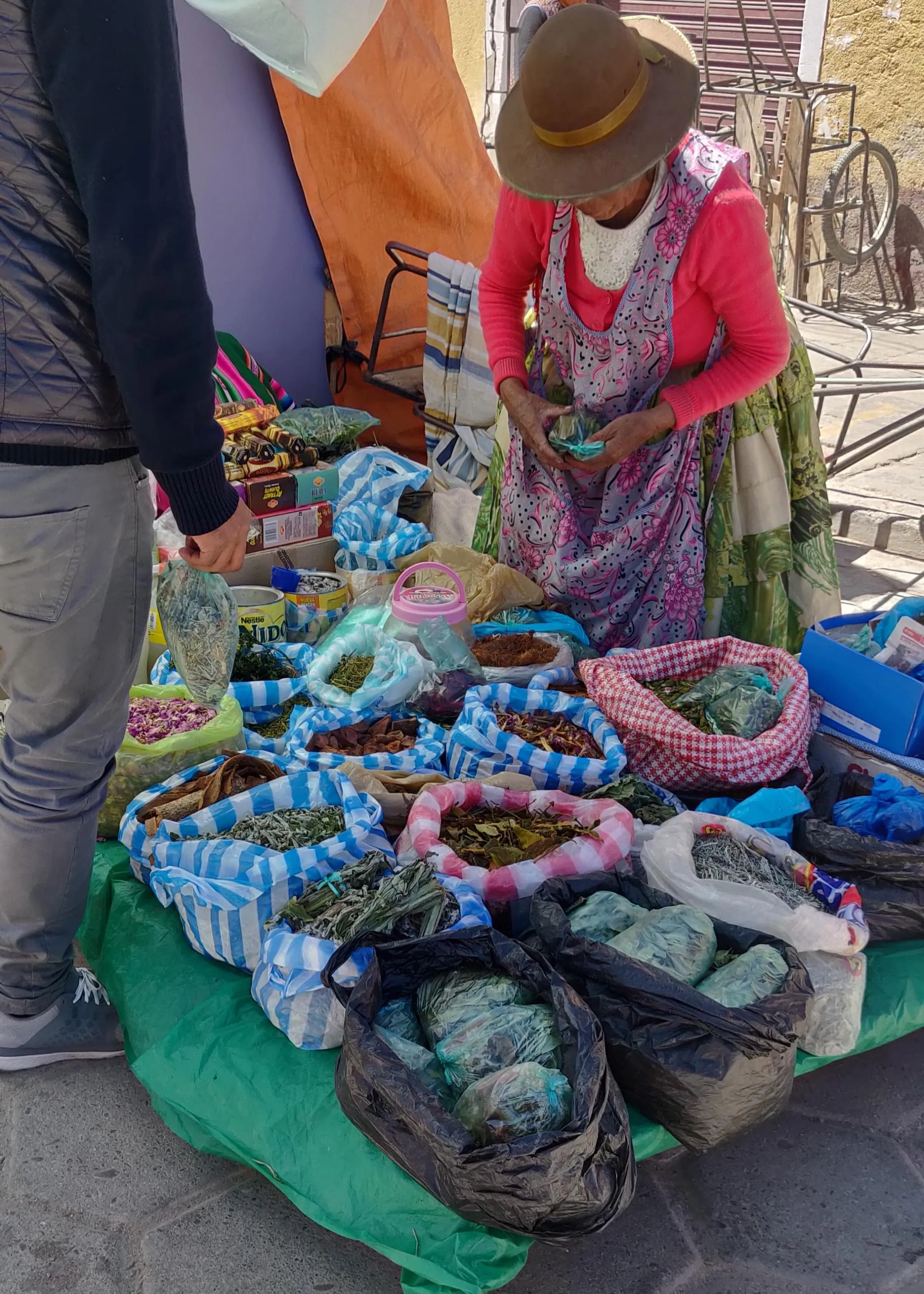
You can find some real treasures in these stalls: whole spices, a range of dried chillis, and a good selection of spice powders and leaves. We often visited these in search of a way to spice-up our otherwise bland camping meals.
Dried Fruits Stalls
These would be our go-to place for gluten free snacks in Bolivia. They usually had a good range, including walnuts, peanuts, monkey nuts, almonds, seed mixes and Brazil nuts. The dried fruit options were usually raisins, dried banana, apple, pineapple and mango. Salted toasted maize was available too and also made for a good snack.
Butchers
Butchers are split out into chicken, beef, pork and llama. All parts of the animals are sold; nothing is off limits.
Convenience Shops
We didn’t find convenience stalls to be of much use. They sell some expensive snack food (crisps, sweets etc) in small quantities, stock cubes and tins of chopped tomatoes. The rest is biscuits, bread and other gluten containing items. They never sold gluten free substitute items.
I struggled to find chocolate that wasn’t ridiculously expensive in the towns and villages. By the end of the month, the withdrawal symptoms had started to subside.
Supermarkets
Supermarkets can only be found in the large cities. The only real chain is Hipermaxi. Other local brands available in some cities are: Fidalga, IC Norte, Ketal and Tia.
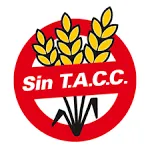
We found the occasional gluten free item in supermarkets. All gluten free items were imported from Argentina, and carried the Sin TACC logo. As a result, they were also more expensive than in Argentina, and expensive compared to European prices to.
Stock up on supplies in the cities
If you’re planning on travelling to the rural regions, I would recommend stocking up on gluten free items and snacks in a city. The supermarkets offer relatively cheap naturally gluten free snack food. The non-perishables are cheaper than in the convenience stalls and markets of the towns and villages.
Our Meals
Camping
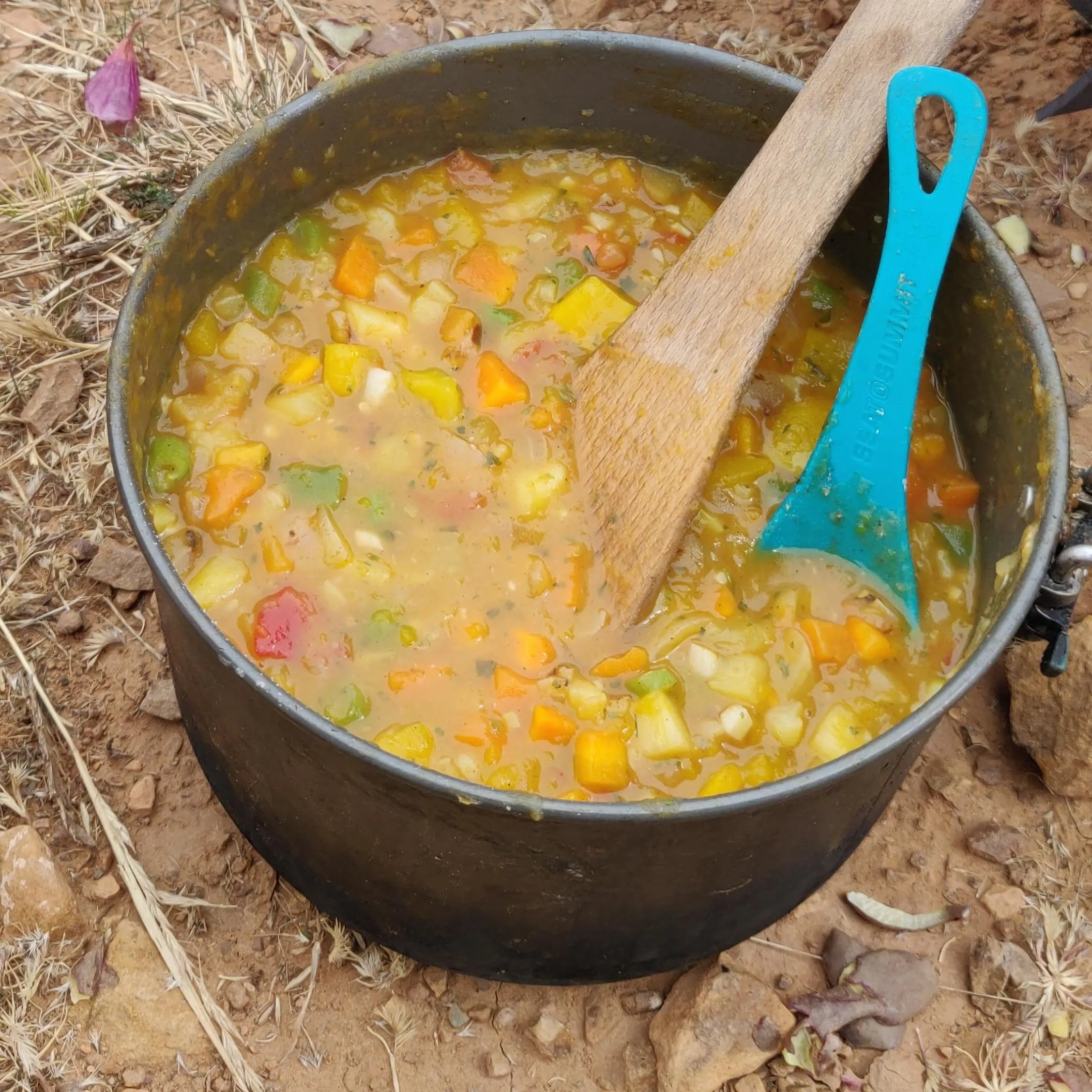
We cooked for ourselves most days. Camping meals included:
- Vegetable stews – a mixture of whatever vegetables we got our hands on, some spices, and potato. An uninspiring dish.
- Rice based one pot dishes
- Maize breads with guacamole or salsa.
I won’t lie, we did struggle to keep ourselves full as we cycled across the country. The lack of gluten free snack food didn’t help with this, and we both lost weight. With a kitchen, and eating out more, we could definitely have fed ourselves better.
In Accommodation
When staying in accommodation, the cooking got better. We could make dishes like roast chicken. Roasted food never tasted so good! We also had a go at making brownies, replacing wheat flour with maize flour. The results were surprisingly good.
Phrases to Remember
| Spanish | English |
|---|---|
| Harina de maíz | Maize flour |
| Harina de cassava | Cassava flour |
| Harina de quinoa | Quinoa flour |
| ! Arroz | Rice |
| Sin gluten | Gluten free |
| No puedo comer trigo o cebada | I cannot eat wheat or barley |
| Hay harina de trigo o salsa de soja en esto? | Is there wheat flour or soy sauce in this? |
| ¿Puede ser sin harina ni salsa de soja, por favor? | Can it be made without wheat flour or soy sauce? |
| Hay trigo en el chorizo? | Is there wheat in the sausages? |
FAQs
- In rural areas, gluten free snacks include dried fruits and nuts, available in the markets, toasted maize and crisps.
- In the cities, the same items are available in the markets, plus the occasional gluten free biscuit, cake and chocolate in the supermarkets.
Bolivia can be challenging for people with celiac disease. Naturally gluten free foods are widely available, but awareness of celiac disease is low and cross-contamination is common when eating out. Travellers who are highly sensitive to gluten should plan to cook for themselves most of the time.
In most of Bolivia, especially rural areas, people are unfamiliar with gluten and celiac disease. You will often need to explain what gluten is and which foods contain it. Awareness is slightly better in larger cities, where some restaurants list gluten free options.
To Summarise
-
Eating out as a celiac is difficult, and there is a high chance you will get glutened. Naturally gluten-free dishes exist, but cross-contamination is common.
-
Gluten-free substitute items are hard to find, especially outside cities. You have to rely on naturally gluten-free foods.
BBolivia is an incredibly interesting country to visit, but it does come with real gluten-related challenges. Choosing meals carefully, talking clearly to servers, and cooking for yourself are the best ways to limit your chances of getting glutened. In my opinion, the rewards of visiting Bolivia outweigh the potential risk of getting glutened.
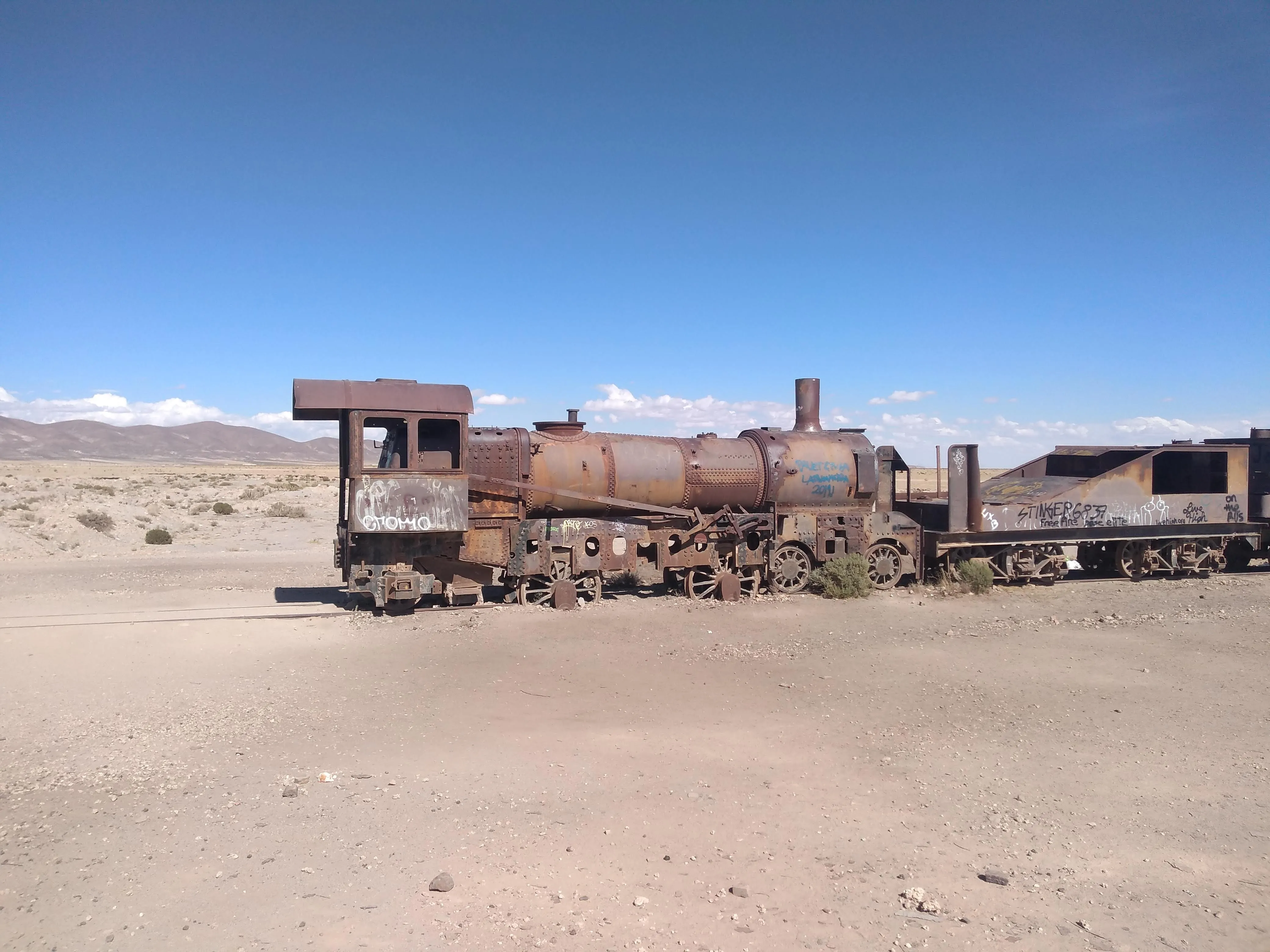
Final thing, if you find yourself at the Salar de Uyuni, you have to check out the abandoned trains located at -20.507, -66.860.
Tags :
Share :
Related Posts

Gluten Free Beer in Argentina
Argentina has a unique and up-and-coming gluten free (GF) beer scene. Local laws have enabled 100% GF beers to emerge in the market, and in recent years it has become more available. In this article, I’ll cover what makes the Argentinian GF beer market so unique, where you can buy it, and which beer
read more
Argentina: A Gluten Free guide
Argentina is surprisingly on it with celiac disease. There is huge awareness of the condition, even in remote parts of the country, and gluten free essentials are widely available in the larger supermarket chains. With a small amount of consideration for which restaurants you visit, it is very feasi
read more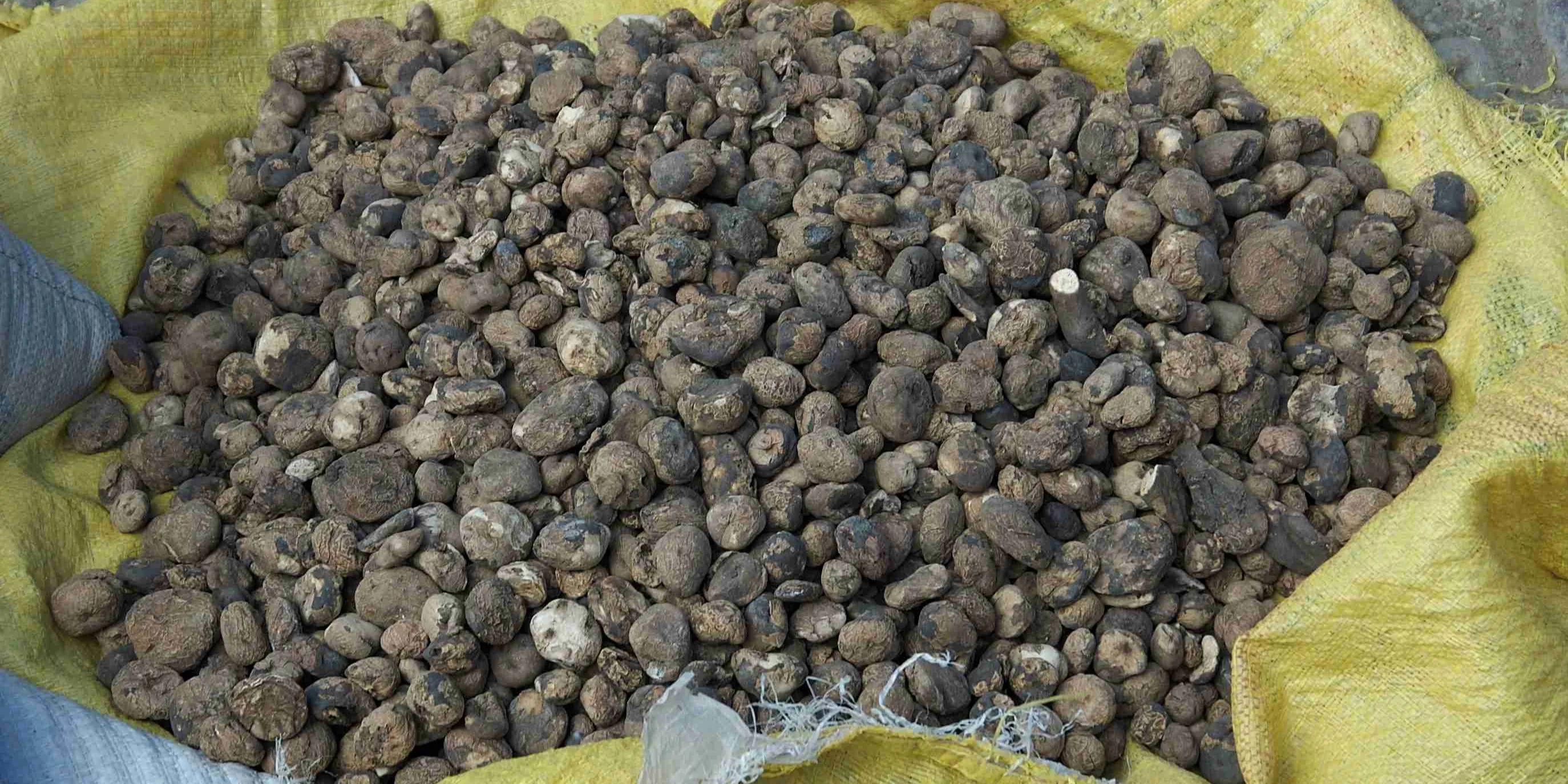
Are Chuños Gluten Free?
Chuños are freeze-dried potatoes, making them naturally gluten free. However, some of the Bolivian and Peruvian dishes they are traditionally used in do contain gluten. They’re a must-try if you’re visiting the region — a unique food item found almost nowhere else in the world.
read more A Complete Guide to Gluten Free Bolivian Restaurant Dishes
Before visiting Bolivia, we did zero research into restaurant food and regretted it deeply. The menus were indecipherable, even with a working knowledge of Spanish. It was difficult to work out what each dish contained, never mind whether it was gluten free or not.
read more
Chile: A Gluten Free Guide
Chile is not the celiac paradise that Argentina is next door, there's no restaurant allergen law, rural options are slim, and staff awareness is inconsistent at best. That said, the Chilean diet leans naturally gluten free, Santiago has a growing dedicated GF scene, and if you're willing to live on
read more
Ecuador: A Gluten Free Guide
Ecuador's traditional diet leans heavily on corn, rice, cassava, and plantains, which makes it a surprisingly good destination for celiacs willing to eat simply. Celiac awareness is low and GF labelling is rare, but the naturally gluten free options, especially through markets and the menu del día,
read more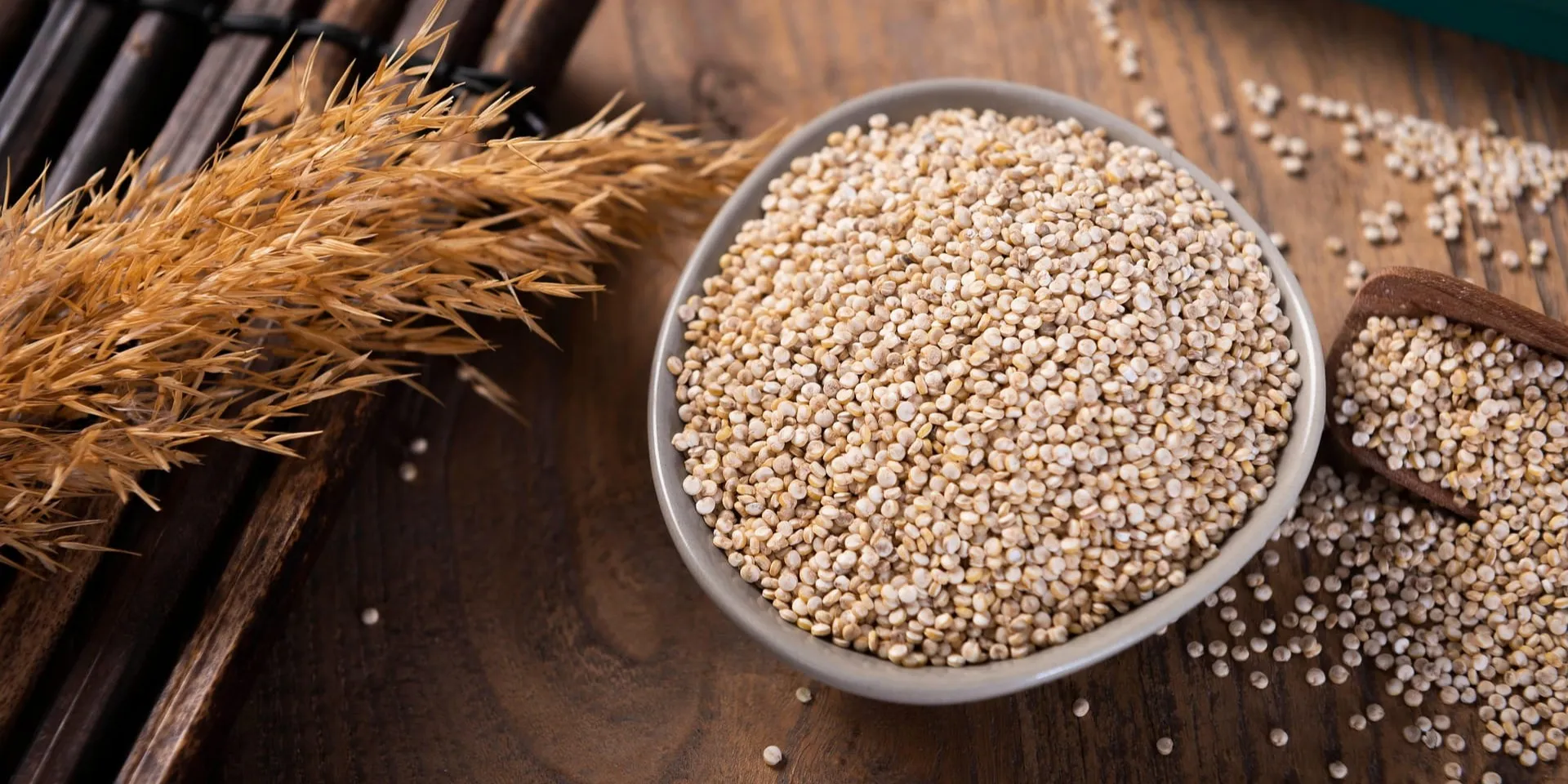
Is Quinoa Gluten Free?
Yes, quinoa is naturally gluten free. It contains no wheat, barley, or rye, and has been a staple food in the Andes for thousands of years. The catch, and there is one, is cross-contamination. Quinoa is often grown, harvested, and processed alongside gluten-containing grains, which means unlabelled
read more
Mauritania: A Gluten Free Guide
- Mauritania
- Travel
- 22 Mar, 2026
Mauritania is not an easy destination for celiacs. Awareness of gluten and celiac disease is effectively zero, and outside Nouakchott you won't find a single dedicated GF product. That said, the country's cuisine is rice- and meat-heavy enough that eating naturally gluten free is possible — especial
read more
Morocco: A Gluten Free Guide
Morocco is a brilliant place to travel; it has a vibrant culture, interesting landscapes and lovely people. Cycling for 3 months through Morocco taught us that this fantastic country is also one of the toughest for gluten-free travellers. This guide breaks down exactly what food is available off the
read more
Peru: A Gluten Free Guide
Peru is not a country that has caught up with celiac disease. When I was there in 2019, GF labelling was essentially non-existent outside Lima, and restaurant staff in rural areas were more likely to be baffled by the question than helpful. That said, Peru's traditional Andean diet is built on potat
read more
Cusco: A Gluten Free City Guide
Cusco is the most celiac-friendly city in Peru outside Lima, which is not a particularly high bar to clear. That said, the tourist centre has a decent cluster of restaurants that understand the question, mark GF options on their menus, and won't look at you blankly when you mention gluten. The menú
read more
A Gluten Free Guide to Poland
Poland surprised me, but then again, much of Eastern Europe has far surpassed my expectations as a celiac. In the cities and in supermarkets, you're in genuinely good hands: plentiful free-from aisles, strict EU labelling laws, a dedicated certification symbol, and a growing network of certified glu
read more
Gluten Free in Romania
Romania is a country of two speeds for celiacs: Bucharest has a genuinely improving GF scene with certified bakeries and dedicated menus, while rural areas still run almost entirely on wheat. Supermarkets in bigger towns will keep you fed either way.
read more
Senegal: A Gluten Free Guide
Senegal is a manageable country for celiacs, largely because so much of the traditional food is naturally gluten free. Thieboudienne and mafé are safe, filling, cheap, and available everywhere. Supermarkets stock no gluten free substitutes to speak of, so if you rely on GF bread or pasta, you'll nee
read more
Is Mafe Gluten Free?
Mafe is usually gluten free. It's a rich peanut stew made with meat, tomatoes, and vegetables, with no wheat in the traditional recipe. That said, some cooks thicken it with wheat flour, so it's not one you can order blindly without checking.
read more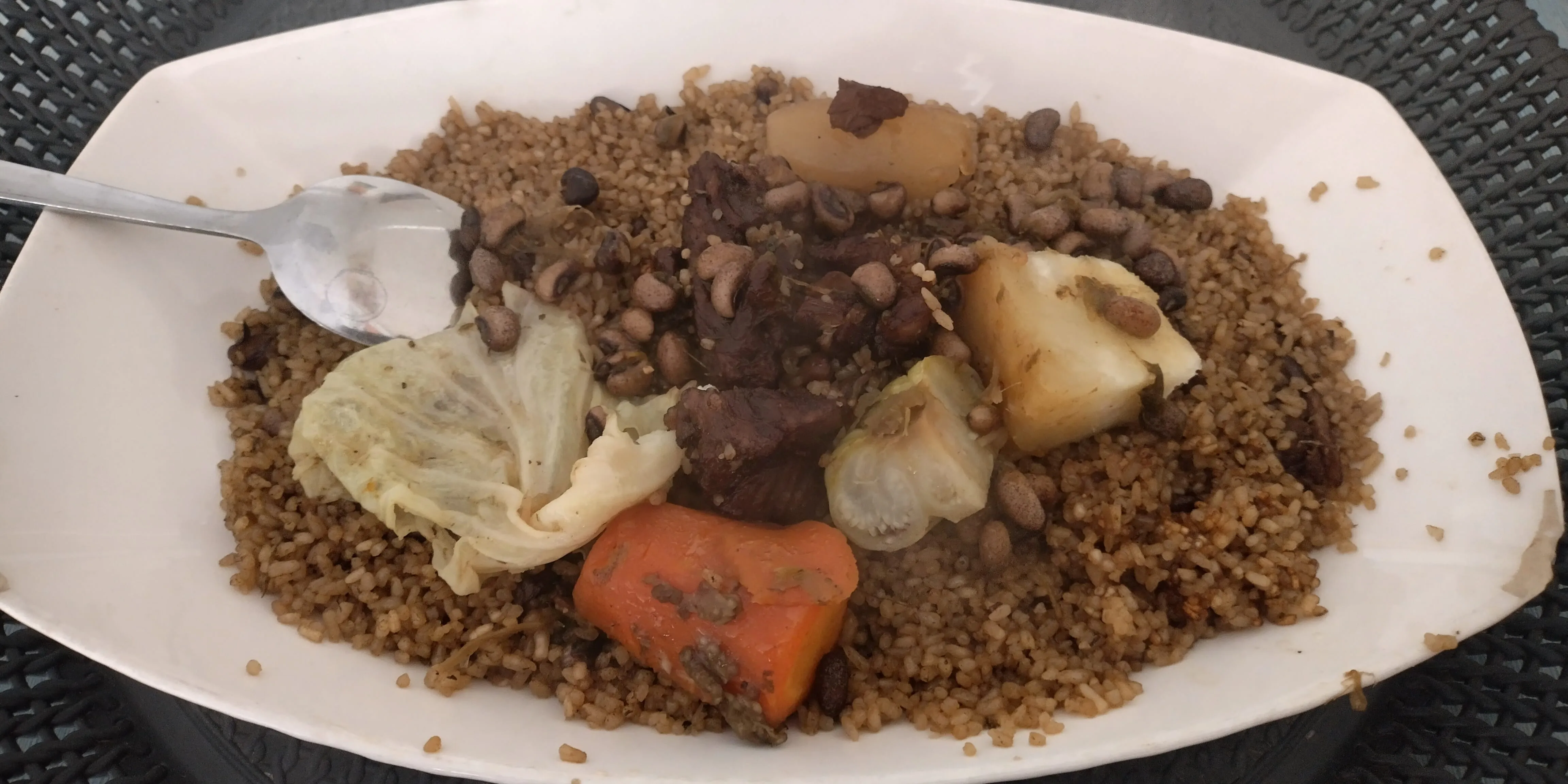
Is Thieboudienne Gluten Free?
Thieboudienne is naturally gluten free, made from rice, fish, tomatoes, and vegetables. The one caveat is the stock cube used in its preparation, which is worth checking, but the main Senegalese brands are GF.
read more
Gluten Free in Mississippi
Mississippi is a mixed bag for celiacs. Chains and Walmart have your back, but local diners and Southern classics are a minefield of shared fryers and flour-dusted everything. Here's what I learned over two months of work trips.
read more
South India: A Gluten Free Guide
India is a beautiful, diverse country with rich food traditions. The South, in particular, is an excellent destination for gluten-free travellers thanks to its reliance on rice, lentils, coconut, vegetables, and spices. This guide focuses on South India, where we spent three weeks exploring, eating
read more
Is Dosa Gluten Free?
Dosa is naturally gluten free, made from a fermented batter of rice and lentils. Most varieties are safe for celiacs, though a handful of dishes served alongside dosa are worth watching out for.
read more
Kenya: A Gluten Free Guide
Kenya is a brilliant country to travel through as a celiac. celiac awareness is virtually zero, but the traditional diet is naturally gluten free, fresh food is abundant, and self-catering is easy and enjoyable.
read more
Is Ugali Gluten Free?
Ugali is Kenya's staple food, eaten by the vast majority of the population at least once a day. It is made from maize flour and water, which makes it naturally gluten free. Here's what a celiac needs to know about eating it safely in Kenya.
read more
Nairobi: A Gluten Free Guide
Nairobi is a great city to visit as a celiac. Celiac awareness is low, but the food scene is excellent, self-catering is easy, and the traditional Kenyan diet is naturally gluten free friendly. Here is what we learned after nearly a month in the city.
read more
Spain: A Gluten Free Guide
Ahhh Spain, lovely Spain. The weather’s (mostly) good, landscapes varied, and gluten free food is abundant. Celiac disease is well known, and there are some good government and third-party resources to help with eating out gluten free. With a bit of care, you can easily travel in Spain and successfu
read more